

Divinity Crystals · Real Gemstones, Secure Metalwork & Comfortable Jewellery
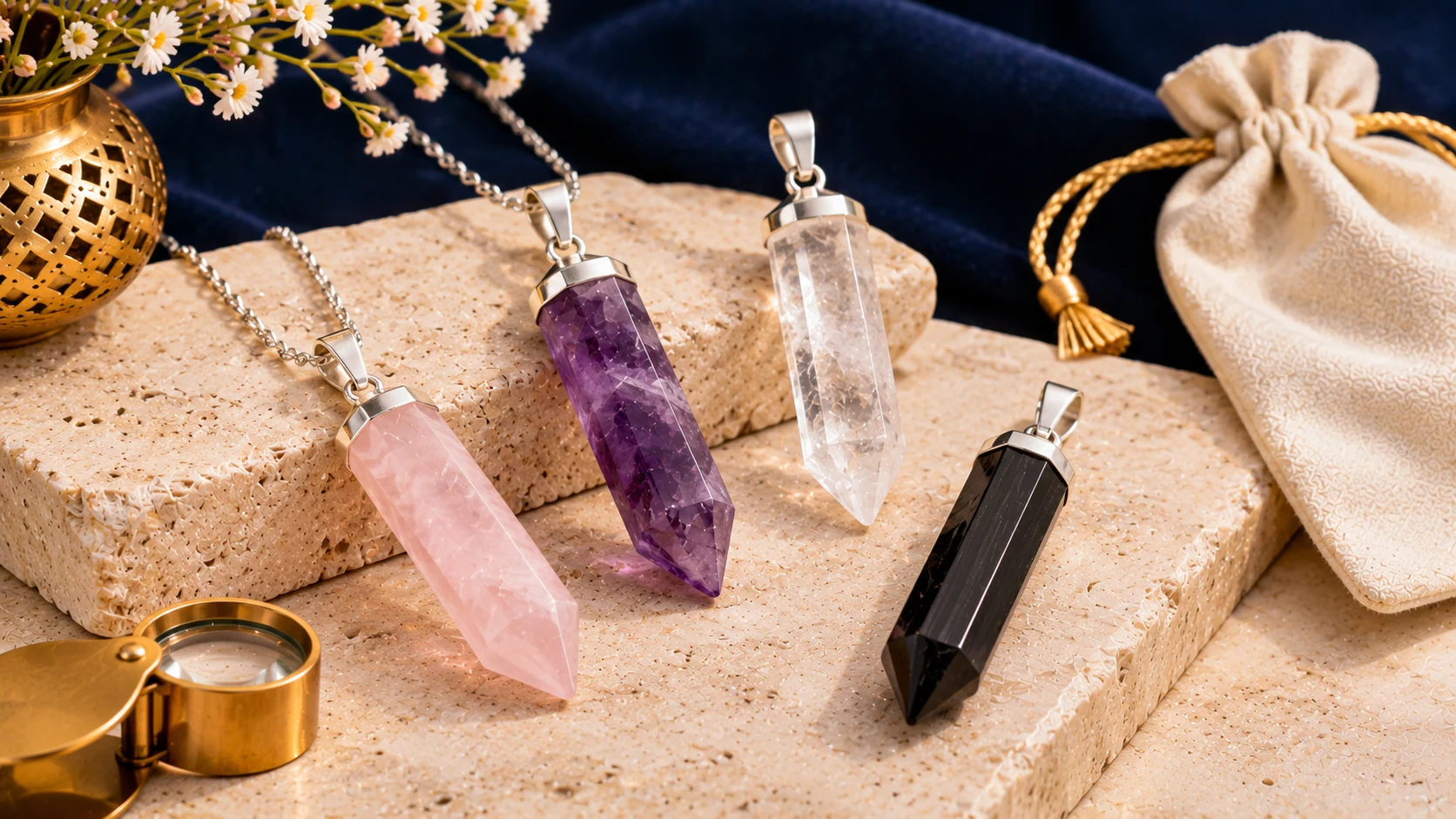
A crystal pencil pendant is an elongated gemstone or gemstone-like jewellery piece shaped into a narrow pointed prism and suspended from a bail, chain or cord. The form can be minimalist with everyday clothing or expressive with Indian festive wear. But its real appeal comes from an accurately described gemstone, careful carving, secure mounting and comfortable weight—not a promise of invisible energy.
Rose Quartz, Amethyst, colourless Quartz and Black Tourmaline are familiar visual references for pencil-point jewellery. Their colour and character differ, and a highly regular six-sided point is often cut and polished from larger rough material rather than naturally grown in exactly that final shape. The design can still be beautiful and authentic when the process is honestly described.
Before choosing a pencil pendant, ask: Which gemstone is this? Is it natural, treated or imitation? What does the point look like from all sides? Is the bail secure? What metal is the chain? How long and heavy will the piece feel? Those questions protect wearability and value, even when the wearer enjoys gemstone symbolism.
The pencil pendants shown in editorial illustrations are design examples rather than photographs of currently available finished jewellery. The genuine Divinity Crystals product photographs further below show real catalogue items, each identified by its actual stone and jewellery format.
Seven essential points for a confident jewellery choice
- Carving is different from growth: polished hexagonal pencils are often fashioned from larger mineral pieces.
- Material identity matters: natural, treated, laboratory-grown and imitation are separate descriptions.
- Secure components: inspect tip, drilled hole, cap, bail, jump ring and clasp.
- Measure the actual jewellery: stone length, width, weight and chain length affect comfort.
- Metal names matter: German silver does not mean sterling silver or nickel-free.
- Protect the point: avoid impacts, harsh chemicals and universal soaking treatments.
- Traditional meanings are optional: a pendant is not proven medical or electromagnetic protection.
Carved pencil points versus naturally terminated crystals
Minerals grow according to their internal crystal structure and environmental conditions. A natural Quartz cluster may show long prismatic crystals, pointed terminations, uneven faces, contact marks and attached matrix. A jewellery maker can instead cut rough stone into a regular elongated shape, polish symmetrical facets and finish one end as a point. Both may resemble each other in a photograph, but a natural termination and a crafted shape have different origins.
Single-terminated designs end in one point; double-terminated designs have two points and may use a centred wire wrap or another suitable fitting. Some pendants have six polished faces, while others retain ridges or natural-looking surfaces. Neither the number of sides nor the direction of the point is evidence of a physical healing effect. The practical questions are how the stone sits, moves and survives wear.
Single pointed pencil
A smooth geometric prism with one tip can be an elegant necklace centrepiece. Inspect facet symmetry, tip condition and the area under its metal cap; a narrow end may chip if it strikes hard surfaces.
Double-terminated design
Both ends can be exposed to friction and impact. A good central fitting should not slide or twist unexpectedly. Evaluate wearable comfort rather than claims that the points channel energy.
Natural Quartz cluster
Clusters contain natural crystal growth and may include matrix and multiple terminations. They are not automatically wearable. A secure custom mount is needed before any mineral specimen becomes a safe pendant.
Cabochons and mounted pendants
Our existing finished pendants have their own shapes and fittings, and our loose cabochons are intended for jewellers. They are useful comparisons, but should not be relabelled as pencil-point products.
Popular gemstone materials for crystal pencil pendants
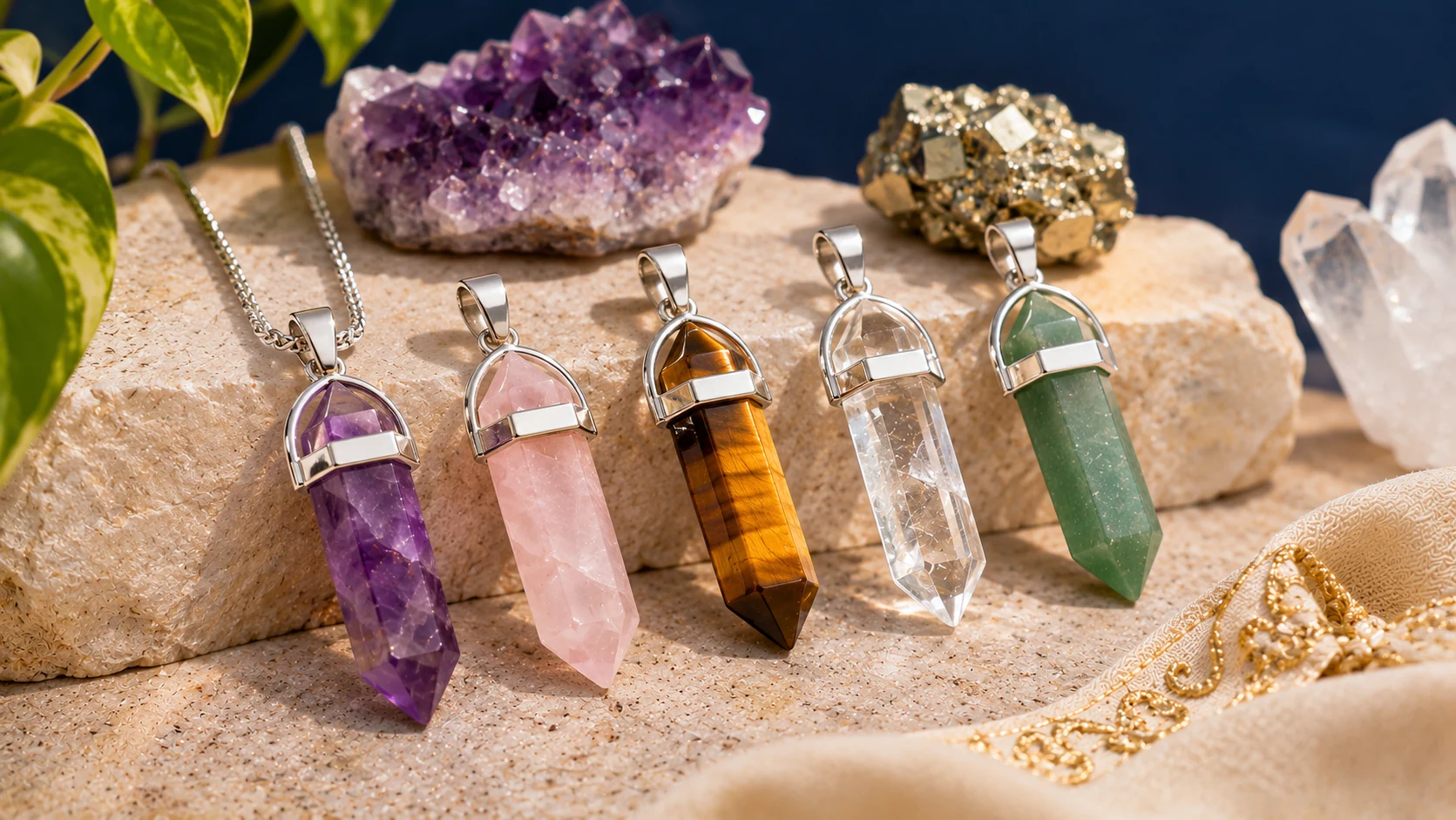
Gemstone colour is a natural way to choose a pendant, but it is not a reliable mineral test. A purple stone might be Amethyst, glass or another material; a black polish could come from Tourmaline, Obsidian or a composite. For each item, the actual material and any relevant treatments should be described accurately instead of guessed from its shade or a traditional chakra association.
A soft blush-pink point
Rose Quartz is a pink Quartz variety, often translucent or cloudy. A smoothly polished pencil shape is generally carved from larger stone rather than a naturally formed perfect prism. Inspect the carving, drilled connection or cap, and any treatment or colour claims. Traditional love symbolism is not evidence of a guaranteed relationship outcome.
Violet Quartz geometry
Amethyst is purple Quartz and may show colour zoning. A good jewellery finish should reveal the colour without rough edges or an unstable pointed tip. Some Amethyst colour can change with prolonged strong sunlight or heat; care should reflect the actual mineral, not an assumed universal cleansing ritual.
Transparent or included rock crystal
Clear Quartz can be colourless and transparent or visibly included. A natural cluster is different from an elongated polished single point. For a wearable piece, inspect the actual prism, bail or wrap, and dimension measurements rather than assuming a beautiful raw cluster image describes a ready-made necklace.
Dark, textured mineral character
Dark Tourmaline is often schorl and may show longitudinal structure. Black appearance alone does not authenticate it. If a pendant is long and narrow, existing fractures or surface ridges may influence its durability. Check material identity, finish and protective setting before purchase.
Citrine, Tiger’s Eye and related looks
Yellow Quartz and banded brown Tiger’s Eye can create attractive accents. However, colour, trade names and purported prosperity benefits do not independently confirm identity or treatment history. A polished point should still be chosen for its actual properties and workmanship.
Firoza, Aventurine and custom settings
Green Aventurine and blue Turquoise are familiar jewellery materials, but their care and treatments differ. Our published Firoza cabochon can be considered for a suitable jeweller-designed setting; its rounded dome is not the elongated pencil design being illustrated here.
For independent mineral-care background, see GIA’s Rose Quartz care guidance and GIA’s Amethyst care guide. Hardness is useful information, but the security of a thin tip or glued metal cap must be assessed separately.
Five genuine product photographs from our own catalogue
These first-party views are tied to five separate published listings: three finished non-pencil pendants, one loose gemstone cabochon and a natural Quartz cluster. No photograph is passed off as an available crystal pencil pendant. Our original coloured-point editorials are illustrative, not merchandise images.
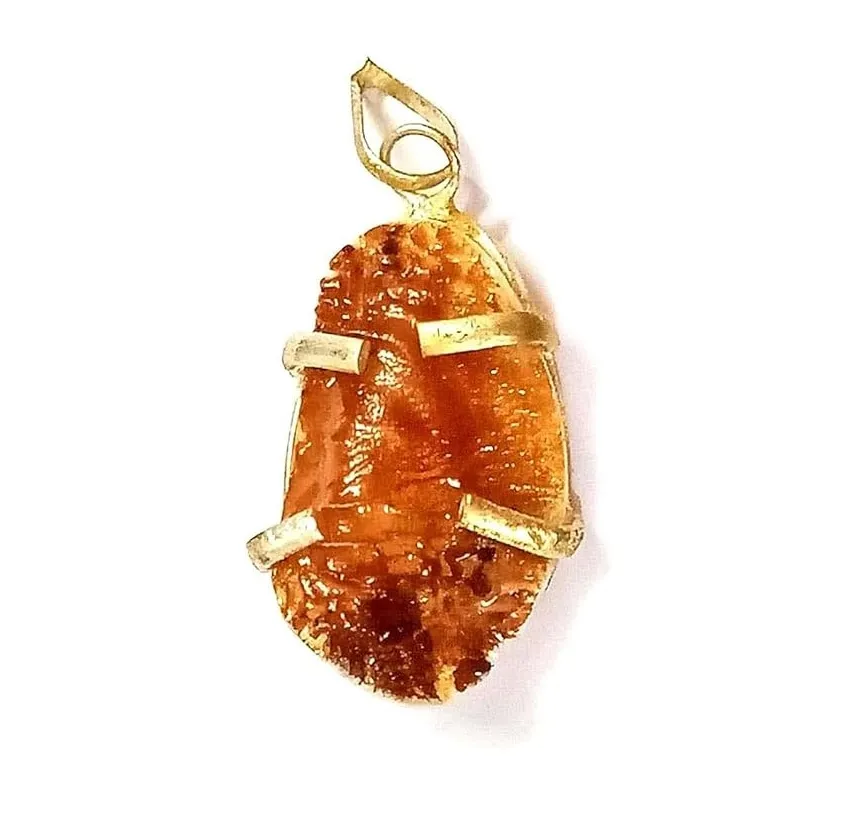
Shukra Mani — Finished Pendant
Our real Shukra Mani trade-name pendant photograph with silver-coloured metal setting. Not a crystal pencil; alloy and laboratory report claims require exact item evidence.

Machh Mani — Finished Pendant
Our real Machh Mani pendant listing photograph, showing the mounted jewellery, not a pencil point. Fish Pearl is a trade term; mineral identity needs supporting information.

Gomti Chakra — Shell Pendant
First-party photograph of our shell-like Gomti Chakra pendant and mount. It is a separate pendant design, useful for inspecting the metal loop and finishing.
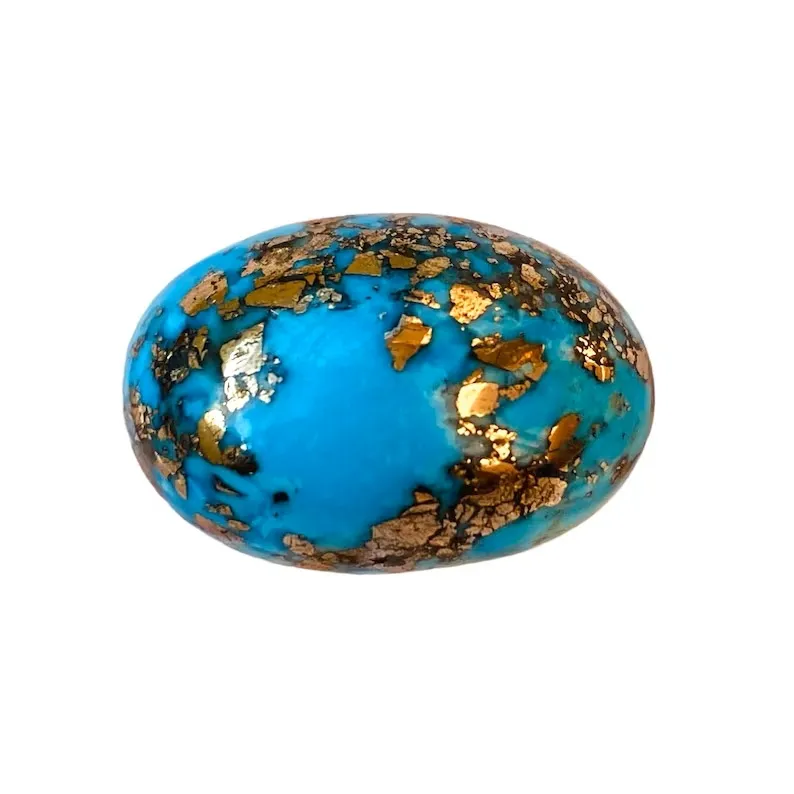
Firoza — Loose Cabochon for Setting
Existing Firoza 16–30 ct listing image of a loose rounded cabochon for setting. Not a finished pendant or pencil; size, treatment and origin claims require appropriate verification.
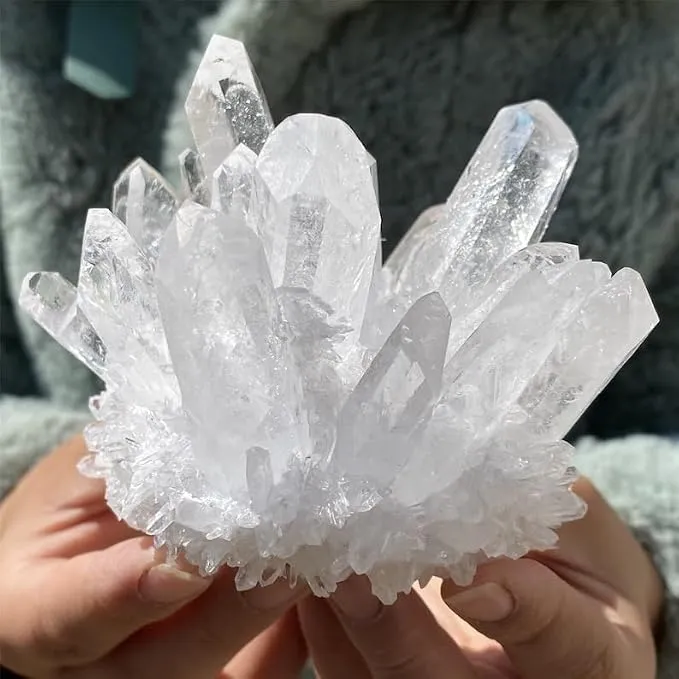
Clear Quartz — Natural Cluster
First-party Clear Quartz cluster photo showing natural grouped crystal points, without a necklace bail or chain. It contrasts natural crystal growth with polished jewellery points.
What our five real listings demonstrate about jewellery and gemstone formats
These five catalogue examples are deliberately honest about their differences. They help explain how gemstone jewellery is mounted and photographed, and why a loose stone, a natural cluster and a finished pendant cannot be treated as the same format. The pencil-point images in the cover remain design illustrations until corresponding products are published with their own original photos.
Our Shukra Mani example
Our Shukra Mani pendant listing shows a pale focal stone in a silver-coloured mounting. The title includes German silver and lab certification claims, which need to match the actual alloy and tested specimen. It is an example of finished jewellery, not a natural pointed pencil form.
Our Machh Mani example
Our Machh Mani pendant has a separate shape and metal assembly. The term Fish Pearl is a trade name rather than complete gemological identification. Any report should be read for its real issuer, tested material and relevant conclusions, without assuming it establishes astrological results.
Our Gomti Chakra example
The Gomti Chakra pendant shows a shell-like spiral mounted in silver-coloured metal. This is useful when checking how loops, caps and fittings are attached, but the listing is not a pencil pendant. The physical shell should not be equated with a Quartz crystal merely because both are symbolic jewellery objects.
Our Firoza cabochon example
Our 16–30 ct Firoza cabochon listing describes a loose rounded stone for custom jewellery, not a finished necklace. A jeweller needs actual dimensions, dome depth and material information before setting it. Country-of-origin or treatment claims cannot be established by a blue photograph alone.
Our Clear Quartz cluster example
Our Clear Quartz cluster illustrates natural crystal growth. It may show multiple points and mineral matrix rather than regular fashion-carved prism geometry. Its photograph should not be reused as evidence that a chain, cap or wearable pencil-shaped gemstone is included.
The distinction matters to customers
A premium product gallery should show the actual listing’s contents and realistic form. We distinguish original editorial design from first-party product photos, and avoid linking to products that are not currently available in the described shape.
Chains, bails and German silver: understand the metal before you wear it
A necklace is a complete assembly, not just a gemstone. The bail holds the stone from the chain, the jump ring should close securely, and a clasp must carry the weight without opening accidentally. Poorly fitted caps can loosen, adhesive can fail, and rough loops can damage clothing or skin. A polished surface alone does not prove alloy quality or safe construction.
| Metal or fitting | What it generally means | What we should verify |
|---|---|---|
| Sterling silver / 925 | A silver-rich alloy traditionally containing 92.5% silver. | Accurate alloy or hallmark basis, wear and jewellery construction. |
| German silver / nickel silver | Usually copper, nickel and zinc; the name does not mean actual silver. | Metal content and any nickel sensitivity concerns. |
| Silver-plated metal | A surface coating over another base metal. | Underlying alloy, plating wear and potential exposed metal. |
| Stainless steel | A family of iron-based alloys with varied grades and finishes. | Suitable grade, corrosion resistance and nickel considerations. |
| Cap, bail and drilled hole | The junction where the stone meets the necklace. | Secure fit, absence of exposed sharp edges, damaged adhesive or loose parts. |
| Chain, clasp and connecting rings | Carry the pendant and hold the necklace closed. | Reliable closure, sufficient strength, true chain length and included components. |
German silver should not be called sterling silver, and a statement that all German silver jewellery is skin-safe is not justified. Nickel can cause allergic contact dermatitis, including where jewellery touches the neck. The independent DermNet nickel allergy guide describes this exposure. For our own German-silver pendant listings, the alloy and any relevant claims should be supported, not guessed from their silver colour.
Size, comfort and styling on everyday or Indian festive clothing
A pencil-point necklace can look very different on a person from how it appears in a tightly cropped studio photograph. Check the complete pendant height including bail, its width, thickness, mass and the actual chain length. A heavy, narrow stone can swing against the chest; a sharp end can catch a dupatta, embroidered kurta, textured sweater or seat belt. Comfort and secure construction should guide the design.
Measure, don’t enlarge
Request a scale reference and written dimensions. The same carat weight can appear very different when cut as a long thin pencil rather than a short broad cabochon; weight is not a substitute for length.
Match fitting to the load
The bail and chain need to carry the actual pendant. Delicate links may look elegant but can be unsuitable for a heavy mineral rod. Check the clasp before wear and inspect joints periodically.
Protect delicate fabrics
For sarees, kurtas and embellished collars, a smooth bail and suitable length help reduce snagging. A long point should not rest where it rubs heavily on embroidery or catches a scarf.
Keep the shape visible
A single pointed pendant can complement a simple neckline without competing with other jewellery. When layering chains, choose separated lengths so the pieces do not hit or tangle around each other.
A model image is helpful for inspiration but does not establish the dimensions or included accessories of the item purchased. This distinction is especially important for our original editorial pencil-point visuals, which are not pictures of available Divinity Crystals stock.
Six practical checks for a reliable crystal pencil pendant
These checks apply to custom point pendants and to already finished jewellery. They help customers separate attractive styling from the product evidence needed for a safe purchase.
-
Confirm the exact mineral
Ask for a specific gemstone species or variety. Natural formation, later treatment, laboratory-grown origin and imitation should be stated separately rather than inferred from a photograph.
-
Inspect the carved point
Look closely at the tip, facet symmetry, surface fractures and any join beneath the cap. A six-sided fashion carving is not automatically a natural untouched crystal termination.
-
Review the bail and chain
Confirm what metal touches the skin, whether fittings are plated, and if the clasp is secure. German silver is commonly a nickel-containing alloy rather than sterling silver.
-
Measure real wearable size
Check complete pendant height including bail, width, depth, weight and the included chain length. A pointed piece can snag clothing or knock the chest if too long.
-
Match photographs and reports
Compare first-party views of the actual jewellery and its included accessories. A generic certificate or editorial portrait does not verify the precise specimen or the whole necklace.
-
Protect the gemstone and fitting
Wipe gently, keep away from impacts and unsuitable cleaners, remove before swimming or sports, and store the tip separately from harder or heavier objects.

Authenticity, treatments and what a gemstone report actually proves
Gemstone jewellery can be made from mined material, laboratory-grown gems, composites, glass or other imitations. A natural stone may also have been heated, dyed, filled, stabilised or coated. These categories are different; no single photograph or spiritual name confirms treatment-free status. A responsible product description should identify the material and disclose what is actually known rather than make unsupported claims.
For a valuable or disputed pendant, a qualified gemologist or laboratory may be appropriate. Read the issuer, report date, number, tested item, weight and measurements, and understand exactly which findings are reported. A gemological report for one loose stone does not automatically certify every bead, a chain’s alloy, the country of origin or an unrelated finished pendant.
Inspect the true item
Front, back, side and detail photographs can reveal tip damage, cap position, adhesive seams and the real scale. A carefully styled cover image cannot replace these views if an item is sold as individually selected.
Distinguish treatments
Natural formation and untreated condition are separate. Heat, dye, coating or filling may materially affect appearance and care. Ask for disclosure where a claim affects a buying decision.
Check certification scope
A real laboratory result supports only properties assessed for the specified material or sample. It cannot prove good luck, zodiac influence, guaranteed relationships or medical recovery.
Skip destructive tests
Scratching, acids, flames and boiling water can harm genuine gemstones and fittings while failing to identify them reliably. Use proper documentation or specialist assessment instead.
Read our Gemstone Authentication Guide and Real versus Fake Crystals Guide for the difference between mineral observations, reports and unsupported authentication shortcuts.
Cleaning and protecting the gemstone, point and chain
Gemstone scratch resistance is not the same as total toughness. Quartz is relatively hard but a narrow pointed end can chip when it strikes a hard surface. A long Tourmaline specimen can fracture. The metal cap, adhesive or plating may also be more vulnerable to water, perfumes or cleaners than the gemstone itself. When the construction is uncertain, begin with a soft clean dry cloth.
| Gemstone or component | Main concern | Conservative care |
|---|---|---|
| Rose Quartz or Clear Quartz point | Sharp terminations can chip on impact. | Store separately in a padded pouch and handle by the body, not the point. |
| Amethyst | Colour changes can occur with prolonged intense sunlight or excessive heat. | Prefer indirect light, avoid heat and protect the tip. |
| Black Tourmaline-style point | Long, thin or fractured sections may be vulnerable. | Avoid impacts and check the mount and any visible cracks. |
| Turquoise or treated gemstones | Porosity, dyes, resins or coatings may be sensitive to chemicals. | Use gentle dry care until mineral and treatment status are clear. |
| German silver or plated fittings | Surface wear, moisture and skin-sensitivity issues. | Wipe softly, keep dry and check for plating loss or metal reaction. |
| Chain, bail and clasp | Loose rings or worn fasteners can lead to loss or injury. | Inspect routinely and have unstable parts repaired. |
Remove pointed jewellery before bathing, swimming, exercise or other activity that risks impact or snagging. Avoid saltwater baths, abrasive jewellery dips, steam cleaning, flames and unverified ultrasonic cleaning. The GIA Amethyst care guide notes sunlight and heat considerations; our Crystal Care & Cleansing Guide explains care for different minerals and jewellery components.
Gifting, packaging and honest jewellery expectations
A thoughtful pendant gift should suit the wearer’s colours, clothing and comfort. Ask whether the person prefers a smooth cabochon or a longer pointed shape. A very long point may be impractical for someone who works with children, exercises often or wears delicate embroidered fabrics. There is no need for a person to wear a particular stone to avoid bad luck or prevent illness.
Consider the recipient
Choose the right colour and form, check jewellery allergies, and decide whether weight or point length may be uncomfortable.
Confirm what is included
A chain, cord, satin pouch, jewellery box or certificate in an editorial photograph is not necessarily included in the order. Rely on the specific product description.
Help the jewellery last
Give practical guidance on storing pointed pieces, metal care and when to remove the pendant. Protect the person and the object rather than promising invisible protection.
Check the exact pendant details
Before buying a finished pencil pendant, review its individual listing for the actual item photographs, point and bail close-ups, measurements, metal details and included components.
Our catalogue photographs show actual Divinity Crystals items, while editorial jewellery concepts are labelled as illustrations. Check each linked product page for its precise material, size and availability before ordering.
Beautiful crystal jewellery does not need exaggerated healing promises
Someone may personally associate Amethyst with calm, Rose Quartz with affection or Black Tourmaline with a sense of protection. Such symbolism can be culturally meaningful, but it is not scientifically established proof of a physical treatment, an emotional cure, EMF shielding or guaranteed financial success.
The direction of a polished tip does not produce a verified transfer of medical or planetary energy. What we can assess is the quality and identity of the stone, integrity of the setting, the real metal against the skin and the practical care required. The lasting value of jewellery comes from suitability, workmanship, honesty and how the wearer enjoys it.
Frequently asked questions about crystal pencil pendants
Answers on mineral materials, carved points, alloy safety, sizing, real products and gemstone care.
What is a crystal pencil pendant?
A narrow elongated pendant made from a gemstone or gemstone-like material, with one or more pointed ends and a suitable chain or cord attachment.
Are pencil pendants always naturally grown?
No. Many regular six-sided prism pendants are carved and polished from larger rough. A designed shape differs from a naturally formed crystal termination.
Can Black Tourmaline points be fragile?
Yes. Long, cracked or thin specimens can break under impact; actual mineral identity, condition and setting should be checked.
What does double-terminated mean?
It describes a form with pointed ends on both sides. It may have a natural origin or be carved, and needs suitable secure mounting.
Is German silver the same as sterling silver?
No. German silver or nickel silver is generally a copper-nickel-zinc alloy with no actual silver, whereas sterling silver is a silver-rich alloy.
Can German silver cause contact allergy?
It may contain nickel, which can cause allergic contact dermatitis in sensitive individuals. Verify actual alloy details before claiming nickel-free safety.
Which chain length is best for a pointed pendant?
It depends on the person’s proportions, neckline, comfort and pendant size. Ask for actual chain length and a realistic worn-size reference.
Does the chain shown in a product photo come included?
Not automatically. Check the product’s declared contents for a chain, cord, clasp, pouch, gift box or other accessories.
Can I wear a pointed pendant during sport?
We recommend removing jewellery where impact, snagging, sweat exposure or contact with others may create a hazard.
What if the pendant’s tip is chipped?
Avoid wearing sharp damaged jewellery and check the mounting. Photograph the condition and follow the store’s repair or returns process.
Are pencil pendants currently in stock at Divinity Crystals?
No finished pencil-pendant SKU was verified among published products in this catalogue review. The point images in this guide are editorial illustrations.
What should I check when gifting a pendant?
Confirm material, condition, metal sensitivity, dimensions, included chain, packaging and returns; select a style the recipient actually likes.
Final perspective: real materials, well-made points and honest descriptions
A good crystal pencil pendant is attractive because of its gemstone colour, polished shape, secure bail and the way it sits on the person wearing it. Whether the stone is naturally grown, fashioned from rough, treated or another material should be clearly described. A beautiful illustration alone does not establish availability or authenticity.
At Divinity Crystals, we want our buyers to have accurate photographs, useful measurements, clear materials, suitable chain information and safe care instructions. Our five linked gallery products are genuine first-party examples, but they are not pencil-pendant SKUs. Until finished pencil pendants are individually verified and published, their editorial designs remain inspirational examples rather than products promised for delivery.