Description
Machh Mani Pendant
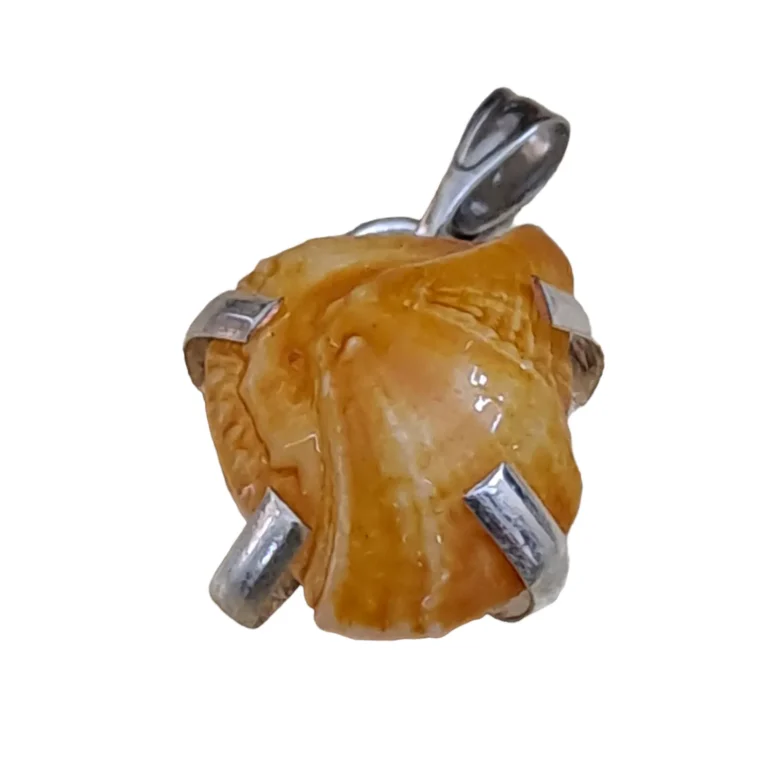
Explore our Machh Mani, also known by the trade names Fish Pearl or Meen Mukta, presented in a silver-coloured German silver setting.
See our original pendant photography and learn the key questions about material identification, metal composition and everyday care before choosing your piece.

A traditional name with a distinctive story.
Machh Mani, also called Fish Pearl or Meen Mukta in traditional jewellery terminology, is the name we use for this pendant. The specific gem material is best understood through its gemological identification rather than assumptions about the traditional name.
Our pendant details.
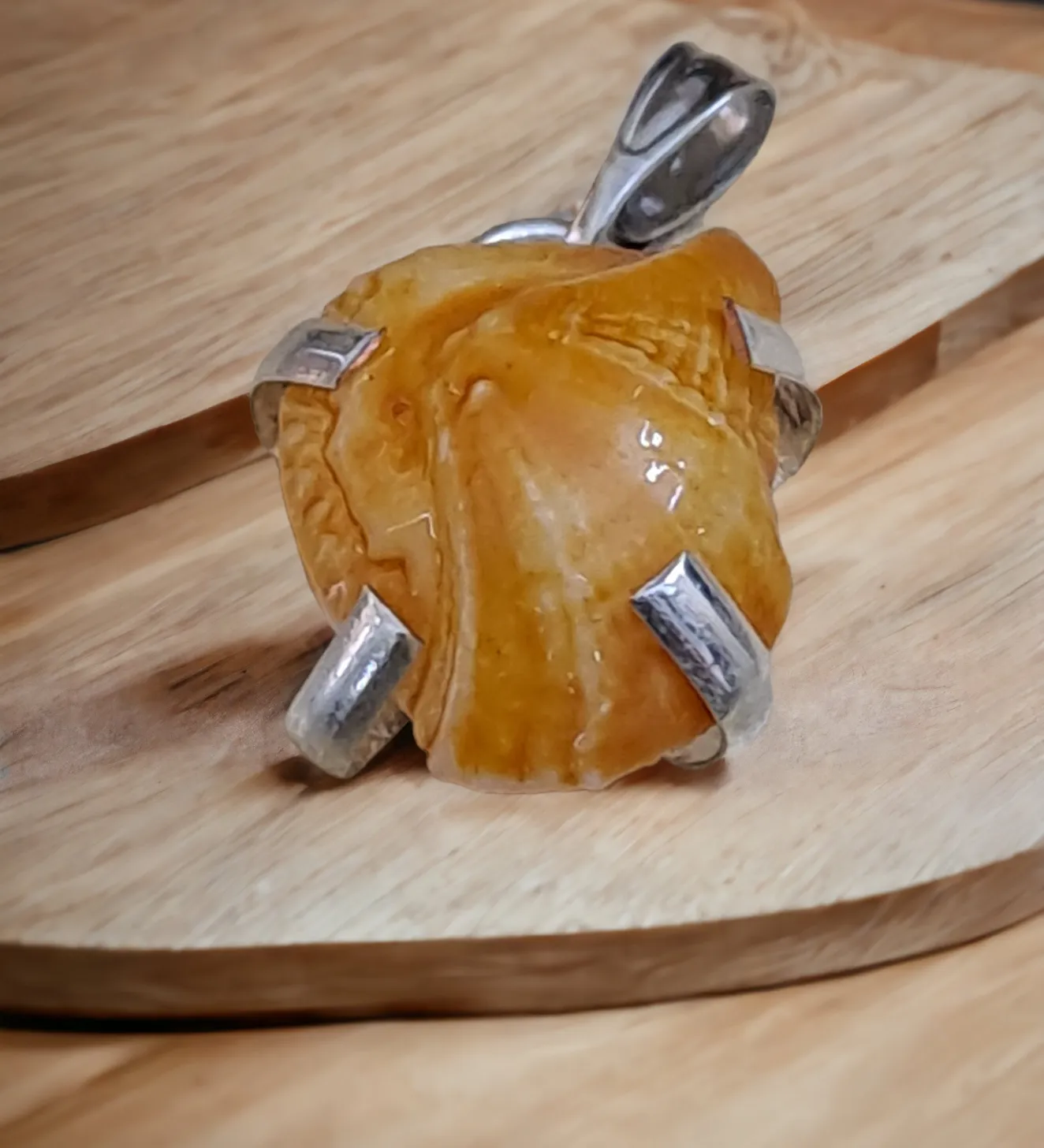
Before purchasing, compare the actual product gallery with the current item. Check the size, stone appearance, setting, bail and any included chain. We recommend reviewing the wording of any associated certificate rather than relying on the title’s “authentic” or “lab certified” terminology alone.
A symbol you can make your own.
A traditional gemstone pendant can be worn as a personal keepsake or as a symbolic connection to astrology and heritage. Select its design for comfort, appearance and suitability for your skin.
Some Vedic astrology traditions associate Machh Mani with Rahu and Ketu and protective symbolism. These are matters of belief, not verified effects on health, career, finances or planetary influences.
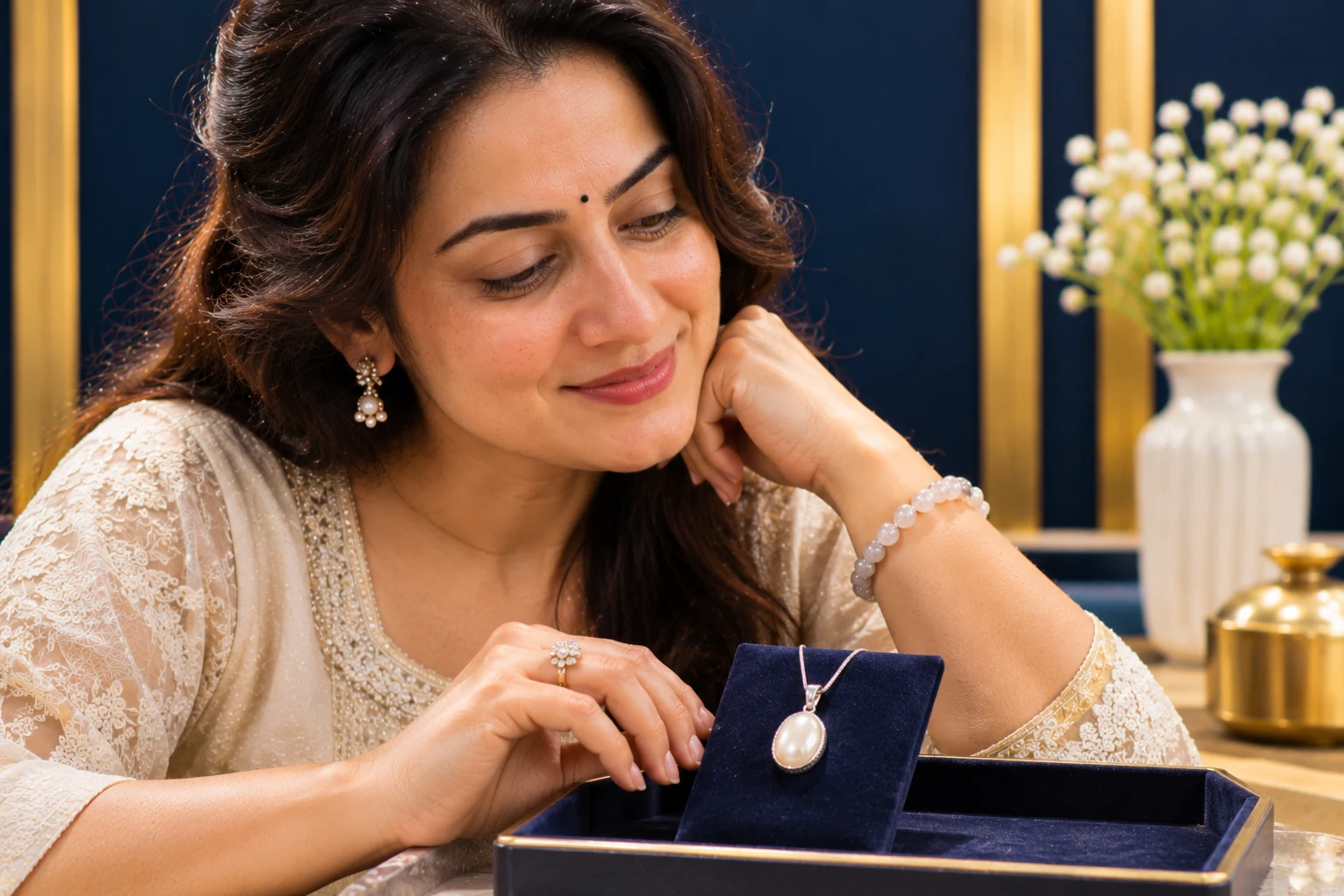
For product identification, our own gallery photos and a genuine item-matched report are more useful than an editorial lifestyle scene.
What does the laboratory actually identify?

“Fish Pearl” is not a laboratory result.
Natural, cultured, nacreous and non-nacreous pearls are categories requiring gemological analysis. Whether a particular Machh Mani material is pearl, shell material, a calcareous concretion or another substance cannot be established from marketing terms or ordinary photographs.
We recommend requesting the actual report name, specimen/reference number, test conclusions and any limitations. For detailed gemstone identification and treatment information, our team can help with the available report details.
Three checks before buying this pendant

See the actual piece
Compare original gallery views for surface, shape, mounting, polish and the condition of the bail.
Confirm sizing
Ask for the pendant and stone dimensions, weight, chain inclusion and metal finish.
Review documentation
Check that any gemological report identifies the material and corresponds to this pendant.
German silver is a trade name, not sterling silver.
German silver (also called nickel silver) is ordinarily a copper-zinc-nickel alloy; it generally contains no elemental silver despite the name. Composition and plating can vary by manufacturer, so do not assume the setting is sterling silver, nickel-free or hypoallergenic.
Nickel can cause contact dermatitis in sensitive wearers. If you have a known nickel allergy, confirm the exact alloy and consider a suitable verified nickel-free setting rather than relying on a general “skin-safe” claim.

Gentle care for German silver pendants

Clean gently and dry.
After wear, use a clean soft dry cloth to remove skin oils. Avoid abrasive polish, prolonged water exposure, perfume, cosmetic sprays and harsh chemicals. Store separately in a clean dry jewellery pouch or box.
Protect unknown materials.
Until the gemstone material and any treatments are known, avoid soaking in milk, Gangajal, saltwater or cleaning solutions. Ask a jeweller about safe methods for the entire piece, including adhesives or plated metal.
Traditional Rahu–Ketu associations.
In some devotional and astrological practices, wearers choose a Machh Mani pendant in connection with Rahu–Ketu symbolism, intention-setting or a personal prayer. There is no reliable scientific evidence that a pendant cures Kaal Sarp Dosha, removes curses or treats illness. Ritual timing and mantras can be discussed with a trusted practitioner if you value that tradition; they are not required for the pendant to be worn as jewellery.
Frequently asked questions
What is Machh Mani or Meen Mukta?
Machh Mani, also called Fish Pearl or Meen Mukta in traditional jewellery terminology, is the trade name used for our pendant. Gemological material identification is separate from the traditional name.
What does our German silver pendant look like?
Our original gallery shows the pendant, its pale stone and silver-coloured setting. Please review those photos and the available dimensions for the selected piece.
Is German silver the same as sterling silver?
No. German silver is normally an alloy of copper, zinc and nickel rather than sterling silver. Its exact finish and composition can vary.
What should nickel-sensitive customers know?
Some German silver alloys contain nickel, which can irritate sensitive skin. If you have a nickel allergy, ask our team about the setting composition before wearing it.
How do I check pendant size and chain details?
Review the product selection for stone size, overall pendant measurements and whether a chain is included. Our team can clarify any details not shown.
What is Machh Mani traditionally associated with?
In some astrology traditions, Machh Mani is symbolically associated with Rahu and Ketu and worn as a personal or devotional keepsake. Such associations are spiritual beliefs rather than guaranteed outcomes.
How should I clean and store the pendant?
Wipe the pendant with a soft dry cloth, avoid perfume and harsh chemicals, and store it in a dry jewellery pouch. Do not soak a stone of uncertain composition.