
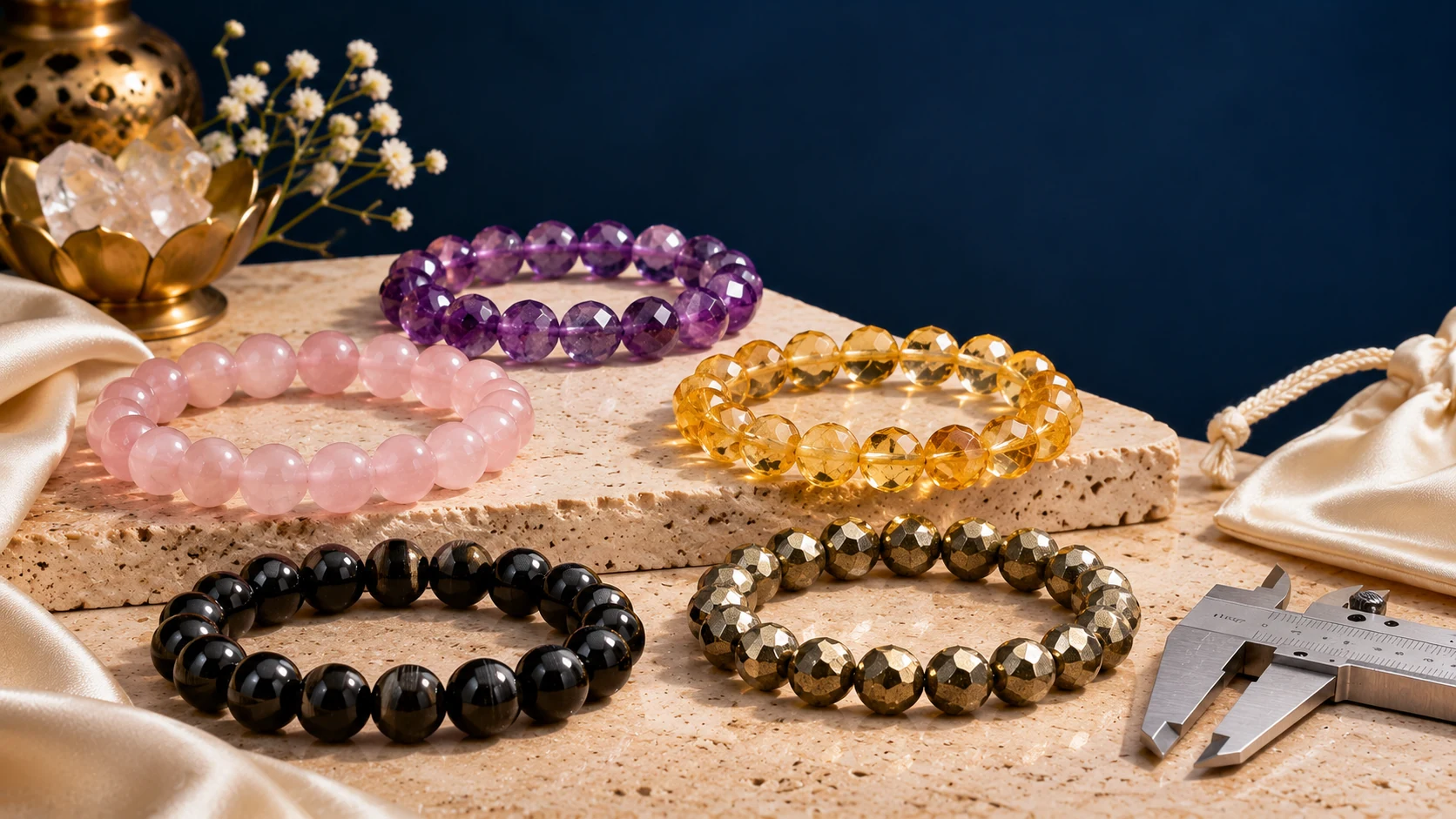

Divinity Crystals · Gemstone Bracelet Selection & Everyday Care
A crystal bracelet can be an attractive piece of everyday jewellery, a meaningful gift or a practical introduction to the variety of polished gemstones. There are round polished beads, faceted diamond-cut designs, single-strand elastic bracelets and double-row threaded pieces. The surface, weight and fit can feel quite different, even when the same gemstone name appears in the title.
But what does AAA grade actually mean? In many jewellery supply chains, labels such as A, AA, AAA or AAA+ are internal or seller-defined visual quality descriptions. They are not an internationally consistent certificate proving that every bracelet bead is naturally mined, untreated, origin verified or independently tested. A buyer will learn much more by checking material, treatment disclosures, bead finish, drill holes, construction and wrist dimensions.
At Divinity Crystals, we want our own product photographs and specifications to help customers make those decisions without vague claims. This guide compares real bracelets from our collection, explains bead sizing and inspection, and provides care advice suitable for finished gemstone jewellery.
The cover is an original editorial representation of bracelet colours and styles, and the Indian portrait is original lifestyle artwork. The five product photographs below come from actual published Divinity Crystals listings; the corresponding listings—not the editorial images—are where customers should confirm the particular product details.
Seven essentials for buying crystal bracelets confidently
- AAA is not a universal independent gem grade across Amethyst, Rose Quartz, Citrine or other bracelet minerals.
- Start with material identity and treatments, not a promise of healing, luck or high vibrations.
- Bead diameter is different from finished circumference and cannot establish wrist fit.
- Round, diamond-cut and double-layered describe different physical design features.
- Good construction matters: inspect drill holes, thread or elastic, knots, clasps and spacing.
- Genuine product photos matter; an illustrative model must not silently replace the actual bead type.
- Cleaning depends on the whole piece, including gemstones, stringing, findings, coatings and adhesives.
What does AAA mean—and what does it not prove?
A gem dealer may sort a particular supply of stones by visible colour, clarity, polish or evenness and use a shorthand such as A, AA or AAA. The sorting criteria can differ widely across suppliers and gemstone types. An AAA label applied to pale-pink Rose Quartz beads is not automatically comparable to a label applied to brassy Pyrite, dark Tourmaline or faceted Citrine.
For a jewellery customer, it is useful to separate aesthetic selection from scientific identification. A bracelet can be attractive, well drilled and neatly polished while still requiring evidence for claims of natural origin or treatment. Conversely, natural inclusions and variation do not automatically make a bracelet defective. The meaningful questions depend on what the listing actually promises.
Colour, finish and consistency
Compare the actual beads, not an idealised studio illustration. Check whether surface polish is even, facet edges are reasonably defined where claimed, and the colour variation matches the description. Consider your preferred aesthetic rather than assuming one universal tone is best.
What are the beads made from?
Rose Quartz is pink quartz, Amethyst is purple quartz, Pyrite is iron sulphide and Carnelian is a silica gemstone. Similar-looking materials can exist. The product description should accurately identify the real beads and disclose relevant treatments where known.
A lab report has a defined scope
If a bracelet listing mentions certification, check the issuing laboratory and whether the report describes an individual bead, selected sample or entire parcel. The phrase “AAA certified” should not be used to imply an independent standard unless a specific valid test supports that wording.
A well-made bracelet is wearable
Secure stringing, smooth drill-hole edges, a suitable wrist fit and a well-finished clasp or elastic system can influence daily comfort more than the grade adjective in a title. Look for actual details of the piece you intend to wear.
Understand the main bracelet styles before comparing listings
| Bracelet style | What it describes | What to verify |
|---|---|---|
| Round polished beads | Smooth spherical gemstones strung into a bracelet. | Diameter, shape consistency, polish, drill holes, strand fit and natural variation. |
| Diamond-cut / faceted beads | Beads with numerous cut faces to reflect light differently from smooth spheres. | Visible faceting, claimed diameter, edge finish and the material being faceted. |
| Double-layered / double-row | Two visible rows or strands, sometimes joined by a threaded construction. | Actual row configuration, bead count, thread colour, circumference and comfort. |
| Single-strand elastic | A circle of beads usually held by stretch cord. | Elastic condition, tension, bead count, knot or join and actual fitted size. |
| Mixed gemstone bracelet | Different named stones or finishes combined into one design. | Each bead material, component proportions and whether claims describe the whole item or only some beads. |
| Large-bead bracelet | Often 11–13 mm beads for a bolder profile and greater weight. | Wrist comfort, inner circumference and any pressure caused by weight or bead size. |
A 13 mm Rose Quartz bracelet should not be mistaken for an 8 mm faceted Citrine bracelet. Both may be premium products, but they have different bead sizes, surfaces, appearances and potential wrist-feel. Similarly, a two-row bracelet is a distinct construction, not a marketing synonym for a single-strand design.
Five genuine bracelet photographs from our collection
Each image is from a published Divinity Crystals bracelet listing. These images show the physical form and bead shape; our featured cover and lifestyle portrait are editorial illustrations, not exact sale-item photographs or proof of a laboratory result.
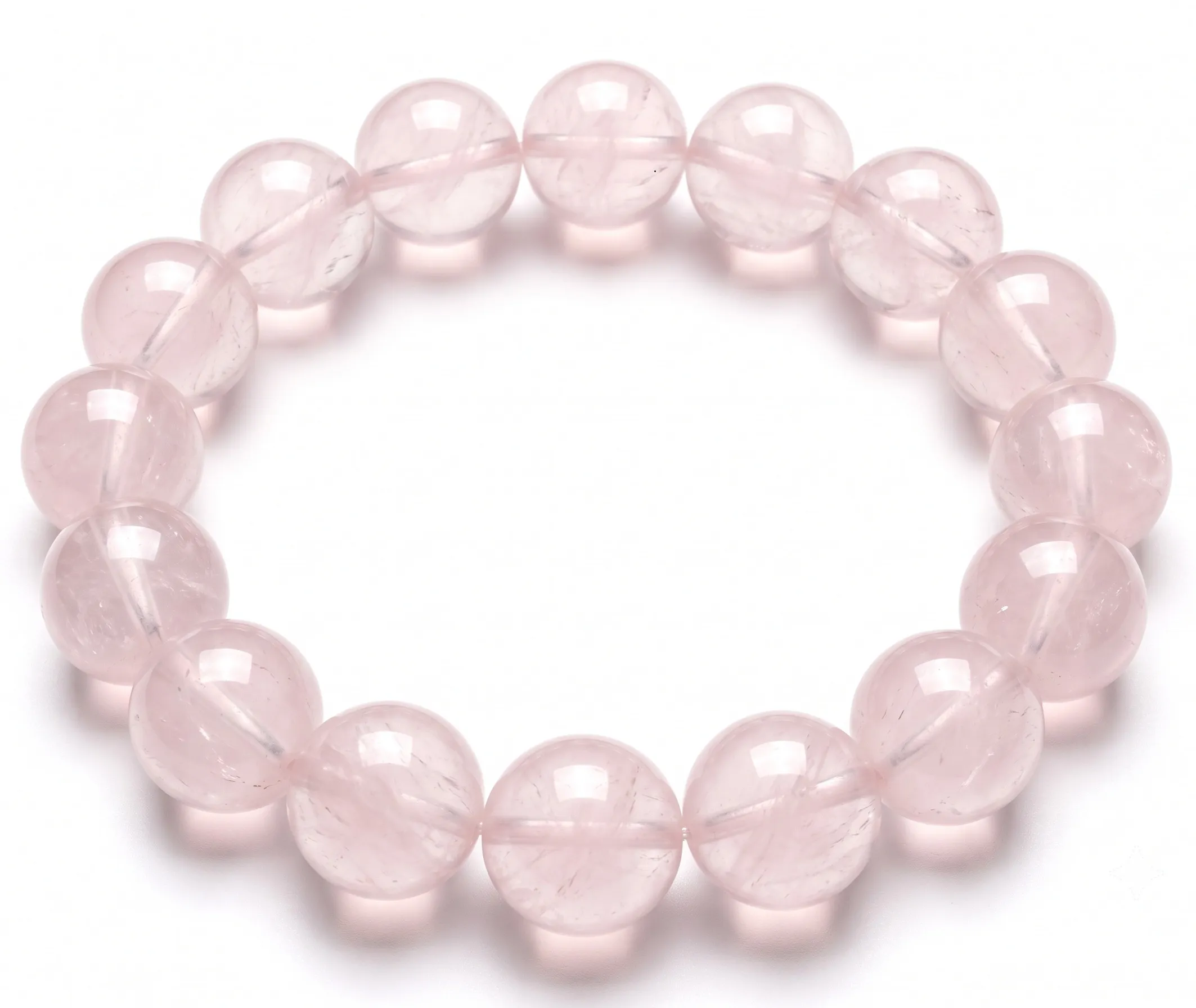
Rose Quartz — 13 mm Round Beads
A polished larger-bead style from our 13 mm Rose Quartz listing. Confirm actual circumference, natural pink variation and the stated origin.
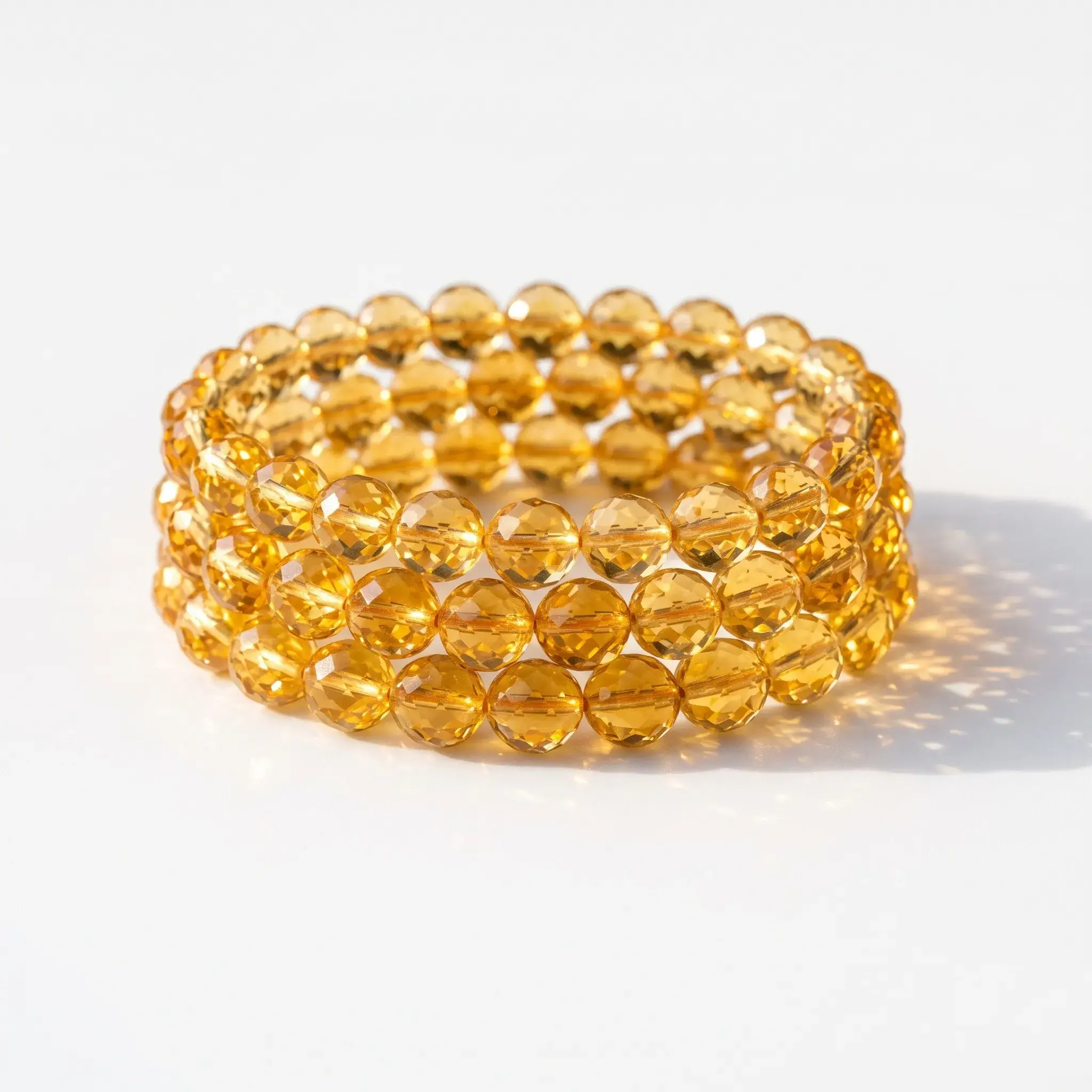
Citrine — 8 mm Diamond-Cut
A smaller faceted-bead Citrine listing. Diamond-cut describes the finish, not an independently verified gem grade or untreated status.
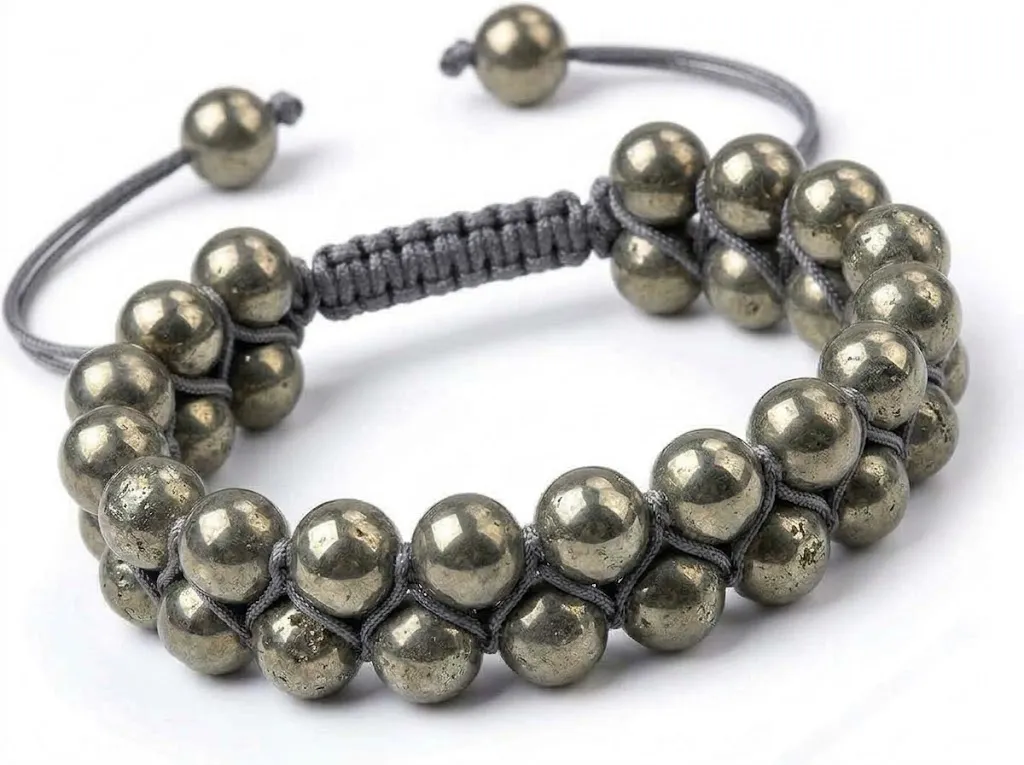
Pyrite — Double-Layered Bracelet
A threaded two-row Pyrite jewellery design. Check the actual 38-bead claim, thread construction, metal content and moisture care.
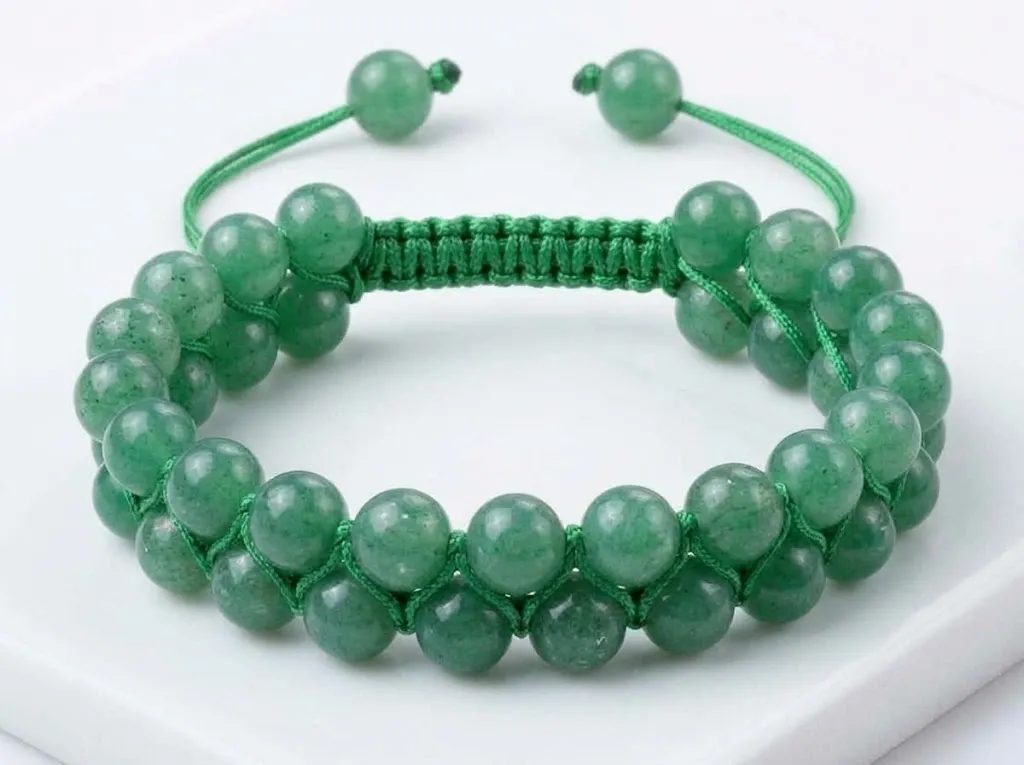
Green Aventurine — Double Row
Our green threaded two-row bead design. Look at both strands, wrist fit, bead finish and documentation tied to the selected product.
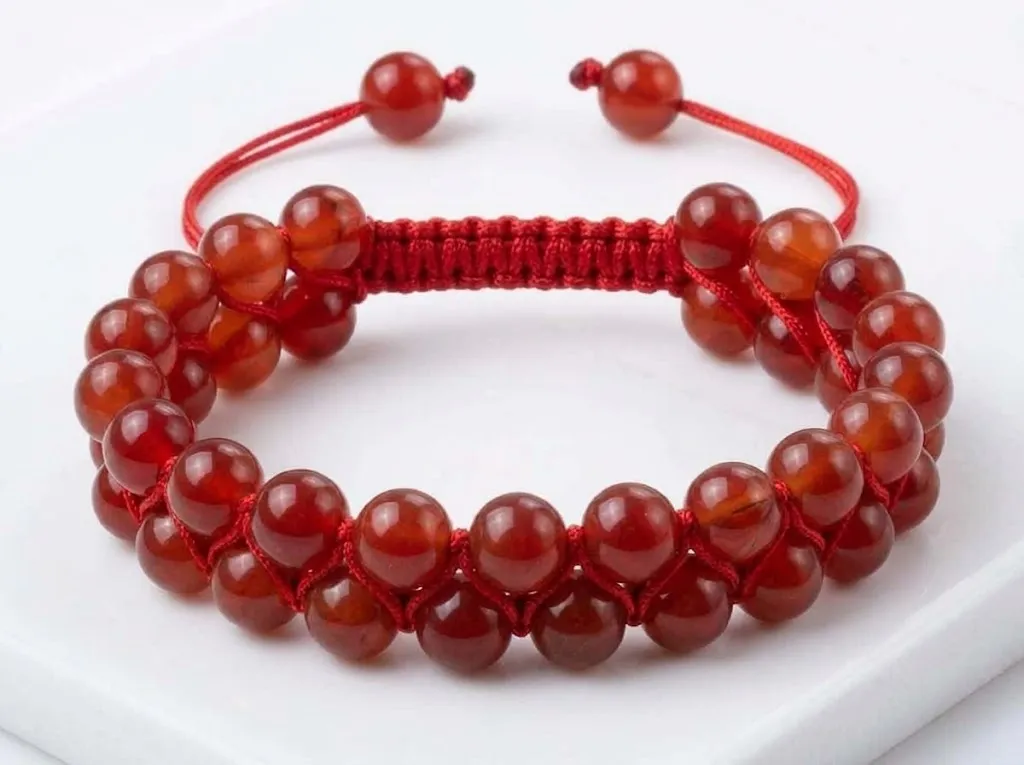
Carnelian — Double-Layered Bracelet
Our orange-red Carnelian two-row threaded bracelet, with round beads and visible construction. Confirm exact tone, count and fit.
What to inspect in the actual product photograph
A well-lit product photograph can help you compare colour, overall construction, bead count, surface quality and visible defects. It cannot prove mineral species, natural origin, treatment status or the scope of a laboratory report by appearance alone. That is why a good product listing combines image evidence with accurate information.
Roundness and matching beads
Round beads should be visibly round rather than irregular shapes unless the design states otherwise. Small natural differences can occur, but pronounced size inconsistency, chips or uneven finishing should be understood before purchase.
Facet definition and surface wear
A diamond-cut listing should actually show faceted beads, not smooth spheres with a generic title. Look for the actual cut profile and whether harsh polishing, fractures or rough edges are visible. Facets do not establish the gem’s chemical identity.
Drill-hole finishing
A rough or chipped hole can damage elastic or thread over time. Close-up photos may help, but a single front-facing glamour shot cannot show the condition of every hole; check the material and craftsmanship details provided.
Colour claims and treatment
Yellow quartz may be heated, and other beads may be dyed or coated. Natural colour alone is difficult to judge from studio photos, especially across devices and lighting. Correctly disclose known treatment rather than declaring every vivid bead untreated.
For more on material identification, visit our Gemstone Authentication Guide and How to Tell If Crystals Are Real. These explain why home scratch tests, colour-only assessment and generic certificate graphics are unreliable.
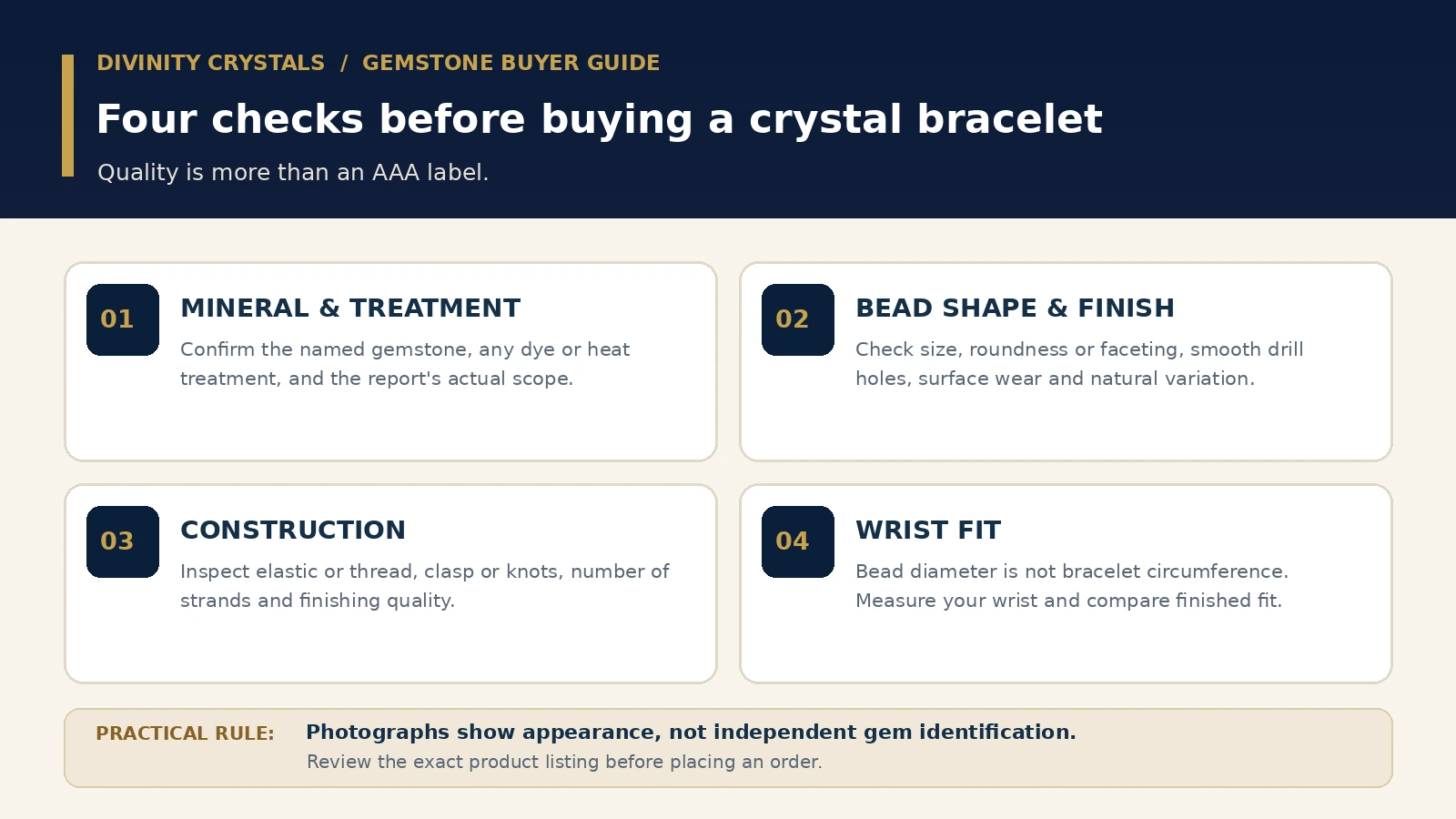
Our four-step bracelet buying check
Use this short process before checkout. It is helpful whether you choose a subtle 8 mm strand, a bold 13 mm bracelet or a two-row threaded design. None of the steps requires believing in a particular crystal energy claim.
Confirm the exact mineral and treatment
Begin with what the bracelet is made of: Amethyst, Rose Quartz, Citrine, Pyrite, Carnelian or a disclosed mixed-stone design. Check whether heat, dye, coating or other treatment is stated. An AAA label does not replace this information.
Inspect bead size, shape and surface
Compare a listed 8 mm, 10 mm or 13 mm bead with the actual gallery photos. Round polished beads should look round; faceted beads should show clear facets. Check visible chips, rough drill holes and whether colour variation is consistent with the description.
Review the construction and report scope
Look at the number of layers, elastic or thread, knots, clasps and spacers. A two-row 38-bead listing should not be illustrated with a single strand. Where laboratory documentation is advertised, verify which materials or actual stones the report covers.
Measure your wrist and plan safe care
Use a flexible tape around your wrist and check the finished bracelet’s internal circumference. Bead diameter alone cannot establish fit. Store jewellery softly, avoid chemicals and repeated wetting, and remove it before strenuous work.
For example, a double-layer Pyrite bracelet is an attractive design but has different construction and moisture-care requirements from a single-strand polished quartz bracelet. Compare how the product is physically made before deciding which appearance suits your needs.
How to measure bead diameter and wrist fit correctly
One of the most common mistakes is confusing the nominal bead diameter with the inside circumference of a finished bracelet. “10 mm” usually describes the approximate width of each bead; it does not mean that the bracelet fits a wrist of any particular size. A bracelet’s inner circumference depends on bead count, shape, stringing, elastic tension and finishing details.
| Bead diameter | Visual style | Practical consideration |
|---|---|---|
| 6 mm | Fine, discreet profile, often suited to simple stacks. | Comfortable light styling for many people, but fit still depends on internal circumference. |
| 8 mm | Medium-to-subtle round or faceted beads. | Useful for everyday jewellery; check string quality and actual wrist size. |
| 10 mm | Noticeably bolder beads and greater presence. | Potentially heavier; the bracelet can pinch if the finished circle is too small. |
| 11–13 mm | Statement jewellery with larger beads. | Check overall weight, bead count and comfort when resting your wrist on a desk. |
| Double-layered | Two rows or more complex construction. | Extra strand friction, exact row count, thread quality and the fit of each section matter. |
Measure your wrist with a flexible tape where you expect the bracelet to rest. Compare that result with the listing’s finished internal circumference or actual fitting guidance, not only bead size. Elastic may stretch, but excessive strain can shorten the life of the cord. A comfortably fitted bracelet should not create lasting pressure marks, pinch the skin or snag repeatedly.
Five bracelet materials and their real differences
Rose Quartz
Pale to richer pink quartz may look translucent or cloudy. A uniform saturated colour is not a necessary definition of quality. Our larger 13 mm style highlights the visual difference between bead diameter and wrist size. Contemporary heart-chakra symbolism is a personal tradition, not a relationship guarantee.
Citrine
Golden-yellow to orange quartz can be naturally coloured or heat treated. A faceted 8 mm bracelet has a different shine from smooth, larger beads. Traditional abundance associations are not evidence of increased income or business performance.
Pyrite
Pyrite is iron sulphide with brassy metallic lustre. A double-row Pyrite bracelet should be described and photographed as such. Keep its finished jewellery relatively dry and do not treat it as gold jewellery merely because the surface appears gold-coloured.
Green Aventurine
Green Aventurine is usually a quartz-rich material with inclusions that can contribute colour and aventurescence. Look at the stated bead shape, actual two-row construction and treatment disclosure. Traditional luck associations are symbolic, not provable outcomes.
Carnelian
Carnelian is a variety of chalcedony commonly orange to reddish brown. Colour and translucency vary. A threaded double-layer bracelet needs attention to the actual strand and bead arrangement; the stone is not a medically established source of energy or vitality.
Amethyst
Amethyst is the violet variety of quartz. Our 11 mm diamond-cut Amethyst bracelet is another option to compare when shopping for faceted stones. Check the precise listing image, bead count, treatment and size rather than assuming it is identical to a generic model photograph.
Traditional chakra meanings are not laboratory grades
Many people choose a bracelet partly for symbolic or spiritual reasons. Rose Quartz is commonly linked with compassion, Amethyst with reflection, Citrine with abundance, and Black Tourmaline with grounding in contemporary crystal practice. These meanings can matter to an individual without becoming measurable gemstone-quality tests.
A laboratory does not certify that a bead cures anxiety, attracts a new relationship or guarantees prosperity by calling it AAA grade. We recommend distinguishing personal symbolism from what can be checked: mineral species, actual design, treatment, workmanship, dimensions and documentation.
At Divinity Crystals, a customer should be able to choose a beautiful object without feeling pressured to purchase more stones for a promised health, money or relationship result. Correct product photography and accurate specifications help build confidence without exaggeration.
Care for the entire bracelet, not just its gemstones
Bead jewellery contains more than minerals. Elastic, thread, nylon, adhesives, metal spacers and clasps may be more vulnerable than the gemstone itself. A quartz bead may tolerate gentle physical cleaning, but that does not mean a complete threaded or elastic bracelet should be soaked. Pyrite requires additional moisture caution.
Daily cleaning
After wear, wipe the accessible surfaces with a clean soft dry cloth. Remove jewellery before swimming, exercise, harsh cleaning products or work involving strong impacts. Check the actual treatment and settings before attempting any deeper cleaning.
Protecting elastic and thread
Avoid stretching the bracelet farther than necessary, pulling it over large objects or scraping its strands across sharp surfaces. Periodically inspect tension, exposed knots, frayed thread and damaged spacers.
Storage and colour preservation
Use a soft pouch or separate compartment so hard beads do not strike delicate ones or chip at drilled edges. Avoid unnecessarily long strong sunlight or high heat with colour-sensitive quartz and unknown treatments.
What to avoid
Do not universally soak bracelets in salt water, use household bleach, heat beads with a flame or put finished jewellery in ultrasonic cleaners without material-specific professional advice. These methods may damage legitimate products.
Our Crystal Care & Cleansing Guide explains the distinction between physical maintenance and symbolic “energy cleansing.” A ritual cannot replace removing actual dirt or preserving the elastic and gemstone surfaces.
Before checkout: the details that should agree
| Listing detail | Why to check | What should match |
|---|---|---|
| Gemstone name | Different materials can look similar in photographs. | Title, product description, image and any material report. |
| Bead diameter | 8 mm, 10 mm and 13 mm create different proportions. | Visible bead style, measurements and listed size. |
| Bead finish | Diamond-cut facets are different from smooth round beads. | The physical product photo and stated construction. |
| Number of rows | A double-layered bracelet must actually have two rows. | Product photo, bead count, thread and fit. |
| Colour or treatment | Heat and dyes can affect appearance, disclosure and care. | Actual stones, known treatments and marketing wording. |
| Certification scope | Not every bead or parcel is tested individually. | Report number, issuer, sample or item described and supplied product. |
| Fit and returns | Good bead quality does not compensate for an uncomfortable size. | Wrist circumference, actual construction and applicable store terms. |
Price, beauty, quality and fit all deserve consideration. It is better to choose a comfortable, accurately described bracelet than a supposed AAA+ piece with uncertain material or a mismatched photograph. A reliable description should let you make an informed decision even without a dramatic gemstone claim.
Frequently asked questions about AAA crystal bracelets
Practical answers about grade claims, exact bead sizes, genuine materials, treatment, thread construction, wrist fit and safe care.
What does AAA grade mean for a crystal bracelet?
AAA is commonly a seller- or supplier-defined description of visual quality. There is no universal independent AAA scale covering all crystal bracelet minerals, so evaluate the actual material, finish, construction and disclosed evidence.
Does an AAA label prove a bracelet is natural?
No. A visual grade does not establish geological origin, treatment status or material identity. Read the specific listing and any relevant gemological report.
Does AAA grade mean laboratory certified?
No. Independent laboratory identification or testing is a separate service with its own report details and stated scope. A grade badge cannot substitute for a verifiable report.
What is the difference between 8 mm and 10 mm beads?
These sizes refer to the approximate diameter of individual beads. They affect appearance and often weight, but do not tell you the finished wrist circumference.
How do I measure my wrist for a bracelet?
Wrap a flexible measuring tape at the position you will wear the bracelet, without pulling it tight. Compare that measurement with the finished bracelet’s circumference and any stated fit guidance.
What does diamond-cut mean?
In many bracelet listings diamond-cut refers to faceted gemstone beads that reflect light differently from smooth round beads. It does not mean the beads are diamond or that a gem laboratory assigned a quality grade.
Is a double-layered bracelet the same as a faceted bracelet?
No. Double-layered describes two rows or strands, while faceted describes the bead surface. A bracelet could have either feature or both, depending on its actual construction.
How can I recognise poor drill-hole finishing?
Look for visibly rough edges, large chips at holes, irregular drilling or friction that appears likely to damage elastic. A clear close-up can help, but inspect the item itself when needed.
How should I clean a crystal bracelet?
Start with a soft dry cloth. Account for both the stone and the elastic, thread, adhesive, clasp or spacers; avoid universal soaking, harsh chemicals and ultrasonic cleaning.
Can a crystal bracelet cure anxiety or attract wealth?
There is no reliable scientific evidence that wearing gemstones treats anxiety, cures illness or guarantees financial outcomes. Traditional associations may be personally meaningful but are not a substitute for care or planning.
Do all beads in a bracelet share one certificate?
Not necessarily. A report may cover one stone, a sample or a parcel, depending on its scope. Check the exact laboratory findings instead of assuming every bead was independently tested.
What matters more than an AAA grade at checkout?
Prioritise the named mineral, correct bead shape and size, product photographs, disclosed treatments, construction, fit, relevant documentation, price and reasonable after-sales terms.
Final perspective: gemstone quality is demonstrated, not merely declared
AAA can be a useful visual shorthand within one supplier’s range, but it should not be treated as a universal credential. A well-chosen bracelet is one whose mineral, colour, bead surface, craftsmanship and actual size suit your preferences and whose marketing claims remain consistent with the evidence.
We want Divinity Crystals customers to enjoy naturally beautiful gemstones and well-constructed jewellery, whether they prefer an 8 mm faceted Citrine, a pale-pink 13 mm Rose Quartz or a threaded double-row design. Compare the real product images and details, ask clear questions when needed, and care for the bracelet as the physical jewellery it is.