

THE DIVINITY JOURNAL · SAFE CRYSTAL CLEANING & CARE
Crystal cleaning and crystal cleansing sound similar, but they mean different things. Physical cleaning removes dust, fingerprints or residue from a mineral or jewellery piece. Symbolic cleansing involves personal rituals such as moonlight, meditation, singing bowls or smoke; it does not physically clean a stone.
There is no one-size-fits-all water bath or salt ritual for a mixed mineral collection. A polished clear quartz piece may tolerate care that could damage soft gypsum, moist-sensitive Pyrite or a delicate Malachite specimen. Before using water, always check the actual mineral, coating, matrix, treatment and jewellery construction.
This guide combines five original and first-party visual examples, a custom mineral-care cover, an Indian lifestyle portrait illustrating symbolic practice separately, a 12-row care matrix and practical safe-care instructions for Divinity Crystals products.
ONE ORIGINAL CARE ILLUSTRATION · FOUR GENUINE GEMSTONE PRODUCT PHOTOGRAPHS
Five Mineral-Care Examples: Tools, Gypsum, Pyrite, Malachite & Amethyst
These visuals help compare a stable mineral with more sensitive materials. Four images show actual Divinity Crystals products; the brush still life is an original educational artwork. None implies that a care method is safe for every treatment or item.
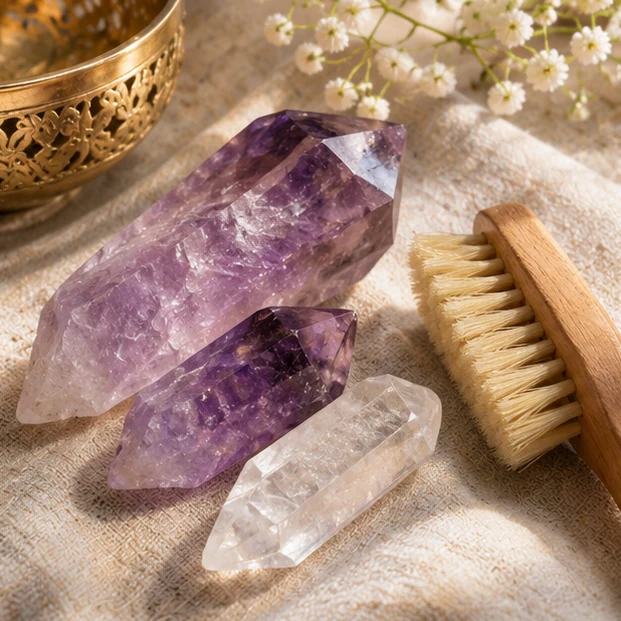
Soft Brush and Dry Cloth — First Step
Original care illustration showing a gentle brush for stable mineral surfaces. Do not abrade loose fibres or fragile crystal terminations.

Selenite Gypsum — Keep Dry
Genuine first-party Selenite tumble photograph. Gypsum is soft and should not be soaked or rubbed vigorously.
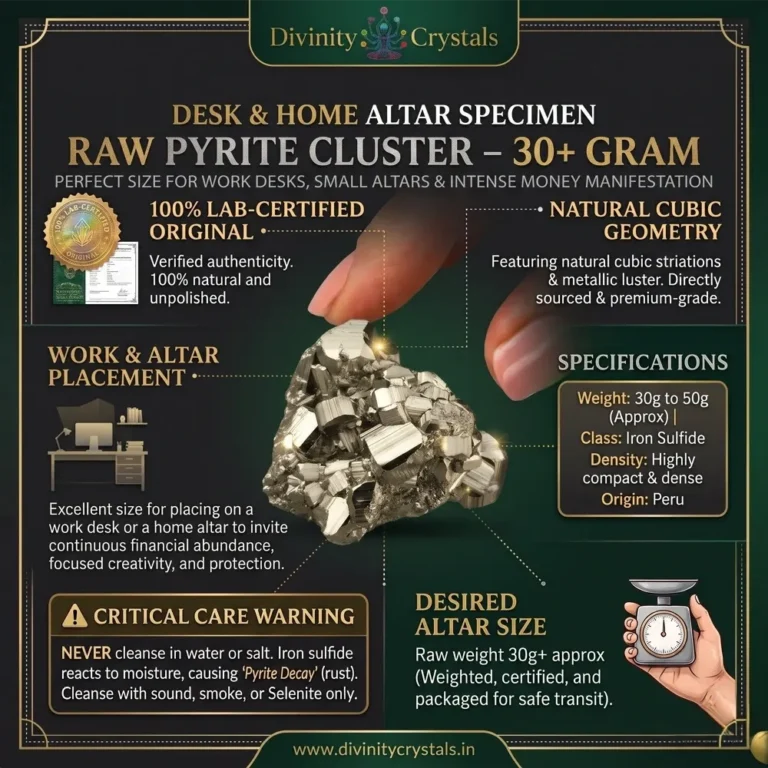
Pyrite — Dry Collector Storage
Actual raw Pyrite cluster photo: avoid water baths and humid storage that can damage susceptible iron-sulfide specimens.

Malachite — Avoid Acids and Dust
Actual polished Malachite photo. Soft copper carbonate mineral; avoid acidic cleaners and any grinding or airborne mineral dust.
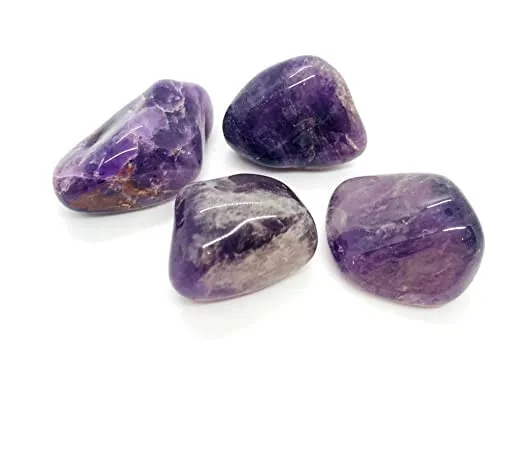
Amethyst — Gentle Quartz Cleaning
Actual first-party Amethyst tumbles. Sound compatible quartz can tolerate gentle warm mild-soapy washing, unlike gypsum or fragile mineral assemblies.
CONSERVATIVE CARE · MINERAL-SPECIFIC
Which Crystals Should Stay Dry?
Water compatibility is a material-and-condition question, not a universal property of all crystals.
Sound suitable untreated stones may tolerate mild soapy water. Check fillings and jewellery first.
Mohs 2; soft, fragile and slightly soluble. Dust gently, never soak.
Humidity can cause oxidation in vulnerable FeS₂ specimens. Keep away from water baths.
Avoid acidic cleaners, abrasion and dust production; soft wiping for stable polished pieces.
Stop if the piece is friable, waxed, glued or repaired; seek product-specific care.
*Not a blanket permission to immerse jewellery or mineral specimens.
Crystal Cleaning Matrix: Material, Risk and Method
| Stone or method | Conservative guidance |
|---|---|
| Always identify first | Read species, matrix, treatments, coatings, repairs, settings and known fragility before deciding how to clean. |
| Unknown or mixed specimens | Avoid immersion, heat, salts and chemicals. Gentle dry dusting only if stable; for friable or valuable pieces ask a conservator. |
| Clear Quartz & Rose Quartz | Sound untreated loose quartz generally tolerates brief warm mild-soap washing, but fissures, pigments and jewellery fittings change suitability. |
| Amethyst | GIA recommends warm soapy water for suitable stones; some Amethyst colours fade with prolonged intense light. |
| Selenite / satin spar (gypsum) | Very soft Mohs 2 material. Dust gently and keep dry rather than soak, scrub or use saltwater. |
| Pyrite | Water baths and elevated humidity can lead to oxidation in susceptible FeS₂ specimens. Store appropriately dry and inspect for powdering. |
| Malachite | Soft Cu₂CO₃(OH)₂ mineral: avoid acids, abrasion, grinding and ingestion. Gently wipe intact polished material. |
| Jewellery beads | Protect elastic, threads, glue, metal findings, dye and filled fractures; the mineral alone does not establish a safe cleaning technique. |
| Symbolic rituals | Moonlight, sound, selenite displays and smoke rituals can be personally meaningful but do not physically remove dirt or disinfect gems. |
| Smoke / indoor air | Smoke creates particles and does not clean crystal surfaces; use a smoke-free ritual where indoor air quality matters. |
| Salt / direct sunlight | Salt baths, sharp grains and repeated intense sunlight can damage some mineral surfaces, dyes, colour stability or settings. |
| Drinking water | Do not soak unknown loose gems or jewellery in water intended for drinking; identification alone does not establish food-contact safety. |
Independent references: GIA Amethyst Care, Canadian Conservation Institute mineral collection care, and Ohio Geological Survey: Gypsum.
CRYSTAL CARE · REAL MINERALS AND GENUINE SAFETY
Identify the Mineral · Choose the Gentle Method · Protect Storage
A practical cleaning decision path for a collection with quartz, gypsum, iron sulfides, copper minerals and jewellery.
PHYSICAL CLEANING IS NOT THE SAME AS SYMBOLIC CLEANSING
Examine the exact piece and its treatments before adding water, heat or chemicals
Identify the Exact Mineral
Confirm whether the stone is quartz, gypsum, Pyrite, Malachite or another material; inspect cracks, coatings, repaired areas and attached fittings.
Unknown or fragile specimen? Do not use a universal water bath.
Use the Gentlest Care
Start with soft dusting on stable pieces. Brief mild washing is only for materials and settings known to tolerate it.
Selenite and Pyrite need extra moisture caution; Malachite dislikes acids.
Dry and Store Properly
Separate minerals, avoid hard knocks and control humidity for susceptible sulfides. Keep sunlight-sensitive Amethyst away from prolonged intense light.
Ritual moonlight or sound does not remove physical dirt.
Compare genuine mineral examples: Clear Quartz · Amethyst · Selenite · Pyrite · Malachite
A Symbolic Cleansing Ritual Is Not a Cleaning Method
Moonlight, meditation, sound and smoke rituals can have personal significance, but they do not remove dirt, polish a stone or disinfect jewellery. The real cleaning method must still follow the mineral’s chemistry and construction.
Choose a stable indoor arrangement without immersing minerals in water, exposing delicate specimens to smoke, using flames near fabrics or allowing moisture to damage stones. A smoke-free reflective practice is suitable for people who prefer cleaner indoor air.
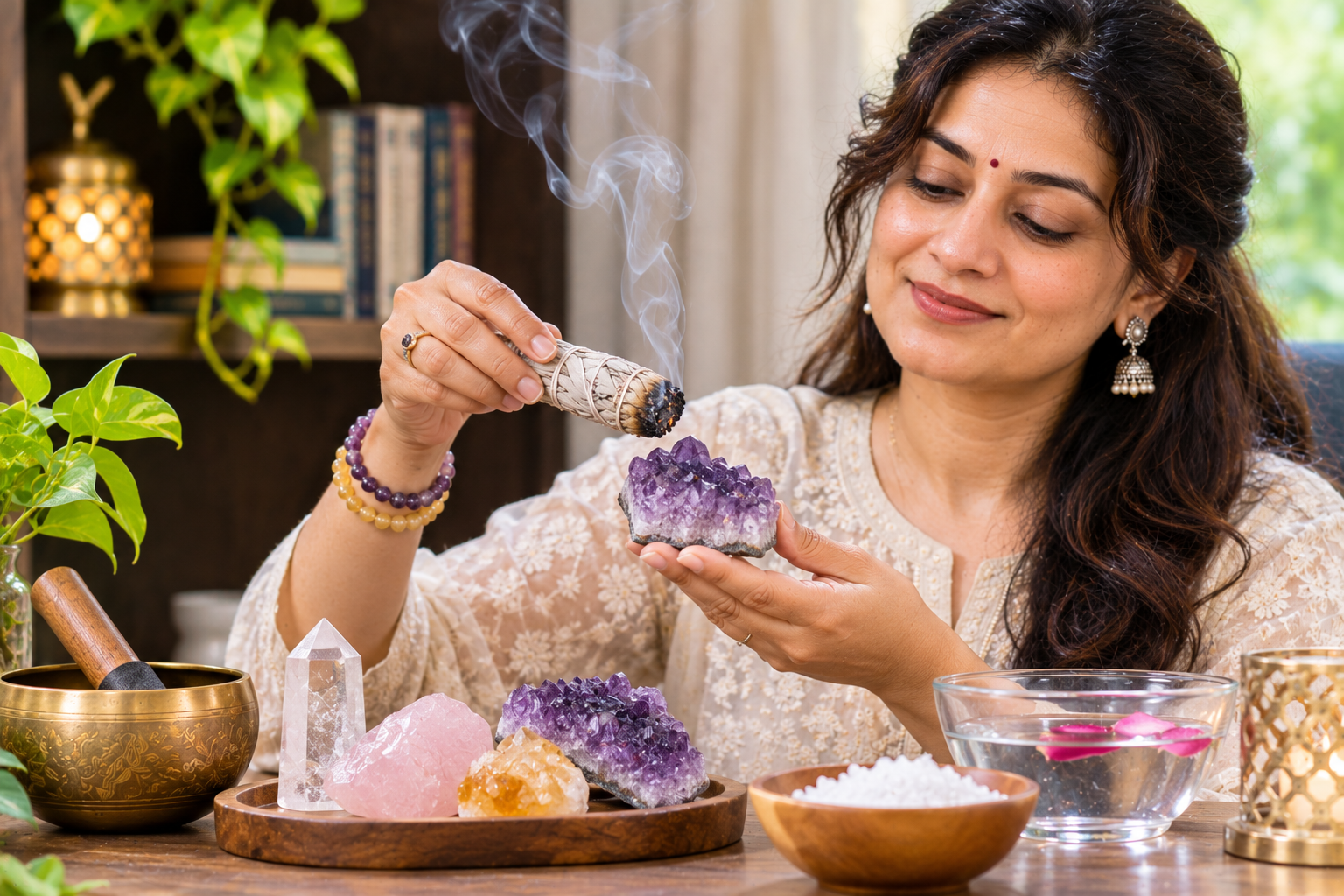
The original Indian lifestyle portrait illustrates a traditional symbolic scene, not a recommendation to smoke-clean or water-clean any particular mineral.
Before Cleaning Any Crystal
- Identify the stone and check for stabilisation, dyes, coatings, glue or metal jewellery findings.
- Inspect for fragile points, loose faces, friable powder, cracks or corroded areas.
- Place stable pieces on a dry, soft, non-abrasive padded surface.
- Use only very gentle dry dusting where the mineral can tolerate it.
- Do not grind, scrape or inhale dust from unknown or powdering minerals.
- For valuable, unstable or unidentified pieces, ask a mineral conservator.
Care Methods to Avoid Universally
- Do not soak every gemstone in water, saltwater or essential oils.
- Avoid harsh acids, bleach, strong solvents and abrasive powders.
- Never use a flame or hot needle to test a real gemstone.
- Do not leave susceptible Pyrite or gypsum exposed to damp storage.
- Protect Amethyst from extended high-intensity sunlight and heat.
- Keep gemstone chips, unknown rocks and jewellery out of drinking water.
Crystal Cleaning vs Spiritual Cleansing: What’s the Difference?
Cleaning means removing physical contaminants such as dust, skin oils or residue. The safest technique depends on mineral composition, porosity, coatings, cracks, treatments, jewellery settings and host rock. A polished single-mineral stone may tolerate procedures that are unsuitable for a fragile cluster of mixed minerals.
Spiritual cleansing or charging refers to rituals involving intention, meditation, selenite, sound, moonlight or smoke. People may find such practices meaningful, but there is no reliable scientific evidence that gemstones absorb emotions, emit curative frequencies or require regular energetic recharging. These rituals do not replace cleaning or safe storage.
How to Clean Crystals Safely: Start with a Dry Brush
For an unidentified or delicate crystal, gently removing loose dust with a clean, very soft brush is a cautious starting point. Work on a padded, dry surface and handle sharp points or fragile clusters by their sturdier base. Use a soft, dry cloth on smooth surfaces when suitable; do not scrape polished faces with gritty material.
- Examine the piece for loose crystals, flaky surfaces, cracks, metal findings or coatings.
- Set it on a soft, dry cloth or stable tray; remove jewellery only when safe to do so.
- Brush gently from stable areas outward without pressing into fragile terminations.
- Keep dust from potentially hazardous or unidentified mineral specimens away from your face. Avoid aggressive brushing of friable samples; seek specialist advice.
- Store the piece separately in an appropriate dry, stable environment.
Can You Clean Crystals with Water?
Sometimes, but not universally. Mineral identity, condition, and setting matter more than social-media “water-safe” lists. For example, the Gemological Institute of America notes that ordinary amethyst jewellery can often be cleaned using warm soapy water, while warning that treatment or jewellery construction may alter cleaning choices. Read GIA’s amethyst care guidance.
Do not assume that a stone is safe to submerge because it is hard, glossy or naturally occurs in wet environments. Fracture fillings, dyed coatings, adhesives and mixed-mineral matrix may all react differently.
Mineral-by-mineral care guide
Clear quartz, rose quartz and amethyst
Conservative care: Soft dry cloth or brush; some sound untreated pieces can tolerate brief gentle washing, followed by thorough drying
Why: Quartz is comparatively durable, but fractures, treatments and jewellery components change the risk
Selenite (gypsum)
Conservative care: Keep dry; use very gentle dusting without rubbing fragile fibres or surfaces
Why: Soft mineral (Mohs 2), easily scratched and susceptible to water damage
Pyrite
Conservative care: Keep dry and avoid humid storage; seek specialist help for deteriorating specimens
Why: Some pyrite oxidises in moisture and can develop powdery decay
Malachite
Conservative care: Soft dry cloth first; avoid acidic cleaners, abrasive methods and creating dust
Why: Copper carbonate mineral that can be damaged by unsuitable cleaners; mineral dust should not be inhaled
Unknown, treated or mixed-mineral specimen
Conservative care: Dry dusting only if stable; otherwise consult a specialist
Why: The safest treatment cannot be inferred from a trade name alone
For valuable, fragile or unusual pieces, follow the instructions of the seller or an appropriate conservator. Never place loose crystals into drinking water or use unknown minerals to make gemstone-infused water.
Why Selenite Should Be Kept Dry
“Selenite” in mineral shops often refers to a clear or fibrous variety of gypsum, a calcium sulfate mineral. Gypsum is comparatively soft (Mohs hardness 2), can be scratched with ease, and is not suitable for soaking. Mindat’s gypsum mineral record provides the mineral identity and hardness information.
Some people rest other stones on a selenite slab as part of a symbolic cleansing routine. That is fine as a personal display, but the selenite is not a proven charger. Avoid placing heavy or sharp stones where they might gouge its surface. Keep both the slab and its surroundings dry.
If you like selenite as a decorative mineral, see the Selenite Tumbled Stones listing, and check the item’s actual dimensions and care notes.
Selenite gypsum is soft; avoid soaking.
Pyrite, Malachite and Other Sensitive Minerals: Common Mistakes
Moisture and pyrite deterioration
Pyrite is iron sulfide (FeS₂). High relative humidity can cause some specimens to oxidise, leading to structural deterioration and potentially acidic by-products. The Canadian Conservation Institute’s natural-history collection guidance explains this risk. The reaction is not necessarily instant “rust,” and different specimens vary in stability.
Keep pyrite in a dry environment rather than soaking it for spiritual cleansing. If a specimen develops powdery, crumbly surfaces, isolate it from other mineral pieces and consult a conservator instead of rinsing it.
Malachite and mineral dust
Malachite is a copper carbonate hydroxide mineral. Do not use acids, harsh household cleaners, hot water, abrasive polishing or flame tests. Avoid inhaling dust generated by cutting, grinding or scraping; simply getting a polished malachite stone wet does not create “toxic copper fumes,” as some online guides claim. For jewellery and polished pieces, use the care instructions supplied for the exact item.
Salt baths and direct sunlight
Salt crystals can accumulate in porous textures and crevices, and water and salt can harm certain minerals, adhesives and metal components. Avoid saltwater baths as a universal treatment. Strong sunlight and heat can also affect some gemstone colours: GIA warns that amethyst may fade after prolonged exposure to intense light. See GIA’s care and stability notes.
Keep moisture-sensitive specimens in separate dry storage.
Moonlight Crystal Cleansing: A Low-Contact Ritual
Some crystal enthusiasts like placing stones indoors near a window under moonlight as a symbolic reflection ritual. This can be a gentle low-contact ritual when the stones remain on a clean, stable tray and away from condensation, sudden temperature changes and direct daytime sunlight.
Moonlight is not demonstrated to recharge or purify crystals, and leaving stones outside overnight is not risk-free: dew, rain, pets, falling debris and theft are practical concerns. A windowsill may also be unsafe if it becomes hot in daytime or has condensation. There is no scientific requirement to use a full moon or leave a crystal out for a set number of hours.
An indoor moonlight display avoids outdoor moisture and weather.
What About Sage, Palo Santo and Smoke Cleansing?
Smoke-based rituals are culturally significant in a variety of traditions, and some people use them with crystals as a personal symbolic practice. However, smoke does not remove mineral dust or safely disinfect jewellery, and the origin and meaning of a particular traditional practice should not be generalised or misrepresented.
Burning incense and similar materials can add fine particles and other combustion pollutants to indoor air. The US Environmental Protection Agency’s indoor particulate guidance recommends good ventilation when burning incense and candles. A smoke-free ritual—such as arranging stones, journaling or quiet reflection—is an alternative when smoke is unsuitable.
For readers who choose smoke-based traditions, Divinity Crystals lists California White Sage Smudge Sticks; treat their use as a cultural or personal practice, with proper fire safety and ventilation rather than a guaranteed cleansing technique.
How Often Should You Clean Your Crystals?
There is no universal schedule. A frequently handled bracelet may need more cleaning than a protected display specimen. Dust a collection when you notice visible buildup, inspect jewellery after use, and reassess storage conditions when humidity or sunlight could cause deterioration. There is no evidence that crystals become “energetically full” after a set number of days.
Shop, Learn and Compare Crystal Care Materials
Browse the Smudging & Cleansing collection for ritual items, or our Pyrite Guide for storage and identification tips. For a broader spiritual discussion, see the Cleansing and Charging Crystals article. Treat these topics as complementary: this page focuses primarily on mineral-safe physical care.
Frequently Asked Questions
What are the safest crystal cleansing methods?
For physical cleaning, identify the stone first and choose the least invasive compatible method, generally soft dry dusting for stable pieces. For symbolism, a no-contact arrangement or reflection can be used without risking the mineral.
Is crystal cleaning different from spiritual cleansing?
Yes. Physical cleaning removes dust, oils and residue. Spiritual cleansing is a personal cultural practice involving intention, moonlight or other rituals; it is not a proven mineral-cleaning or medical process.
Can I clean every crystal with running water?
No. Material, finish, fractures, adhesives and jewellery construction determine whether water contact is appropriate. Selenite and vulnerable Pyrite should generally be kept dry.
Can Amethyst be washed with soapy water?
GIA recommends warm soapy water for suitable Amethyst gems, while caution is needed for certain treatments, damage or jewellery settings. Avoid strong light exposure for susceptible pieces.
How do I clean Selenite without damage?
On sound pieces, gently dust with a soft dry cloth or suitable soft brush, avoiding pressure on fragile fibres. Do not soak or scrub.
Can water damage Pyrite?
High humidity can contribute to oxidation in susceptible specimens. A water bath is not a recommended universal care method for iron sulfide.
What is Pyrite disease?
A colloquial mineral-conservation term for oxidation-related deterioration that can cause swelling, cracking, powdering or corrosion products in vulnerable Pyrite specimens.
How should I clean Malachite?
Use a clean soft cloth on intact polished surfaces. Avoid acids, abrasive rubbing, grinding, steam or ultrasonic cleaning; coatings and jewellery elements may require extra care.
Is Malachite safe to touch?
Normal handling of an intact polished Malachite object differs from inhaling mineral dust or ingesting material. Avoid grinding, dust creation and drinking-water infusions.
Should I use rock salt or saltwater on crystals?
Avoid using salt baths as a universal practice. Salt grains and saltwater can damage some minerals, porous surfaces, adhesives and metals.
Can sound or singing bowls clean crystal jewellery?
Sound can form part of a personal ritual but does not remove physical contaminants or disinfect a gemstone. Protect fragile specimens from vibration or impact.
Can I use steam or an ultrasonic cleaner on all crystals?
No. Many gems, treated materials, porous minerals and fragile jewellery can be damaged. Use only an appropriate method verified for the exact material and setting.
How often should crystals be cleaned?
Clean based on dust, wear, handling and material condition; there is no scientifically required weekly or monthly energetic-charging schedule.
Can stones be kept directly in drinking water?
Avoid placing untested minerals, chips and jewellery into drinking water. Stone identification does not establish cleanliness, treatment safety or food-contact suitability.
Can I wash a double-layered crystal bracelet?
The thread, elastic, knots and any dye, coatings or metal components may be damaged even when the stone itself tolerates brief moisture. Follow the exact product’s instructions.
What should I do with a crumbling mineral specimen?
Avoid brushing or washing friable material. Isolate it safely from adjacent pieces and consult a qualified mineral conservator if the specimen is important.
Care for the Mineral You Actually Own
Protecting crystal beauty starts with correct identification, the condition of the exact piece and the gentlest material-compatible method. Clear Quartz, delicate Selenite, potentially moisture-sensitive Pyrite and softer Malachite require different procedures. Careful storage and honest gemstone descriptions matter more than blanket cleansing rules.
Enjoy symbolic rituals as personal practices, separate from physical cleaning and scientific gemstone testing.