

Divinity Crystals · Forgiveness, Amethyst & Thoughtful Living
Forgiveness is often described as letting go of anger, but real relationships are rarely that simple. You might be coping with harsh words, a broken promise, betrayal, or regret over your own behaviour. The important first step is not to declare that everything is fine. It is to recognise what happened and decide what response is healthy and appropriate for you.
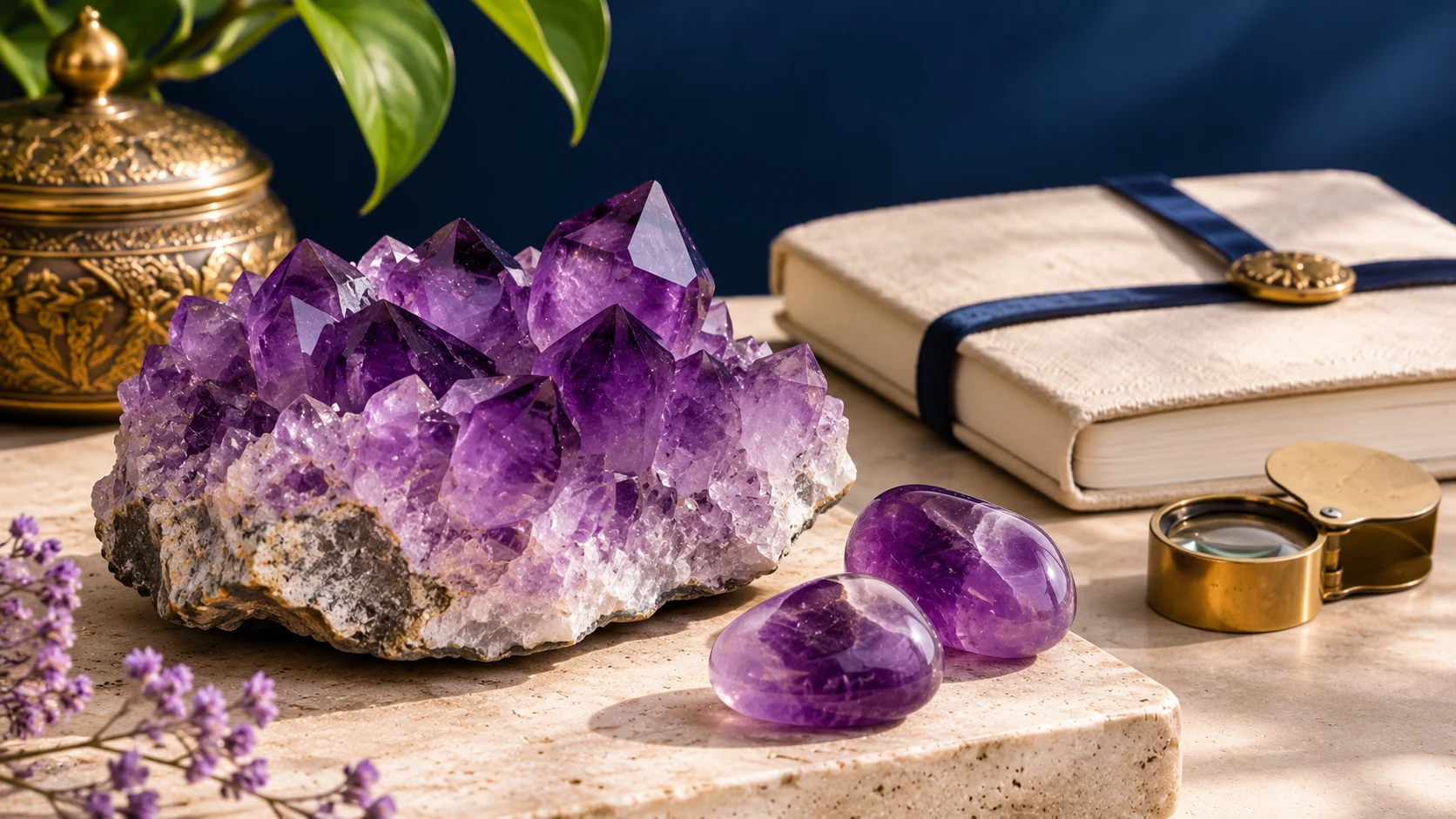
Amethyst, the violet variety of quartz, has long been valued for its beauty and is associated with clarity and contemplation in modern crystal traditions. We can enjoy it as a symbolic companion while remembering that no crystal erases emotional harm, guarantees reconciliation, or changes another person’s decisions.
This guide brings together a practical reflection exercise, Amethyst’s actual mineral properties, five photographs from relevant Divinity Crystals product listings, and useful care advice. The original Indian lifestyle portrait is editorial artwork, while the product gallery represents merchandise formats available through our site.
If you prefer a physical reminder, consider a small Amethyst tumblestone on a desk. You can also complete the same reflection with a notebook alone.
Six principles for a meaningful reflection
- Forgiveness can be a personal decision, not an obligation imposed on someone who was hurt.
- It does not require forgetting, excusing harmful actions or restoring a relationship.
- Reconciliation, trust and safety are separate questions that deserve careful consideration.
- Amethyst is purple quartz, not a verified medical or psychological treatment.
- Use a stone as an optional visual reminder; focus on actions and boundaries.
- Choose the actual product form and care method that suit your needs.
What forgiveness really means—and what it does not
People use the word forgiveness in several ways. Some mean no longer wishing for retaliation; others mean accepting that the event occurred while gradually allowing their feelings to change. It is possible to seek accountability or maintain distance while exploring forgiveness on your own terms. The process is neither a timer nor a test of someone’s goodness.
Forgiveness is not the same as permission
Deciding to stop carrying a particular resentment is not a statement that the other person’s behaviour was acceptable. A harmed person may still need restitution, legal remedies, personal safety or a permanent boundary. No spiritual advice should be used to pressure them to reconnect.
Reconciliation requires more
Rebuilding a relationship generally involves trust, mutual willingness, changed behaviour and a realistic assessment of safety. Even a sincere apology does not entitle the person offering it to forgiveness, renewed contact or an immediate return to normal.
For someone working through their own mistake, reflection is more constructive when it names the action and its impact, recognises the other person’s autonomy, and identifies a genuine change. For someone who was harmed, it can be more constructive to begin with support and boundaries before deciding whether forgiveness has a place at all.
Why people associate purple Amethyst with inner reflection
Amethyst’s violet colour, glassy lustre and naturally angular crystal points give it a distinctive character. In modern crystal practices, those visual qualities are often connected with calm, thoughtful decision-making and crown-chakra symbolism. Such associations can make a gemstone meaningful to someone who enjoys meditation or journaling. They do not prove that the stone alters emotions, prevents anxiety, changes karma or guarantees better relationships.
The older phrase “spiritual transmutation” is best understood here as a personal metaphor: we can turn painful reflection into a better next choice. A crystal may mark that intention, but changes in behaviour, perspective and support are made by people—not by a measurable force emitted by quartz.
You might place a piece in a dish near a journal as a reminder to be fair to yourself and others. You might also skip the stone entirely. Either way, your boundaries, choices and care for other people remain the important parts of the practice.
Amethyst at a glance: the actual mineral
Violet quartz · SiO₂
Amethyst is a purple variety of crystalline quartz, not a different mineral species. Its colour is associated with trace iron and colour centres. The shade may range from pale lavender to deep violet, sometimes with visible zoning or banding.
Mohs hardness near 7
It is harder than minerals such as Howlite or gypsum but can still chip if dropped or struck. Avoid unnecessary heat and prolonged intense sunlight, which can affect colour in some specimens.
Colour zones and patterns
Individual crystals can show uneven violet tones, clear quartz zones and natural inclusions. A uniform deep colour is not an automatic guarantee of grade, origin or authenticity.
Forms and treatments vary
Amethyst can be sold as tumblestones, bracelets, raw chunks and clusters. Ask what is included, how it is treated, and whether any certificate applies to the exact item rather than relying on promotional labels alone.
Our Amethyst gemstone guide and crystal identification guide provide additional background. Labels such as “high vibration” describe marketing or spiritual language, not a laboratory measurement of authenticity.
Five Amethyst product photographs from our collection
These five images link to published Divinity Crystals products. Different formats serve different display and jewellery needs; none is a promise of a spiritual, medical or financial result.
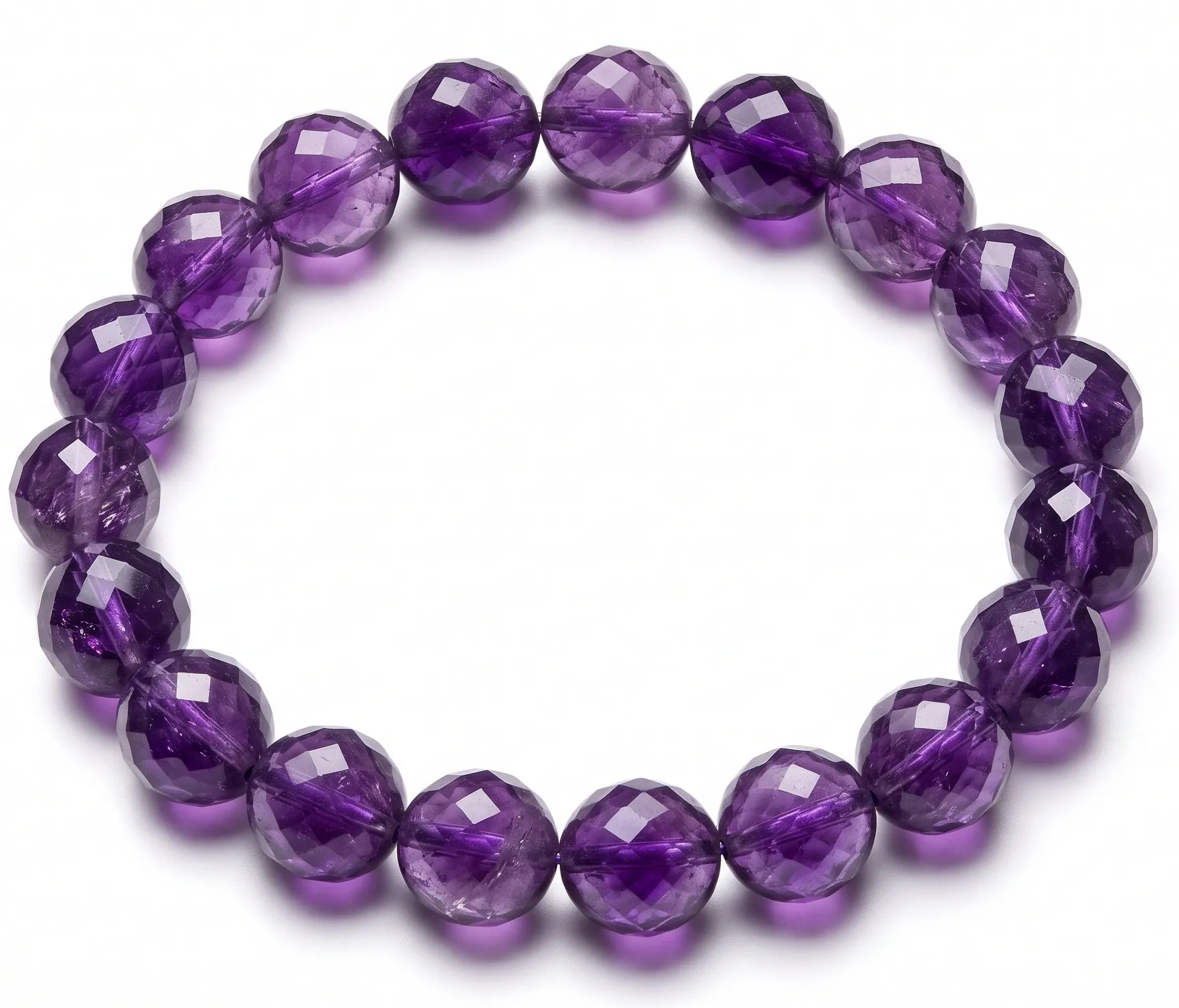
Amethyst Diamond-Cut Bracelet
A polished faceted-bead bracelet. See the listing for stated bead size, fit and material details.
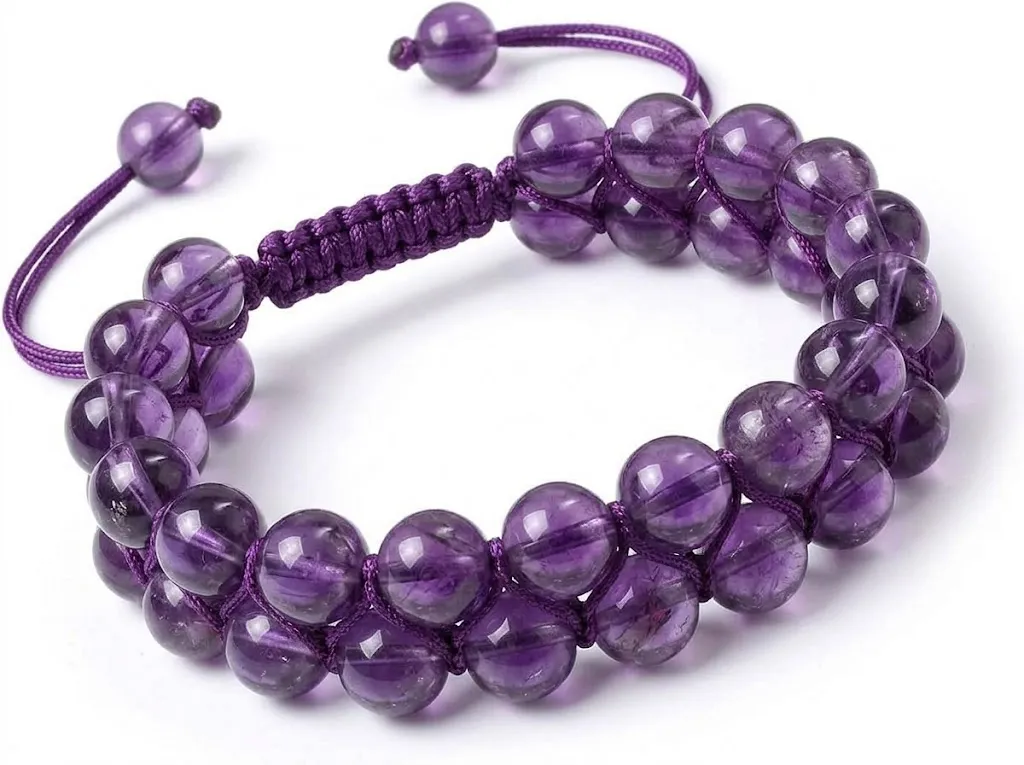
Double-Layered Amethyst Bracelet
A separate double-layered bracelet format with purple thread; confirm the exact construction and bead count.
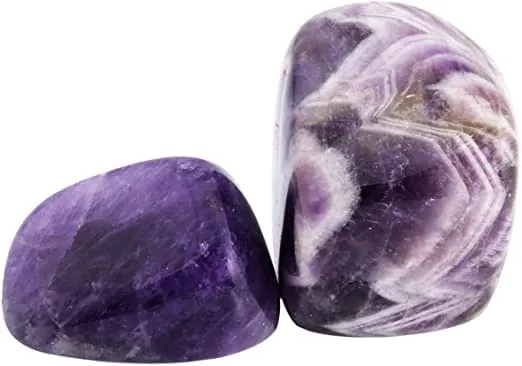
Polished Amethyst Tumblestones
Smooth purple-and-light-banded quartz tumblestones shown in the published listing, suitable for a contained desk display.
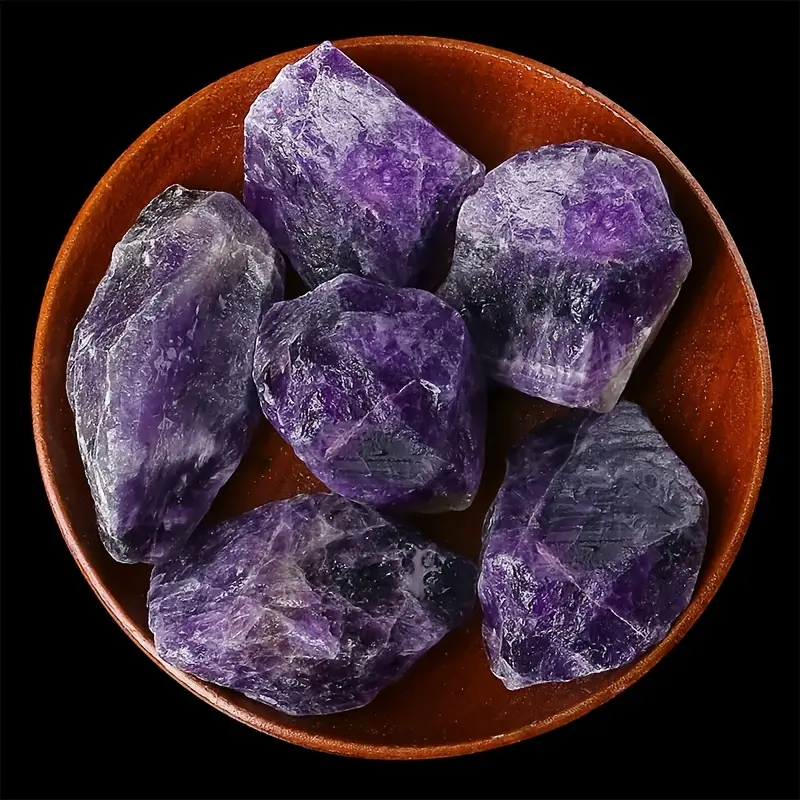
Natural Raw Amethyst Chunks
Rough purple quartz pieces showing irregular surfaces and natural variation.
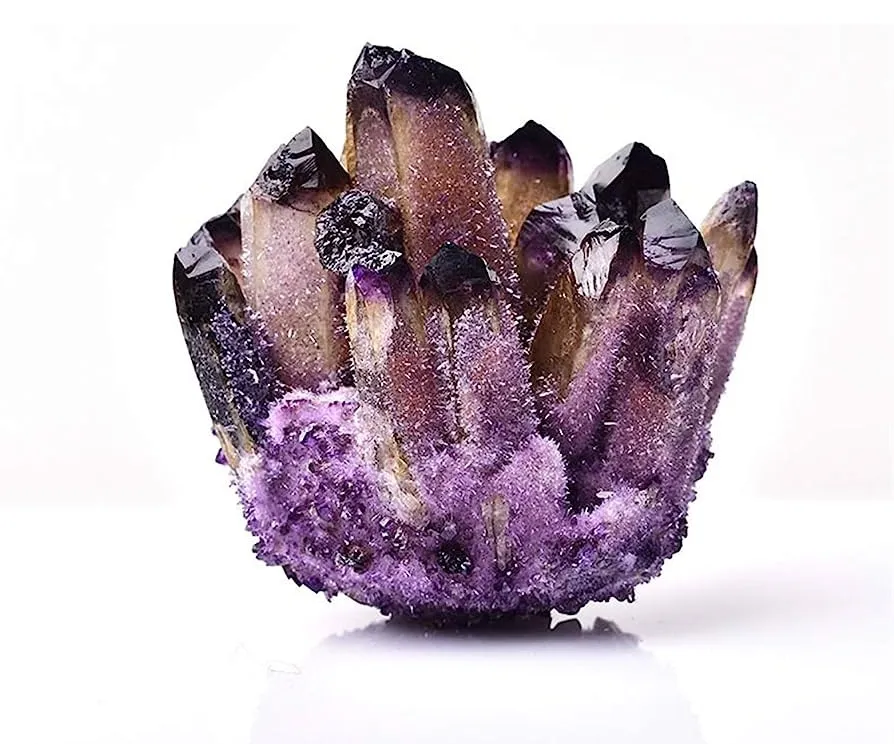
Amethyst Phantom Cluster
A pointed purple quartz cluster gallery photograph. Check the individual listing for documentation and dimensions.
How to choose an Amethyst format for your space or routine
| Physical form | Practical use | What to check before choosing |
|---|---|---|
| Polished tumble | Small object for a desk, tray, journal corner or carefully supervised personal handling. | Actual number of stones, dimensions, surface finish and photo/variant description. |
| Faceted bracelet | Wearable gemstone jewellery with a more noticeable faceted surface. | Actual bead diameter, wrist fit, stringing and whether the photographed bead shape matches the listing. |
| Double-layered bracelet | Distinctive two-row jewellery design. | Bead count, thread, wrist dimensions and the exact product construction. |
| Raw Amethyst chunks | Natural-looking dry decorative display or mineral study. | Approximate weight, rough edges, size range and whether it can be securely supported. |
| Crystal cluster | Stationary shelf or table display of multiple quartz points. | Specimen photos, weight, point condition, any relevant paperwork and a stable base. |
We want you to buy a clearly described gemstone, not an implied promise of an emotional outcome. A smooth tumble may be more comfortable beside a notebook than a pointed cluster. A bracelet may suit someone who prefers wearable jewellery, while a raw specimen can be a better choice for observing natural crystal shapes.
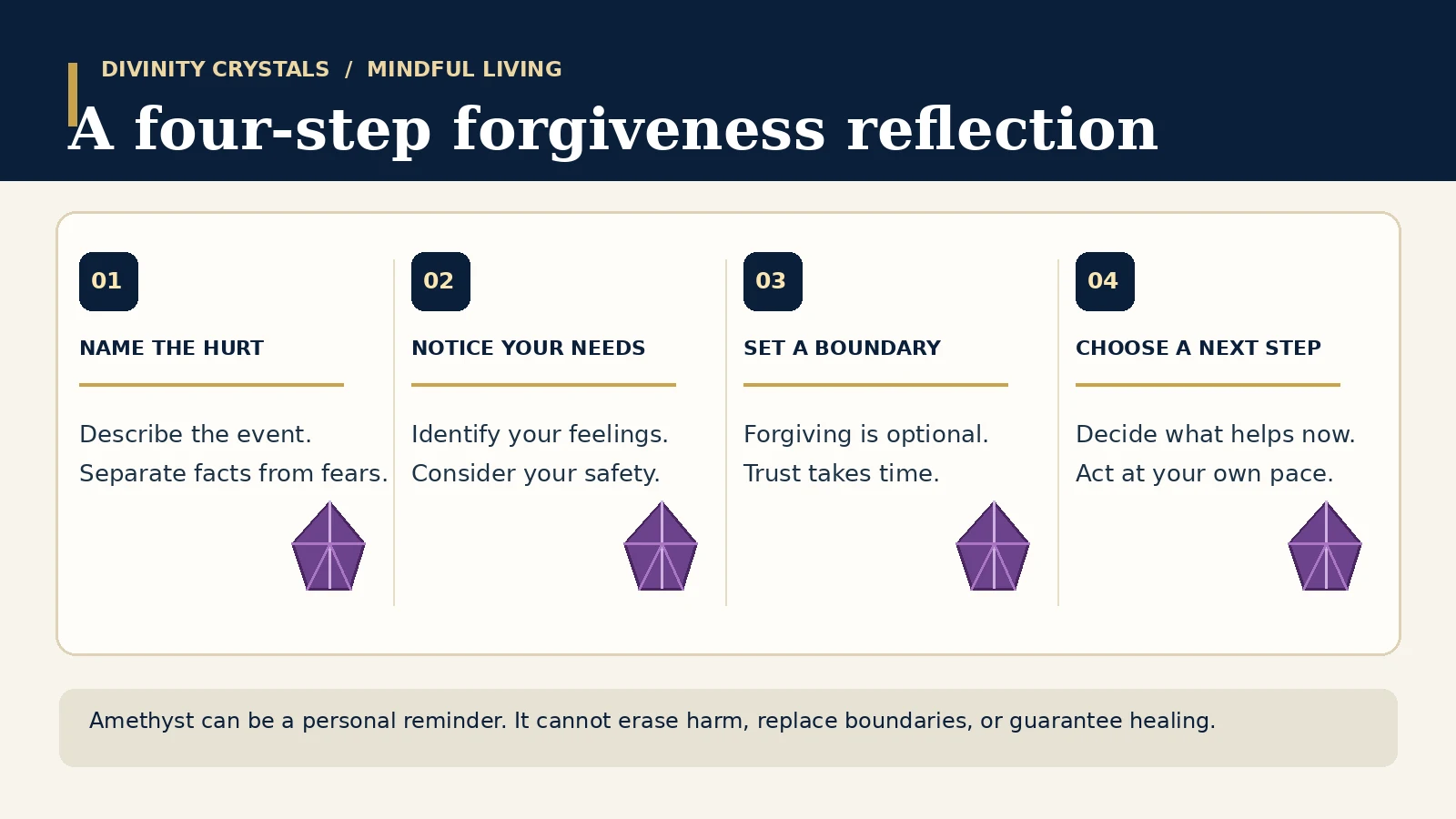
A gentle four-step forgiveness reflection with or without Amethyst
Allow a few minutes when you feel ready. You may place an Amethyst tumble on the table as a reminder to proceed thoughtfully, but it is not required. Do not force yourself to revisit a traumatic event. You can stop, rest or seek support at any point.
Acknowledge what occurred
Name the specific event, what you know, and what you are assuming. A journal can help separate the two.
Recognise what you feel
Anger, sadness, grief, embarrassment and uncertainty can coexist. You do not have to dismiss a feeling to move forward.
Choose your boundaries
Decide what contact, distance, apology, restitution or support is appropriate. Forgiveness does not require renewed trust.
Pick one realistic action
Consider a conversation, a safe change in routine, a private note or a request for support. You can also choose to do nothing immediately.
Four situations that call for different responses
When someone has hurt you
You may choose to forgive privately while maintaining firm boundaries. You can still seek accountability, repayment, support or protection. There is no obligation to resume contact or reconcile.
When you have hurt another person
A meaningful apology describes the act and its impact without demanding quick forgiveness. Offer a practical repair if appropriate, respect the other person’s response and change the relevant behaviour.
When you cannot contact the person
Sometimes contact is unsafe, unwanted, impossible or would reopen harm. A private reflection and changed conduct can be more respectful than approaching someone who has asked for distance.
When forgiveness does not feel possible
You can begin with stability, boundaries, support and an understanding of what happened. Choosing not to forgive immediately does not make you spiritually deficient.
A thoughtful response sometimes means a conversation, sometimes means more distance, and sometimes means seeking outside guidance. Any spiritual symbolism should support—not replace—your own judgement about safety and wellbeing.
Forgiveness is not a test of spiritual worth
Being upset after mistreatment does not mean that your aura is impure, that negative karma is trapped in your body, or that you have failed a spiritual obligation. Religious traditions differ in how they understand karma, intention and compassion, and these concepts should not be simplified into physical forces that a crystal is claimed to remove.
If discussing or remembering harm brings overwhelming distress, it is reasonable to stop and seek a trusted person’s or qualified professional’s support. If someone uses “forgiveness” to discourage boundaries or silence a safety concern, that advice deserves to be questioned. A beautiful Amethyst stone cannot substitute for protection, accountability or care.
How to identify Amethyst responsibly
Amethyst is typically purple or lavender quartz, often showing variation in colour and clarity. Glass and other purple stones can look superficially similar, especially in small photographs. A deep colour or a high price does not by itself establish the material, treatment or geographic origin.
| What you see | Useful interpretation | Limit of visual assessment |
|---|---|---|
| Purple colour, sometimes zoned | Consistent with Amethyst-like quartz appearance. | Not proof of mineral identity or untreated status. |
| Distinct crystal points or clusters | A natural growth form may be visible. | Not proof of exact origin or a laboratory result. |
| Smooth tumbled stones | Surface has been physically polished. | Does not establish whether colour has been enhanced. |
| Beads and threaded jewellery | Construction and bead size can be inspected. | Photographs alone cannot prove composition of every bead. |
If material identity, treatment or certification is important to your purchase, request specific documentation relevant to the exact stone or parcel. Avoid home acid, flame and destructive scratch tests. A gemologist can assess a specimen when the question warrants professional verification.
Gentle Amethyst cleaning and long-term care
Polished tumblestones
Start with a soft dry cloth. If compatible with the exact stone and its treatment, a lightly damp cloth can remove ordinary dirt. Dry it afterward. Avoid harsh household chemicals, extreme heat and abrasive cleaning.
Bracelets and jewellery
Keep elastic, thread, adhesives and metal components in mind. Remove jewellery before household cleaning, rough activity or prolonged wetting. Store it away from sharper or harder objects.
Raw chunks and clusters
Place clusters on a secure base so points do not snap or scratch surfaces. Dust gently with a soft dry brush. Handle large or sharp pieces with care and keep loose fragments away from children and pets.
Light, heat and storage
Prolonged strong sunlight or heat can affect Amethyst’s purple colour in some cases. Keep it away from hot windowsills, sudden temperature changes and locations where it can fall.
In crystal traditions, phrases such as “charging” or “cleansing energy” refer to symbolic practice; they are not mineral cleaning procedures. Our safe crystal cleaning guide explains the difference between gentle physical care and optional rituals.
Making a small practice useful rather than performative
You might keep a smooth Amethyst tumble in a shallow bowl near a journal. When a difficult memory comes up, a visible object can prompt you to name a feeling and ask what you need. The stone does not need to touch your body, be activated or be placed under bedding. A few clear sentences may be more useful than an elaborate ceremony.
A bracelet may serve as an ordinary reminder during the day, but it should not become a measure of whether you are “healed” or worthy of happiness. If wearing jewellery is uncomfortable, leave it aside. If you enjoy a mineral cluster instead, choose a stable shelf and appreciate its natural quartz points without attributing medical effects to them.
The most meaningful outcome is often something small and concrete: a clearer boundary, a sincere acknowledgement, an apology offered without pressure, or the decision to seek support. You can honour spiritual symbolism and still distinguish it from claims that require scientific evidence.
Frequently asked questions about Amethyst and forgiveness
Common questions about the crystal, realistic reflection and responsible gemstone ownership.
Can Amethyst make someone forgive me?
No. A mineral cannot change another person’s choices or guarantee their forgiveness. An apology, accountability and respect for boundaries are more relevant.
Can I use Amethyst as part of a reflective practice?
Yes, if you enjoy it. A small Amethyst tumble or bracelet can be a tactile or visual reminder to pause and reflect, but the practice does not depend on owning a stone.
Does forgiveness mean forgetting what happened?
No. Some people choose to forgive while remembering events, learning from them and maintaining boundaries.
Does forgiveness require reconciliation?
No. Reconciliation involves relationship decisions, trust, safety and often participation by both people. It should never be forced.
What is Amethyst made of?
Amethyst is the violet variety of quartz, primarily silicon dioxide (SiO₂). Its colour relates to trace iron and natural or artificial irradiation-related colour centres.
Are all purple stones Amethyst?
No. Glass, dyed materials and other minerals can be purple. Appearance alone is insufficient for definitive identification when authenticity is material to a purchase.
How should I clean an Amethyst tumble?
Use a soft dry or slightly damp cloth if the piece is suitable, then dry carefully. Avoid harsh chemicals, extreme heat and unverified treatment assumptions.
Can Amethyst fade in sunlight?
Some Amethyst can lose colour with prolonged, intense exposure to sunlight or heat. Store it away from prolonged direct sun when preservation of colour matters.
Do I need a crystal to practise forgiveness?
No. You can reflect, seek help, establish boundaries or make amends without buying or using a crystal.
What if remembering the event is overwhelming?
If reflection brings intense distress, stop, use grounding strategies that feel safe and consider support from a qualified mental-health professional. You are not required to confront the memory alone.
Final perspective: make room for a thoughtful next step
Amethyst is a beautiful purple variety of quartz. Its colours, natural forms and traditional associations can give a personal reflection corner meaning, but it cannot reverse a harmful event, require forgiveness from someone else, or guarantee emotional recovery.
For those who enjoy symbolic objects, a genuine, well-described Amethyst stone can sit beside a practical plan: recognise what happened, protect necessary boundaries, and choose one respectful action. At Divinity Crystals, we want the purchase to be clear and useful, with relevant product photographs and straightforward mineral care—not exaggerated promises.