

The Divinity Journal · Firoza and jewellery craftsmanship
From loose turquoise cabochon to thoughtfully made jewellery
Irani Firoza (Persian turquoise) has a distinctive character: blue to green colour, individual matrix patterns and a softer surface than many traditional jewellery gemstones. A beautiful ring or pendant begins with the actual stone—not just a photograph, carat weight or ready-made mounting.
Learn how to plan a protective setting, measure an oval cabochon, care for turquoise and compare the individual stones offered by Divinity Crystals.
Illustrations explain styling ideas; a loose gemstone purchase does not include a finished ring or pendant unless its listing says so.

Five things to know before setting Firoza
- Always request the stone’s length, width and depth in millimetres.
- Carat weight measures mass, not the mounting dimensions.
- A protective bezel or rim can help shield a turquoise ring’s edges.
- Protect turquoise from impacts, heat, chemicals, steam and ultrasonic cleaning.
- Match an individual gemstone to its correct report; disclose what the report does and does not verify.
1. Measure the actual cabochon before ordering jewellery
Most oval Firoza cabochons have a curved polished face and a flatter or shaped reverse. Their dimensions vary even at the same carat weight. Ask the jeweller to inspect the stone and measure length × width × depth (mm), dome height, edge thickness and the back of the stone.
For an irregular outline or prominent matrix, the jeweller should plan the setting around that individual shape. When a laboratory report leaves dimensions blank, do not infer them from a weight range or digital mockup.
| Measurement | Why it matters |
|---|---|
| Length and width | Determine the setting’s footprint and how much of the stone is visible. |
| Depth / dome | Help the jeweller judge bezel height, ring profile and clearance. |
| Edge and base | Reveal how securely the stone can sit without excessive pressure. |
| Carat weight | Documents mass; useful for product comparison but not a substitute for measurements. |
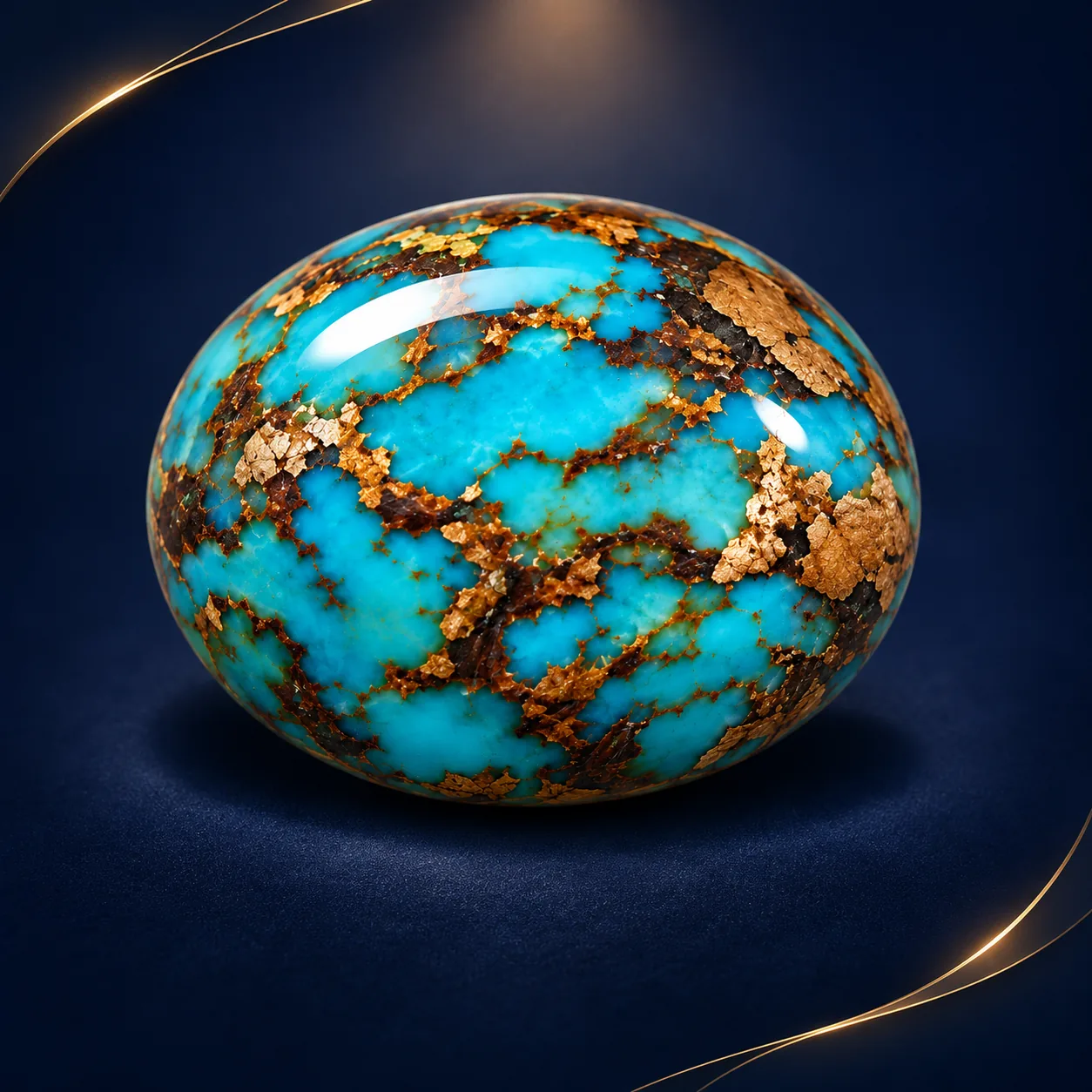
2. Choosing a protective Firoza ring setting

Turquoise typically measures about 5–6 on the Mohs hardness scale, so it deserves thoughtful protection in a ring. A well-designed bezel or metal rim may help guard its edge against ordinary contact. A jeweller should also assess how the dome sits above the finger and whether the stone has any existing weaknesses.
- Daily wear: favour a lower profile, protective edge and removal before cleaning, gym work or hard manual activity.
- Occasional wear: a more prominent dome can be visually striking, but impact risk still matters.
- Metalwork: solder and finish the metal without exposing mounted turquoise to direct heat or harsh chemicals.
- Final fitting: test security without putting undue pressure on the cabochon.
The ring pictured in a design reference is an idea, not proof that any particular stone fits a standard ready-made mount.
3. Designing a turquoise pendant
Pendants are often a practical way to showcase a larger oval cabochon without the same day-to-day impact exposure as a ring. For a custom pendant, review the stone’s actual outline and depth, the surrounding metal frame, bail opening, chain strength, total finished weight and how the piece will hang when worn.
If the cabochon has a dramatic colour distribution or visible matrix, choose the orientation only after examining the front and back of the actual stone. A jeweller can advise on a secure setting and any necessary backing.
What is included with the order?
Our individual Firoza listings must determine this. A loose cabochon does not automatically include a silver setting, chain, pendant bail or completed ring. Check the exact product description before purchase.
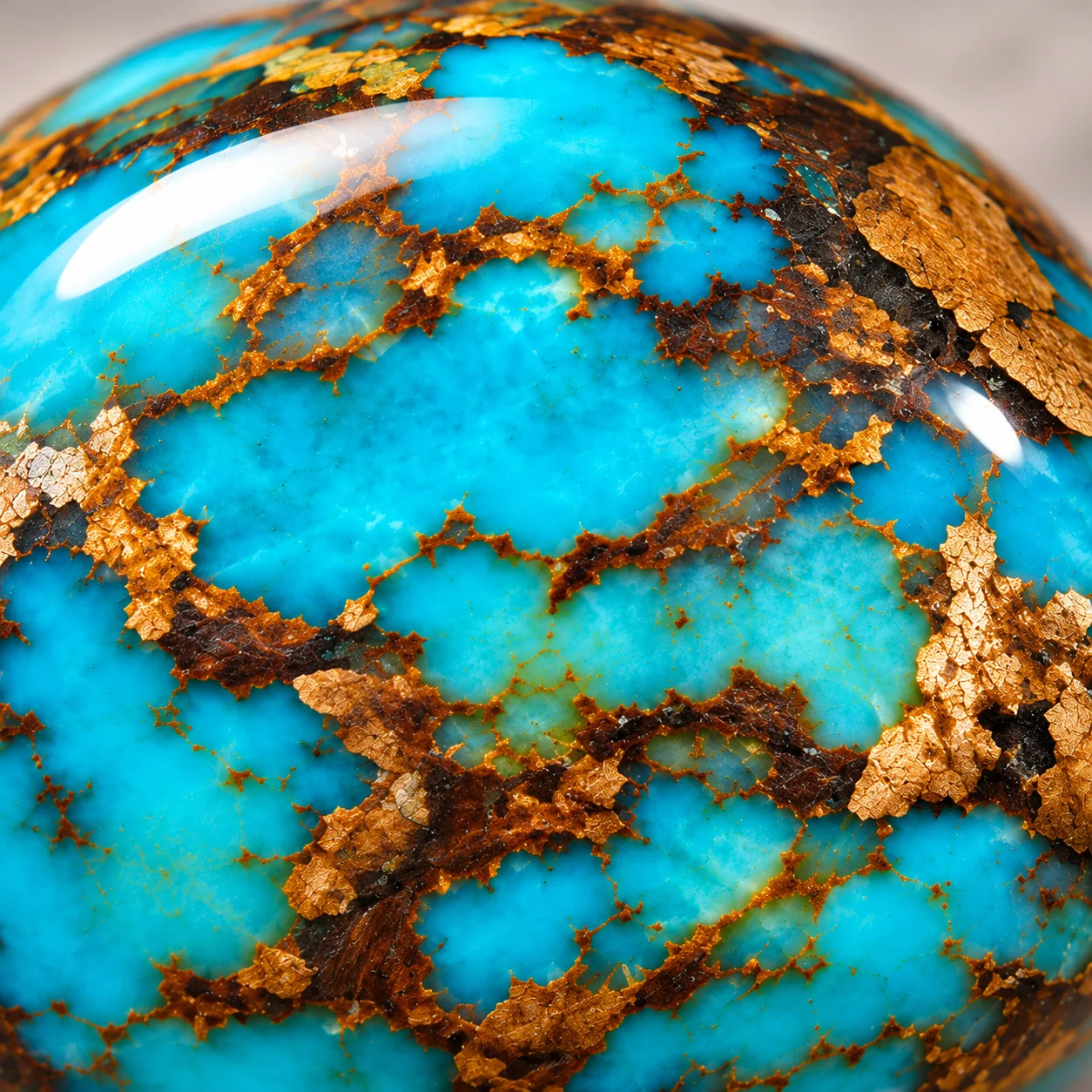
4. How to clean, store and protect Firoza
Wipe gently
Use a clean, soft, dry cloth to remove fingerprints and skin oils. If the stone needs more cleaning, follow the jeweller’s advice for its known treatment.
Remove before exposure
Take it off before detergents, cosmetics, perfumes, pools, exercise or work that may strike or scratch the stone.
Keep it separate
Use a soft pouch or lined compartment and keep turquoise away from harder stones, direct heat and strong sunlight.
Never steam-clean or ultrasonically clean turquoise
Heat, oils and chemicals can affect porous or treated turquoise. Avoid saltwater soaking, solvent tests, hot-needle experiments and abrasive scrubbing. For a valuable or unknown-treatment stone, consult a qualified jeweller before using moisture or cleaning products.
Explore five genuine Divinity Crystals catalogue listings
These photographs and presentations link to actual store listings for different Firoza formats and individual stones. Some product presentations are digitally styled; review the listing’s actual stone photographs, weight and certificate before ordering. A mounting is not included unless stated.
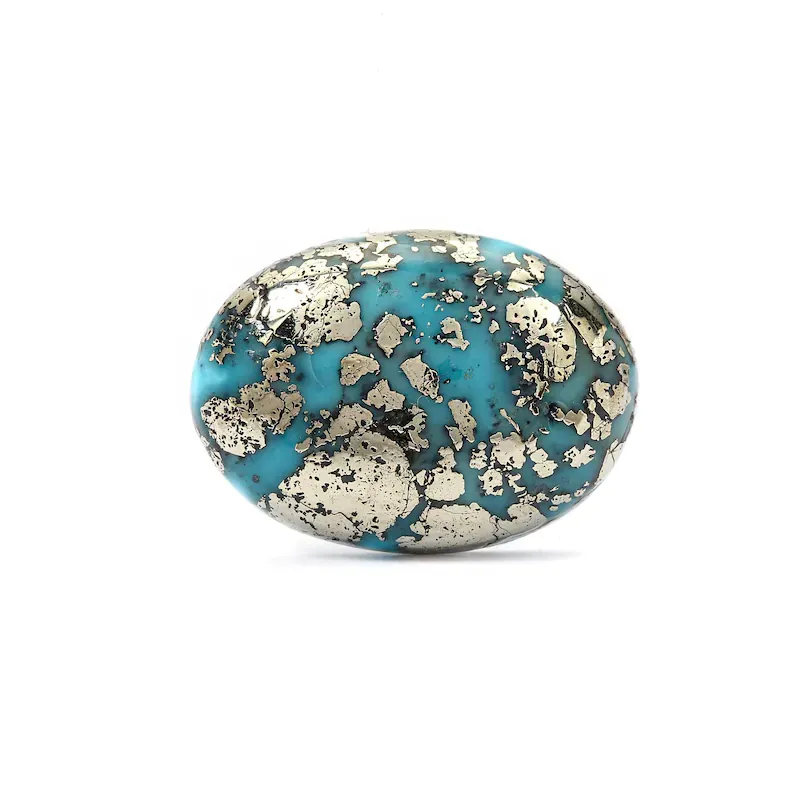
Ring-size collection
Compare the individual stone and suitability for a protective ring setting.
View gemstone listing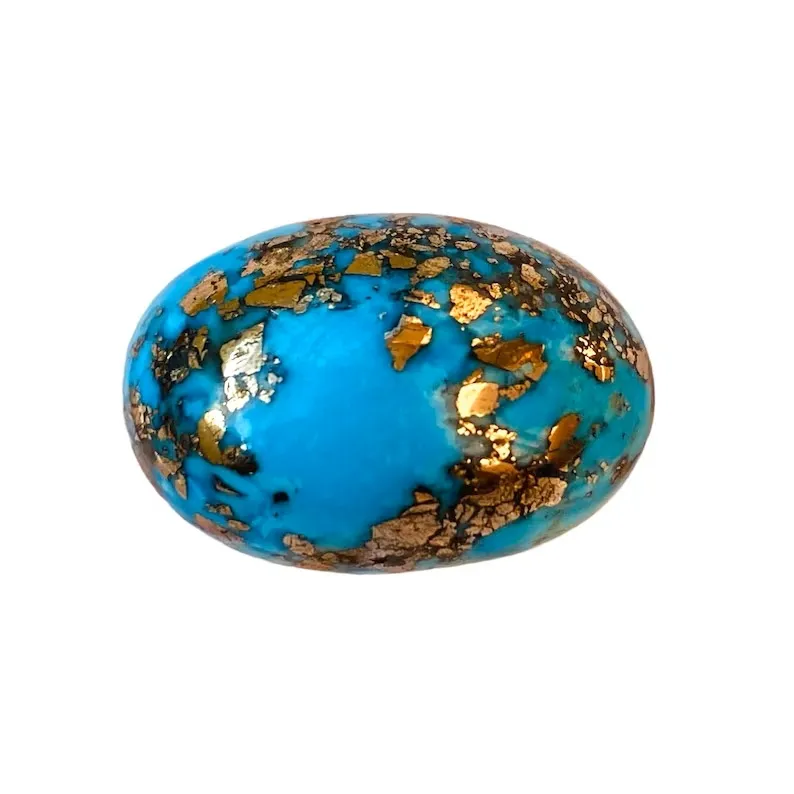
Pendant and ring cabochons
Larger loose cabochons in the 16–30 carat collection; final fit depends on measured dimensions.
View gemstone listing
Larger cabochon formats
Explore 30–48 carat selections and confirm weight, mounting requirements and availability.
View gemstone listing
12.12 carat individual listing
Review the individual identification report and actual gemstone evidence; this image is an illustrative presentation.
View gemstone listing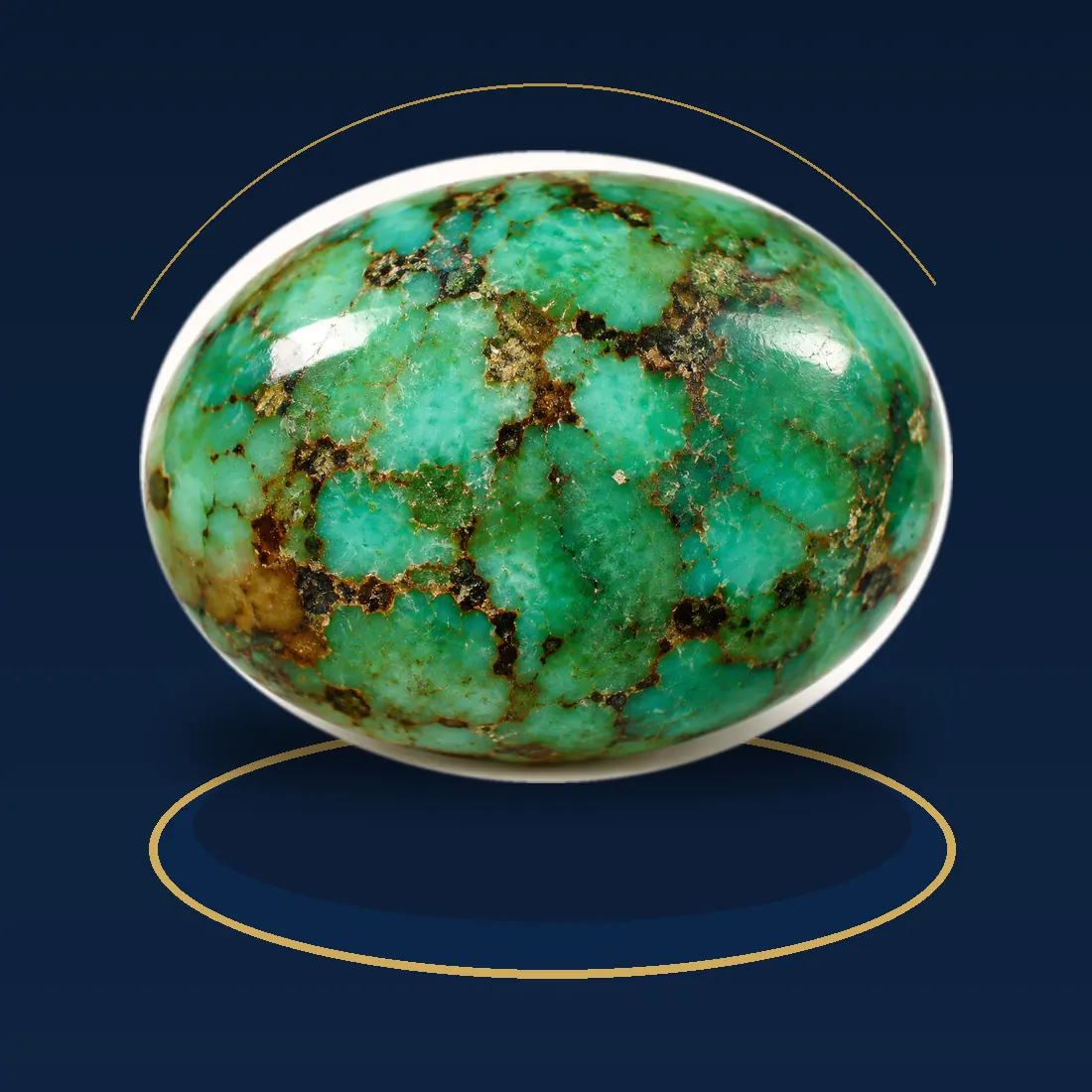
Greenish Hussaini · 6.88 ct
A certificate-linked individual stone; assess its exact report and photographs before choosing a setting.
View gemstone listing5. Colour, matrix and treatment disclosure
Natural turquoise ranges from blue through greenish colours and may show matrix. However, a turquoise-like appearance or golden-looking veins alone cannot prove geographic origin, natural condition or authenticity. Some stones may be stabilized, impregnated, dyed or otherwise treated.
Read the individual identification report for the wording it actually confirms. A report that identifies a sample as natural turquoise does not necessarily document every possible treatment, exact mining location or suitability for a setting. If a detail is absent, request clarification rather than assuming.
Do not attempt scratch tests, harsh solvents or heated-needle experiments on a finished stone; these can permanently damage the surface.
6. The five-step custom-setting checklist
- Select the individual cabochon and check its availability, weight and product identifier.
- Review the relevant laboratory report and compare the photographed stone to the listing.
- Request dimensions and angles—front, side and reverse—before paying for a custom mount.
- Discuss protective setting design, metal selection, bail or band specifications with the jeweller.
- Confirm the delivered components, quoted jewellery-making cost, delivery timeline and applicable returns policy.
Find your individual Irani Firoza cabochon
Explore our current selection and compare the documentation and actual product details before planning your bespoke ring or pendant. Divinity Crystals sells the individual gemstone described on the product page; finished jewellery must be expressly included to form part of an order.
Explore the Irani Firoza collectionFrequently asked questions
Can a jeweller choose a setting based only on carat weight?
No. Carat describes weight, while length, width, depth, dome and edge profile determine the physical fit.
Is a bezel always required for turquoise?
No single design works for every stone or wearer, but a carefully fitted protective bezel can be useful for vulnerable edges. A jeweller should inspect the exact cabochon.
Can I clean Firoza using an ultrasonic cleaner?
No. Steam and ultrasonic cleaning are not recommended for turquoise.
Is a turquoise pendant safer to wear than a ring?
A pendant typically faces fewer direct impacts than a daily-use ring, but it still needs suitable mounting and protection from heat, cosmetics and chemicals.
Does a laboratory certificate confirm the stone is untreated?
Only if the report expressly evaluates and states that point. Read the issued report and ask about anything not covered.
Does a loose Firoza stone come with a ring or chain?
Not unless the exact product listing explicitly includes those components.
Educational gemstone and jewellery guidance, not a guarantee of treatment, origin, astrological effects or individual suitability. Product-specific descriptions and identification reports take precedence.