

Firoza at a glance
- Mineral: turquoise; natural examples may appear blue or greenish.
- Traditional themes: protection, harmony, hope and personal meaning.
- Planetary associations: Jupiter or Venus in some interpretations; not universally agreed.
- Rashi: no single sign-based recommendation applies across all schools.
- Gemology: a lab can examine identity and some treatments—not planetary influence.
- Practical buying: check the exact stone, measurements, report and what the listing includes.
1. What does Firoza traditionally symbolise?
In Persian-influenced and South Asian jewellery traditions, Firoza is often cherished as a gem associated with auspiciousness, protection, peace, goodwill and heartfelt gifting. These meanings can be important as cultural heritage or a personal reminder of an intention.
The significance of a turquoise ring or pendant may come from family custom, faith, craftsmanship or aesthetic preference. These traditions do not demonstrate that turquoise medically treats anxiety, prevents accidents or changes a person’s fortune.
Tradition versus evidence
A gemstone may carry personal or religious meaning without producing measurable health, financial or astrological effects. No outcome—wealth, marriage, confidence, protection or recovery—should be guaranteed because of a stone.

2. Is Firoza associated with Jupiter (Guru) or Venus (Shukra)?
Jupiter · Guru / Brihaspati
Some advisers associate Firoza with Jupiter, interpreting it as a symbolic companion to wisdom, learning, generosity and considered judgement. This association is tradition-specific, not a mineralogical property.
It does not mean that wearing turquoise strengthens Jupiter as a scientifically established phenomenon or guarantees education, career or financial results.
Venus · Shukra
Other practices connect turquoise with Venus, focusing on beauty, affection, elegance and relationship harmony. Such interpretations differ by community, lineage and practitioner.
These ideas can inform a symbolic jewellery choice but do not guarantee love, marriage, prosperity or improved relationships.
There is no universally accepted Jupiter-versus-Venus rule for turquoise across all gemstone and astrological traditions.
3. Which rashi can wear Firoza stone?
Questions about Dhanu (Sagittarius), Meena (Pisces), Vrishabha (Taurus) and Tula (Libra) often arise because different advisers connect the stone with Jupiter or Venus. These are examples of differing traditional interpretations, not a universal list of approved or prohibited zodiac signs.
| Common question | Balanced guidance |
|---|---|
| Can Dhanu or Meena rashi wear Firoza? | Some Jupiter-oriented traditions may discuss these signs. No universal rule or proven benefit follows. |
| Can Vrishabha or Tula rashi wear Firoza? | Some Venus-oriented interpretations may discuss these signs; customs are not uniform. |
| Can other rashis wear turquoise? | There is no gemological reason to restrict jewellery by zodiac sign. Personal astrological practice may differ. |
| Do I need a birth chart? | Only if you choose to follow a particular astrological adviser’s tradition; it is not needed for an ordinary jewellery purchase. |
Anyone choosing turquoise as jewellery should prioritise authentic identification, treatment information, durability, comfort and design. A personal horoscope cannot replace product due diligence.
4. Traditional day, finger and metal: why answers differ
Some Jupiter-based customs mention Thursday and yellow-toned metal; Venus-based practices may mention Friday, white metal or silver. Finger selection and ritual instructions also vary. No single chart should be treated as universally binding.
If these customs matter to you, consult an adviser from the tradition you actually follow. If your priority is elegant jewellery, choose the ring size, metal allergy compatibility, protective stone setting and intended wearing frequency first.
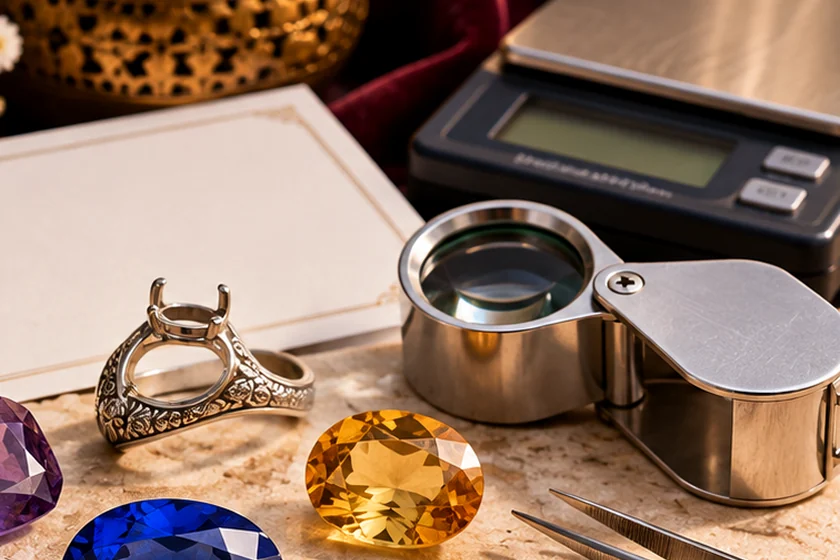
Turquoise is relatively soft—typically around Mohs 5–6. A qualified jeweller should inspect the individual cabochon before selecting a suitable mount.
5. Can Firoza bring luck, wealth, peace or protection?
Personal significance
A treasured gemstone can remind someone of values, family traditions or aspirations. Its symbolism is personal rather than clinical evidence.
Avoid medical promises
Turquoise jewellery has no demonstrated ability to cure illness, remove anxiety, prevent injury or replace medical care.
No guaranteed results
No gemstone is established to cause promotions, business profit, marriage, fertility or relationship success.
6. Choose a documented Firoza stone, not an unsupported claim
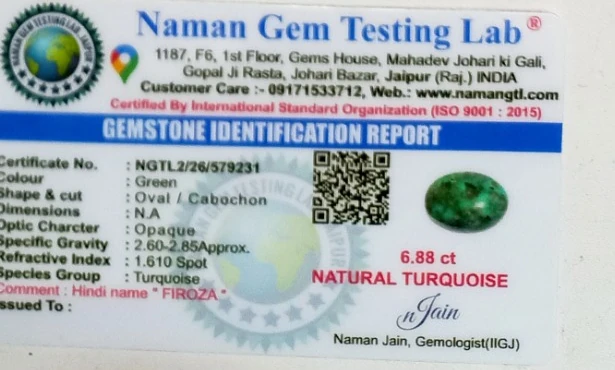
For a loose Firoza cabochon, inspect the individual stone and its identification document. Report terminology matters: an identification report may confirm mineral species while leaving treatment, geographic origin or measurements unspecified.
- Match the report number to the individual product.
- Review actual front, side and reverse stone images where available.
- Check carat weight and obtain precise millimetre dimensions for mounting.
- Ask what any treatment assessment explicitly covers.
- Confirm whether your order contains a loose stone or finished jewellery.
A digitally styled image can illustrate presentation but is not a substitute for an actual stone photograph or complete report.
Explore the Divinity Crystals Irani Firoza collection
Five existing store listings illustrate blue and greenish turquoise choices. Individual descriptions, report evidence and current availability take precedence over general astrology information. Digitally styled previews are illustrations, not exact specimen documentation.
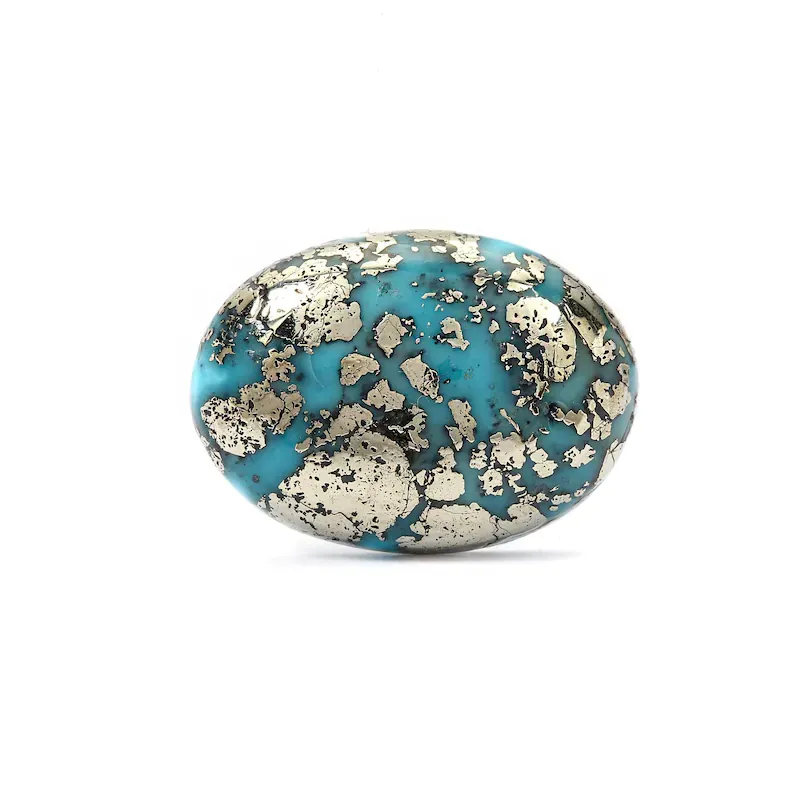
Blue Firoza for ring selection
6–16 carat loose cabochon range; check individual available stones and measurements.
View stone listing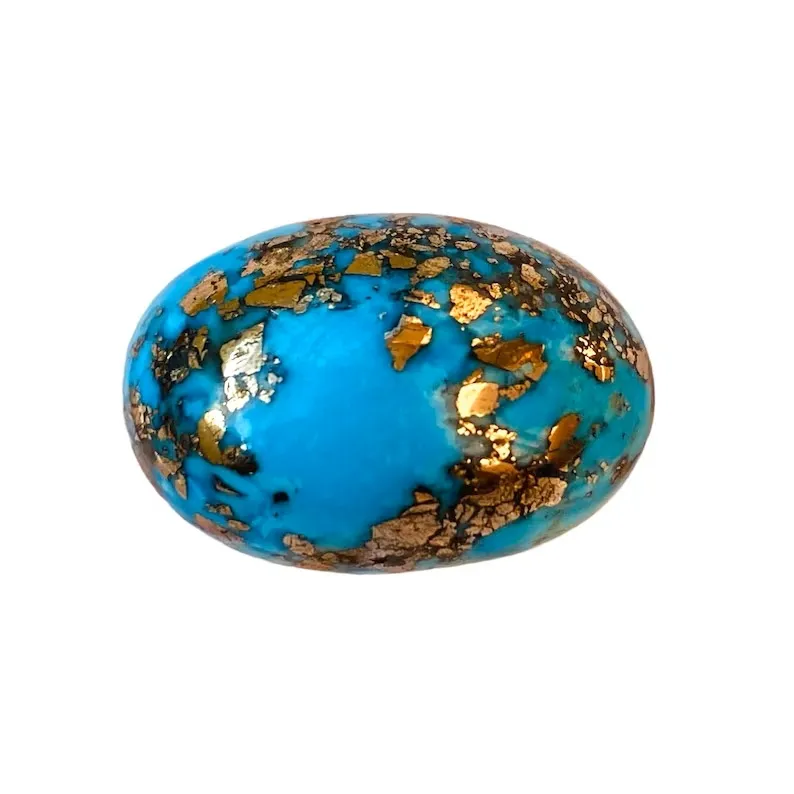
Firoza for pendant or ring
Explore 16–30 carat loose stones; mounting and chain are not automatically included.
View stone listing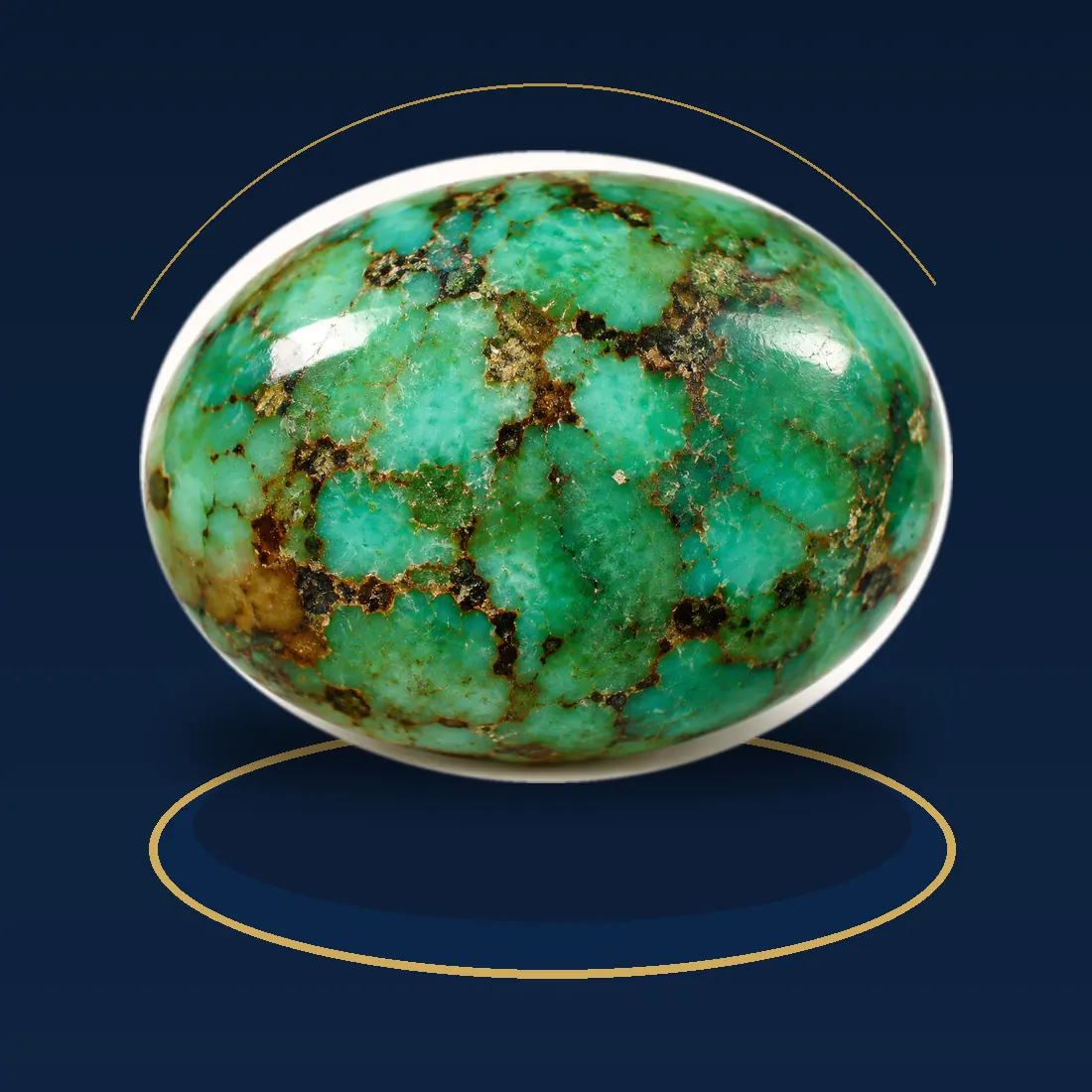
Greenish Hussaini Firoza · 6.88 ct
Individual NGTL-linked listing; preview is digitally styled, so inspect the stone and report.
View stone listing
Larger Firoza cabochons
Compare the 30–48 carat collection for jewellery planning; size and stock vary.
View stone listing7. Everyday Firoza wearing and care
Turquoise can be sensitive to heat, oils, cosmetic products and harsh chemicals. Avoid steam and ultrasonic cleaning. Wipe gently with a soft cloth and store separately from harder jewellery. Remove rings before impact-prone work, bathing, swimming or cleaning.
For a custom ring or pendant, a jeweller should measure the actual loose cabochon and assess protective setting design. Read our detailed Firoza care and jewellery-setting guide before planning a bespoke piece.
Choose Firoza for its beauty, craftsmanship and meaningful heritage
Explore the available Divinity Crystals loose cabochons, compare stone-specific reports and select a piece that speaks to your personal tradition or style—without unverified guarantees.
Browse Irani Firoza gemstonesFrequently asked questions about Firoza and astrology
Which planet is associated with Firoza stone?
Some traditions connect turquoise with Jupiter (Guru); others associate it with Venus (Shukra). There is no universally agreed rule or scientific planetary effect.
Which rashi should wear Firoza?
Different practitioners may discuss Dhanu, Meena, Vrishabha or Tula depending on their tradition. There is no scientific zodiac requirement for wearing turquoise jewellery.
Should Firoza be worn on Thursday or Friday?
Thursday appears in some Jupiter-associated practices and Friday in some Venus-associated practices. Follow your own tradition if relevant; these days do not establish gemstone efficacy.
Can Firoza protect against negative energy or accidents?
Protection symbolism is part of some cultures, but no reliable scientific evidence demonstrates such protective powers. Do not rely on jewellery for personal safety.
Is a Firoza gemstone certificate proof of astrological benefits?
No. A gemological report addresses material identification and potentially specified treatments, not luck, planetary effects or personal outcomes.
Does a Firoza purchase include a ready-to-wear ring?
Not unless the specific product description explicitly includes finished jewellery. Loose cabochons require a separate mounting process.
Educational content discussing cultural and astrological traditions. No medical, financial or planetary outcomes are promised. Actual gemstone listings and laboratory reports govern the individual items sold.