

How to check whether Firoza is original
The safest way to buy natural Firoza is to understand precisely what is being offered. Genuine mineral turquoise, treated turquoise, dyed look-alikes and artificial imitations are not interchangeable. Colour, matrix patterns and a cool touch do not authenticate a gemstone.
- Look for an individual report tied to the actual stone.
- Read the report’s exact words about identity and treatments.
- Check real front, side and back photographs.
- Never perform damaging home tests on valuable stones.
1. Natural turquoise versus dyed imitations
Turquoise is a mineral, not simply a shade of blue or green. Real mineral turquoise is distinct from a plastic or resin imitation and from materials such as dyed howlite or magnesite sold to resemble it. Buyers should not infer mineral identity from a colour photograph alone.
Inspect whether a report identifies the stone as turquoise, how the sample was described, and whether the pictured gemstone appears to correspond to the stone supplied. The report number should be associated with that specific product; an unrelated or generic certificate is not individual evidence.
Dyed howlite, magnesite, plastic and other substitutes can look convincing in online photos. A supposed spiderweb matrix is not decisive proof—compare actual specimen details and laboratory identification rather than assuming a particular pattern means genuine Persian turquoise.
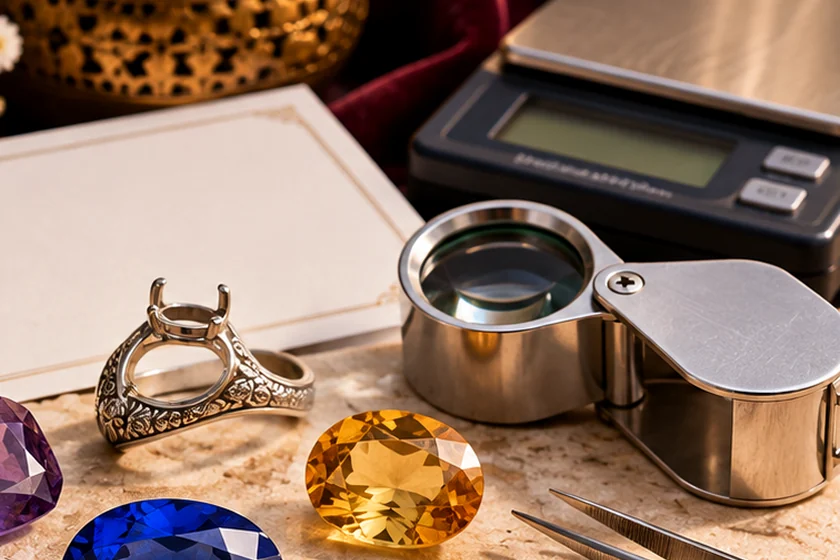
2. What natural, stabilized and untreated actually mean
Stabilization, resin or polymer impregnation, waxing and dyeing may be applied to various kinds of turquoise. Some treatments can affect colour, surface feel and durability. A certificate that says Natural Turquoise may establish mineral identity without stating whether treatment was observed or ruled out. Do not infer “untreated” from silence.
For a buyer who specifically wants untreated turquoise, request an explicit, treatment-aware laboratory assessment. Treatment evidence requires appropriate testing and cannot be determined reliably from a staged photo.
Important distinction
Natural turquoise names the mineral. Untreated turquoise requires separate support when the treatment question matters. The absence of a treatment statement is not proof that none exists.
3. Why scratch, flame and solvent tests are unsafe
They are not appropriate for a valuable customer gemstone. Scratch tests can permanently mar polished cabochons; heat and chemical exposure can damage natural turquoise and alter treated surfaces. Acetone or other solvent spot tests can create harm without establishing an item’s full identity or provenance.
Cool touch, porosity, shine, and spiderweb-style matrix are observations, not proof of natural untreated turquoise. A visually convincing fake can share some of these features. A professional gem-testing laboratory offers a safer approach than home damage tests.
Do not damage the gemstone to test it
Home scratch, hot-needle, burning and chemical experiments can harm natural turquoise as well as imitations. No destructive shortcut replaces material analysis by a qualified laboratory.
Photographs may help identify obvious discrepancies, but appearance alone cannot prove precise origin, identity or treatment.
4. Read an individual Firoza identification report
- Match the report number shown on the listing to the paper or image supplied with that stone.
- Compare mineral identity: turquoise rather than “turquoise-coloured” or dyed substitute material.
- Confirm the weight, cut and colour against the specific product record.
- Read whether the report actually addresses treatments and geographic origin; mark missing topics as unconfirmed.
- Check real front, back and profile photos. Where the online report photo is very small, request clearer specimen images and jeweller measurements.
Key reminder: the number, photographed gemstone and recorded weight must correspond to the specific stone you intend to purchase.
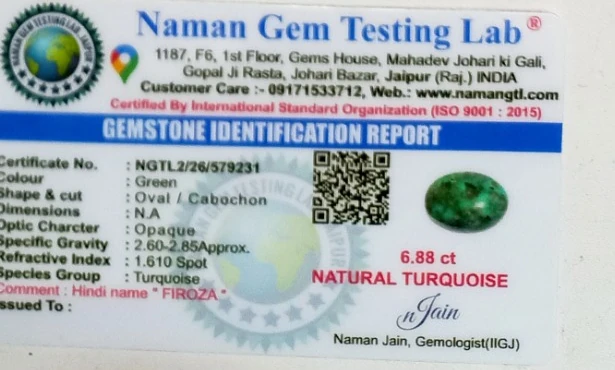
5. What the green Hussaini Firoza reports do—and do not—establish
The supplied photographed Naman Gem Testing Lab identification cards state natural turquoise, green, oval/cabochon, opaque, and an individual weight and report number. Their dimensions field reads N.A. The reports we inspected do not independently state “Nishapur-origin”, “Iranian mine origin” or “untreated”. Divinity Crystals presents the collection’s Iranian sourcing separately from the lab findings.
See the Irani Firoza stones and individual reports or the wider gemstone authentication guide.
For example, report NGTL2/26/579231 records a 6.88 ct green turquoise cabochon; it does not show millimetre dimensions. Compare the exact report with the related 6.88 ct Firoza product listing. A certificate should never be used as blanket proof for another gemstone.
Firoza stones with individual listing details
These are real Divinity Crystals catalogue links. Some product images are digitally styled illustrations: rely on the original stone photographs and identification reports when judging an individual specimen. No certificate should be assumed to apply to a different stone.
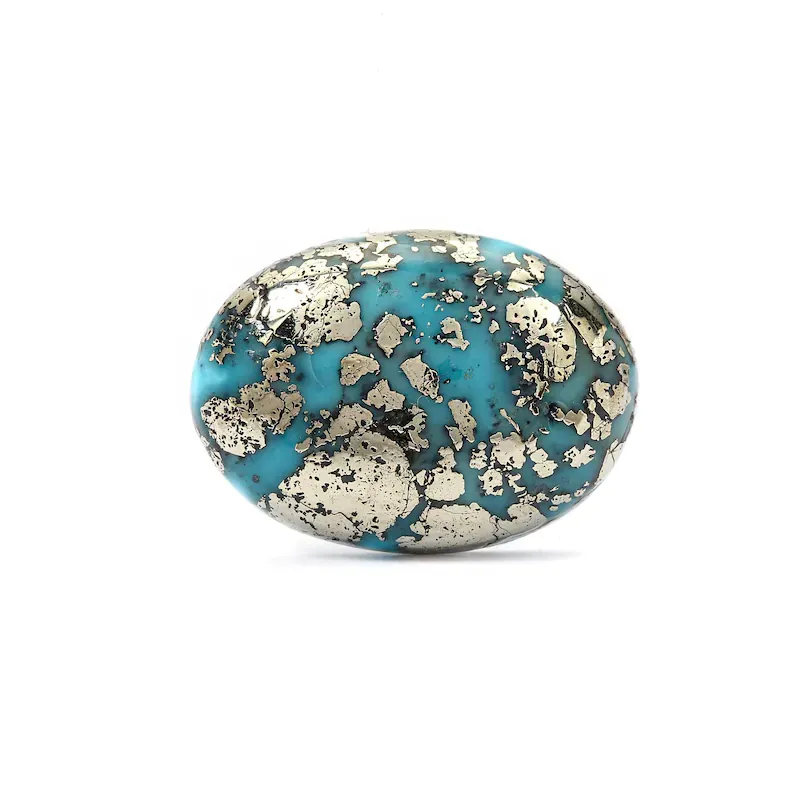
Blue Irani Firoza · 6–16 ct
Compare the listed stone and its individual evidence before choosing a setting.
View stone listing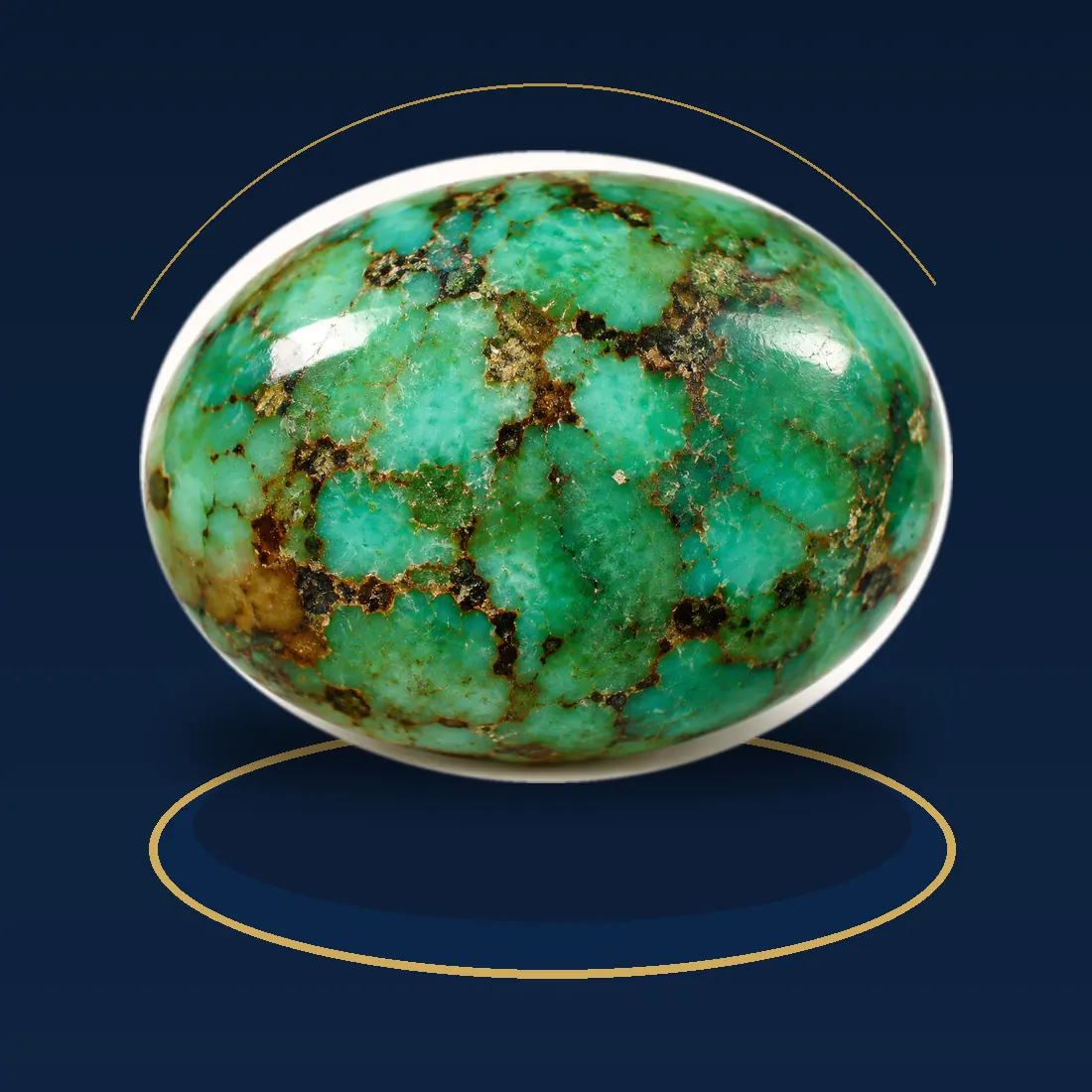
Hussaini green Firoza · 6.88 ct
Individual report 579231. Digital preview is illustrative; verify the specimen in the actual report.
View stone listing
Hussaini green Firoza · 5.84 ct
Individual report 579246. Check the report and product photographs before purchasing.
View stone listing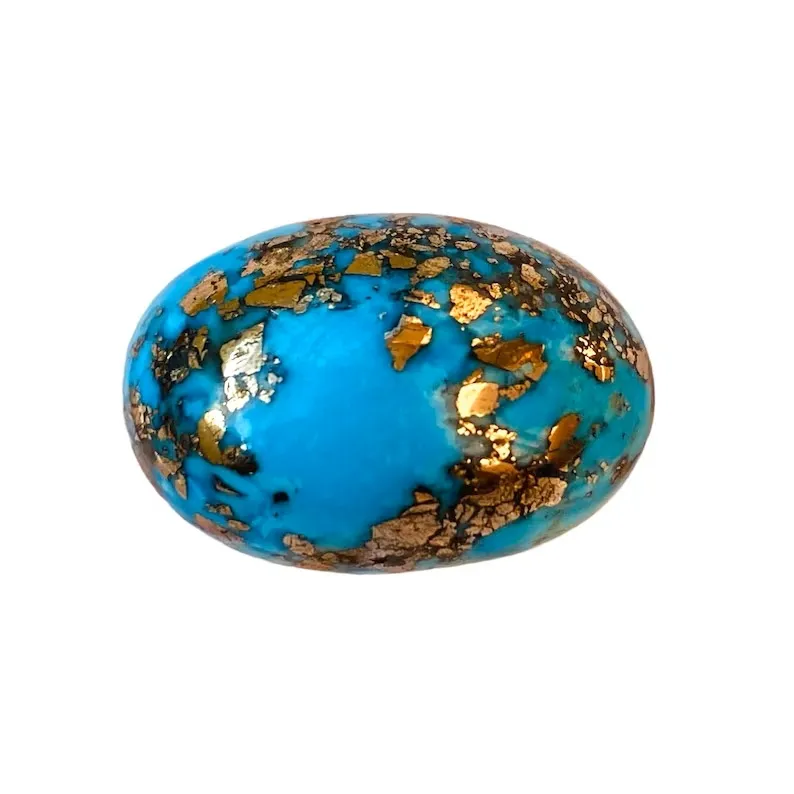
Blue Firoza · 16–30 ct
Explore loose cabochons for settings; not every specimen has identical dimensions.
View stone listing6. Red flags in Firoza stone advertising
Do not rely on unsourced phrases such as “100% untreated,” “mine certified,” or “guaranteed astrological results.” A trustworthy listing provides individually relevant evidence, what the order includes, the total price and clear descriptions of any remaining unknowns. If a special-treatment report is required, ask before purchase.
- Claims of guaranteed Iranian mine origin without stone-specific provenance.
- “Untreated” asserted from a report that never tested or declared it.
- Stock photographs presented as the precise specimen being sold.
- One generic certificate attached to multiple unrelated gemstones.
- Promises of guaranteed medical, astrological or financial outcomes.
Shop Firoza with clear documentation
Compare the actual gemstone, carat weight and available lab identification evidence in the Divinity Crystals Irani Firoza collection. Confirm treatment details, size and what is included before purchase.
Explore natural Irani FirozaQuestions buyers ask about original Firoza
Does ‘natural turquoise’ guarantee no resin?
No. Mineral identification and treatment detection are separate findings.
Can a matrix prove real Firoza?
No. Natural matrix can be attractive, but appearance alone is not sufficient to authenticate a specimen.
Is a laboratory certificate enough to identify an exact stone?
It helps when the correct report is linked to the right specimen. Clear physical photographs and matching weight improve confidence.
Can a photograph confirm that turquoise is from Nishapur, Iran?
No. Colour and matrix cannot by themselves establish geographic origin. Ask for traceable sourcing information and any report evidence that actually addresses origin.
Is a real Firoza always blue?
No. Natural turquoise can be blue or greenish; colour alone does not establish mineral identity.
Do all natural turquoise certificates include treatment tests?
No. Read the individual report carefully, because treatment conclusions may be outside its stated scope.
Gemological reading: GIA, impregnated and dyed turquoise. Educational content only; treatment and origin claims must be established for each individual specimen. Individual product listings govern actual purchases.