
Description
Green Phantom Crystal Cluster
A sculptural green-included crystal cluster for a beautifully curated space. Explore our genuine first-party merchandise photographs, possible phantom-growth features and practical selection guidance before choosing your piece.
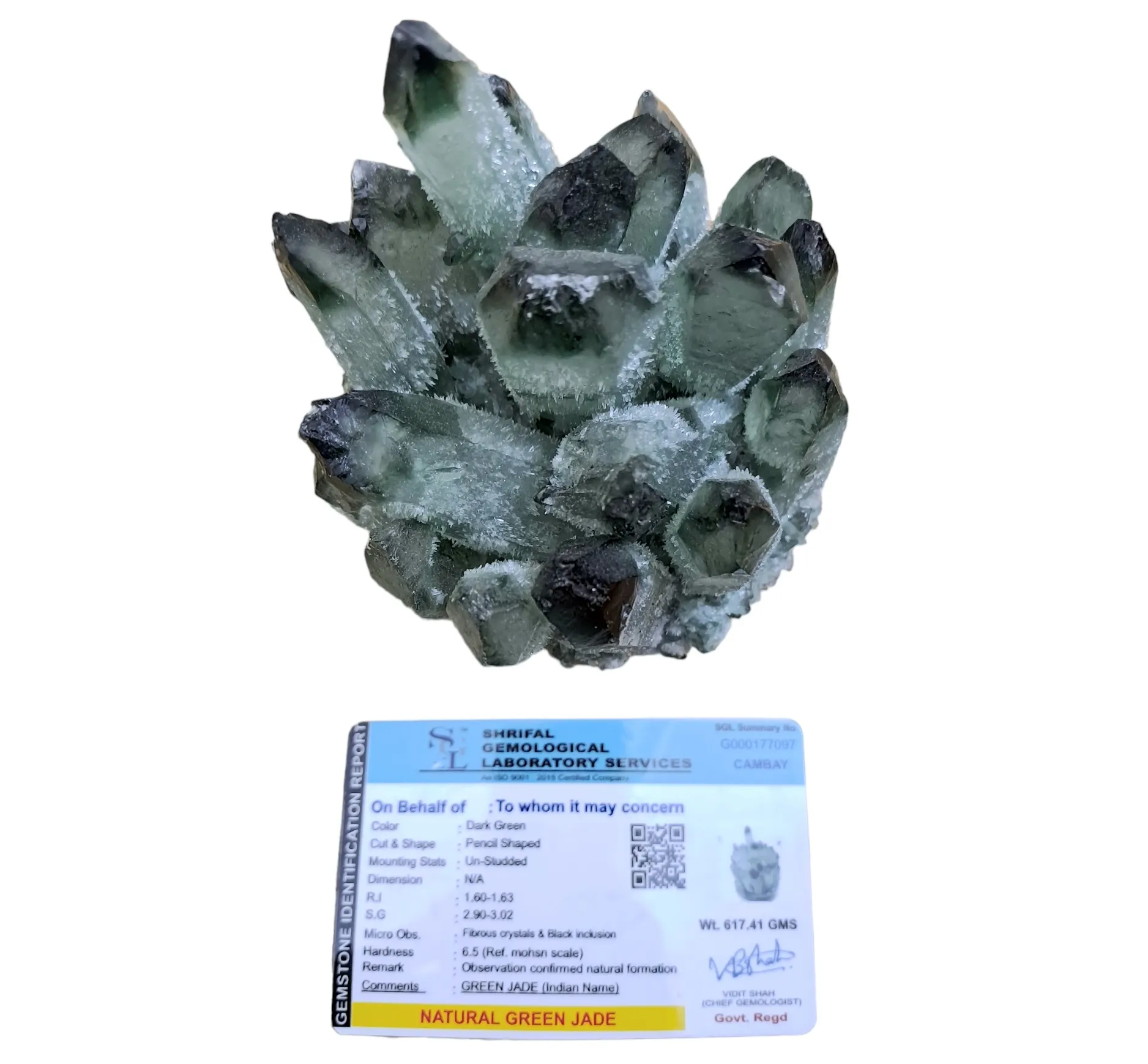
Earlier product naming used “Green Jade Phantom,” although the description also referred to green-included quartz. Because these are different mineral identities, we are not claiming that the pictured specimen is jadeite, nephrite or quartz until the specific material is confirmed.
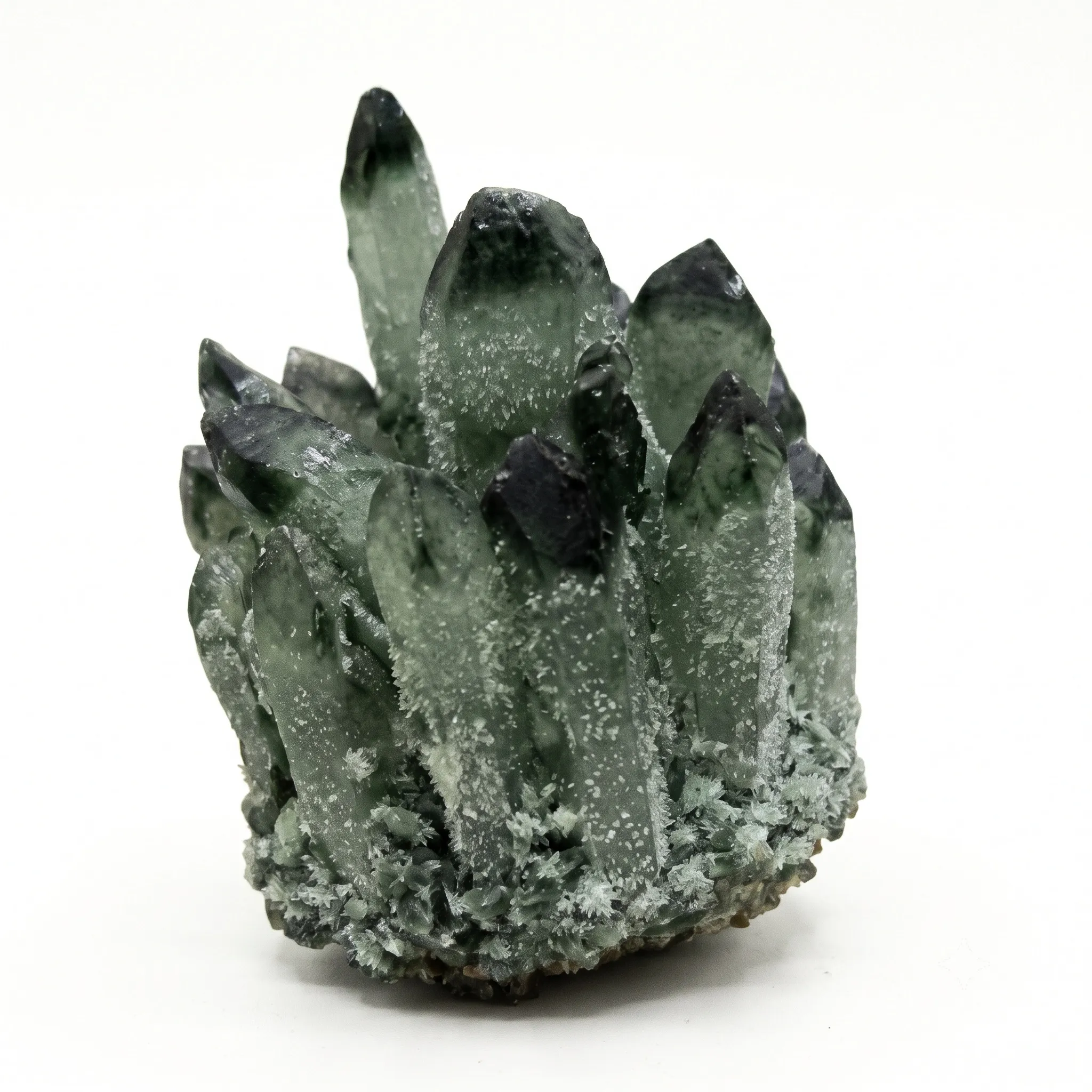
A closer look at green growth patterns.
Some quartz specimens show internal outlines of earlier crystal-growth stages. Green minerals can mark those planes or occur as other inclusions. Such specimens are commonly called green phantom quartz in the crystal trade. Appearance alone does not prove the host is quartz, identify an inclusion as chlorite or establish a natural growth phantom in this particular cluster.

Know what you are selecting.
Earlier descriptions alternated between a green-included quartz-style cluster and the trade name “Green Jade Phantom.” We have changed the displayed title to avoid asserting either mineral identity until a corresponding independent report establishes the composition of the exact item.

Bring the beauty of green to your space.
Display a green crystal specimen on a secure shelf or desk to enjoy its striking colour and crystal form. A decorative stone can be a visual reminder to pause, reflect and care for your space, regardless of spiritual practice.
Green stones are traditionally associated with growth, prosperity and the heart chakra in crystal beliefs. Such symbolism reflects cultural and personal practices, not medical treatment or proof of financial outcomes.
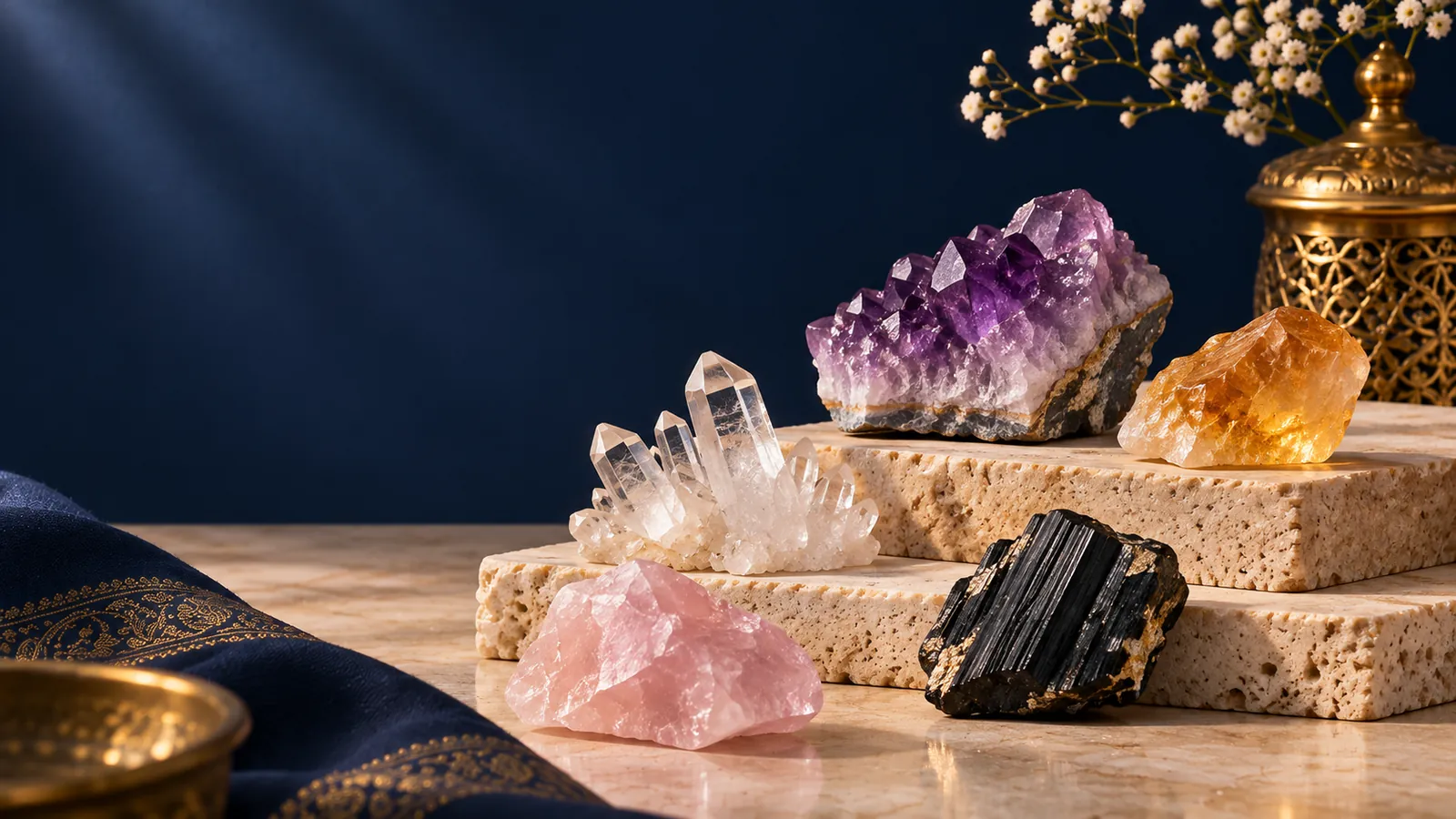
Our original gemstone photography—not the stylised lifestyle portrait—should be used when judging what merchandise is offered.
Green phantom quartz, explained

Green quartz is not automatically jade.
“Jade” is a recognised gemstone term for materials such as jadeite and nephrite. Quartz with green inclusions is a different material, even if someone informally describes its colour as “jade-like.” Its green mineral may be chlorite-group material or something else, but visual appearance does not establish a species.
A proper identification should match a laboratory document to the particular cluster. If chlorite inclusions, natural growth phantoms or untreated origin affect your decision, ask us for detailed evidence instead of assuming them from the product’s trade name or generic pictures.
For independent mineral context, read GIA’s study of chlorite-group inclusions in quartz.
Three checks before buying

See the specimen
Examine real merchandise views for external shape, green areas, the base and any possible growth outlines. Ask for macro photos if necessary.
Confirm dimensions
Obtain height, width, depth and weight, rather than judging from lifestyle photography or a display prop.
Match a report
Review any actual certificate for the host mineral, treatment statements, inclusion identification and specimen match.
Look beyond the colour.
Different viewing angles show the distribution of green inclusions or surface colour, the condition of the crystal points and the shape of the base. Compare the product gallery with details of the specific selection rather than assuming each photographed cluster is identical.
The listing currently has no individually reviewed report in these records, so claims of certified AAA quality, confirmed chlorite and 100% untreated or earth-mined origin remain unsubstantiated here.
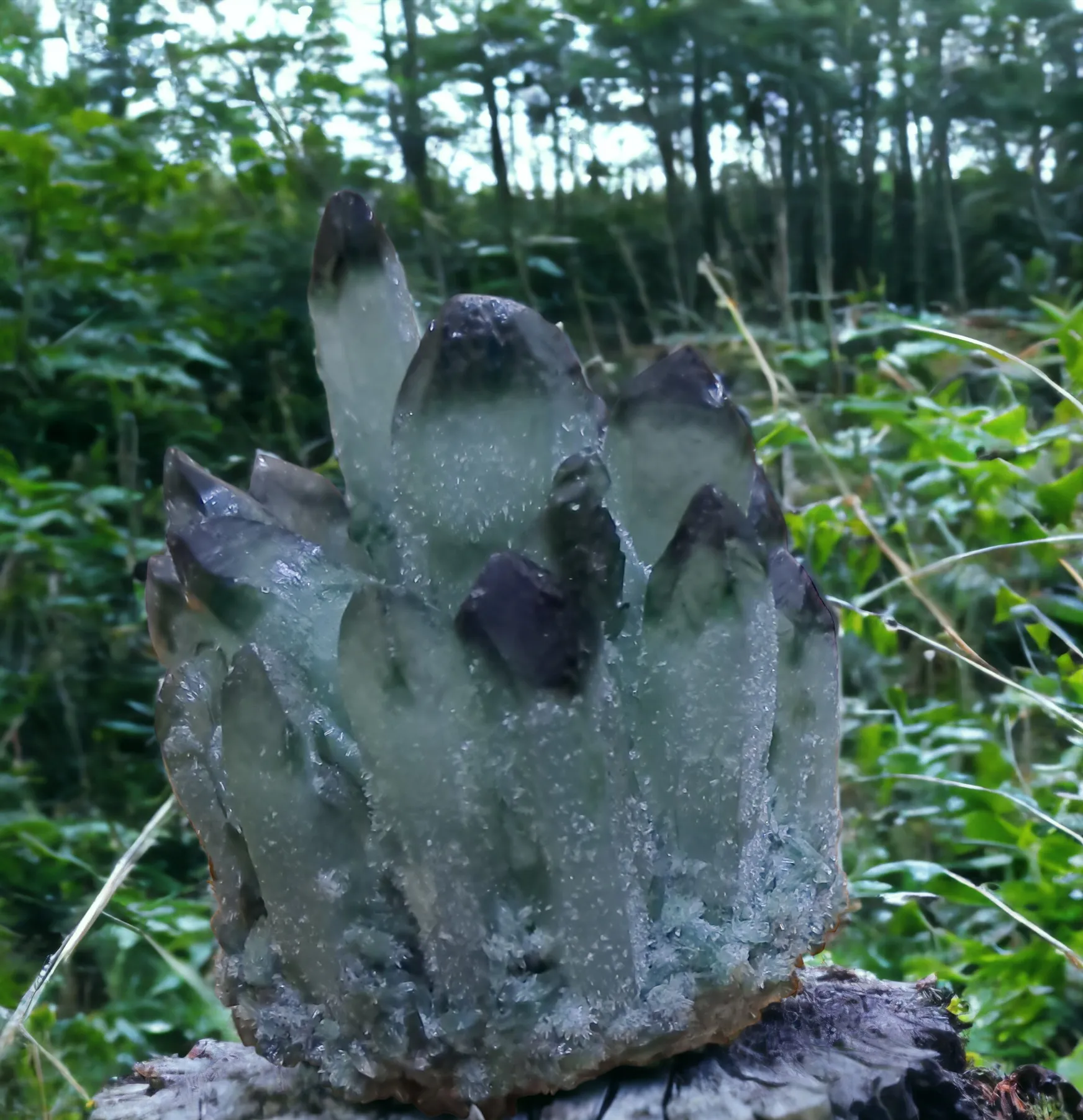
An intentional place for your crystal.
In traditional crystal practices, green stones are sometimes associated with harmony, the heart chakra and renewal. If you enjoy intention-setting, use the specimen as a reminder of a personal goal in a peaceful space. These practices do not establish physical healing effects, treat anxiety or guarantee wealth.
Caring for delicate crystal points

Start dry and handle carefully.
Use a soft dry brush or lint-free cloth over a padded surface to lift dust around delicate points. Until the mineral species, base material, adhesives and treatments are confirmed, avoid soaking, ultrasonic equipment and harsh cleaning chemicals.
Support the base, not the tips.
Choose a stable level surface away from edges, pets, children, strong heat and frequent knocks. For a large or irregular cluster, confirm the footprint and weight before choosing a stand.
| Feature | Green phantom quartz | Jadeite / nephrite jade |
|---|---|---|
| Mineral identity | Quartz host (SiO₂), if verified | Different mineral groups, not quartz |
| Green appearance | May reflect inclusions or zoning | Can be inherent to the jade material |
| Phantom definition | Earlier growth-surface outlines within a later crystal | Not implied by the word jade |
| Verification | Confirm host and inclusions using item-specific tests | Confirm jadeite or nephrite with appropriate mineral testing |
Frequently asked questions
What is our Green Phantom Crystal Cluster?
This is our photographed green-included crystal-cluster product. Earlier naming included “Green Jade Phantom”; that name is not a verified identification of this specimen. Contact us for a corresponding report before purchasing for a particular mineral identity.
Are jade and green-included quartz the same mineral?
No. Jadeite and nephrite are different from quartz. For a material-specific purchase, please refer to the gemstone identification and ask our team about the selected specimen.
What is a green phantom growth pattern?
In quartz, green inclusions may trace an earlier internal crystal-growth surface. The form of the actual growth pattern can be examined in detailed specimen views.
How can I check the colour and dimensions?
Use our product gallery to see the form and green areas. We can help with natural-light images and exact height, width, depth or weight when required.
Where can I find the material documentation?
Our team can help review the available mineral identification and laboratory details relevant to this item.
Where should I display the green cluster?
A stable shelf, cabinet or desk is ideal. Green crystals are also symbolically associated with renewal and the heart chakra in some traditions.
How should I clean the cluster?
Use a soft dry brush and support the base. Avoid immersion or chemical cleaners until the mineral and any accompanying matrix materials are known.
 Official product photograph · not customer-submitted