Description
Citrine Phantom Cluster
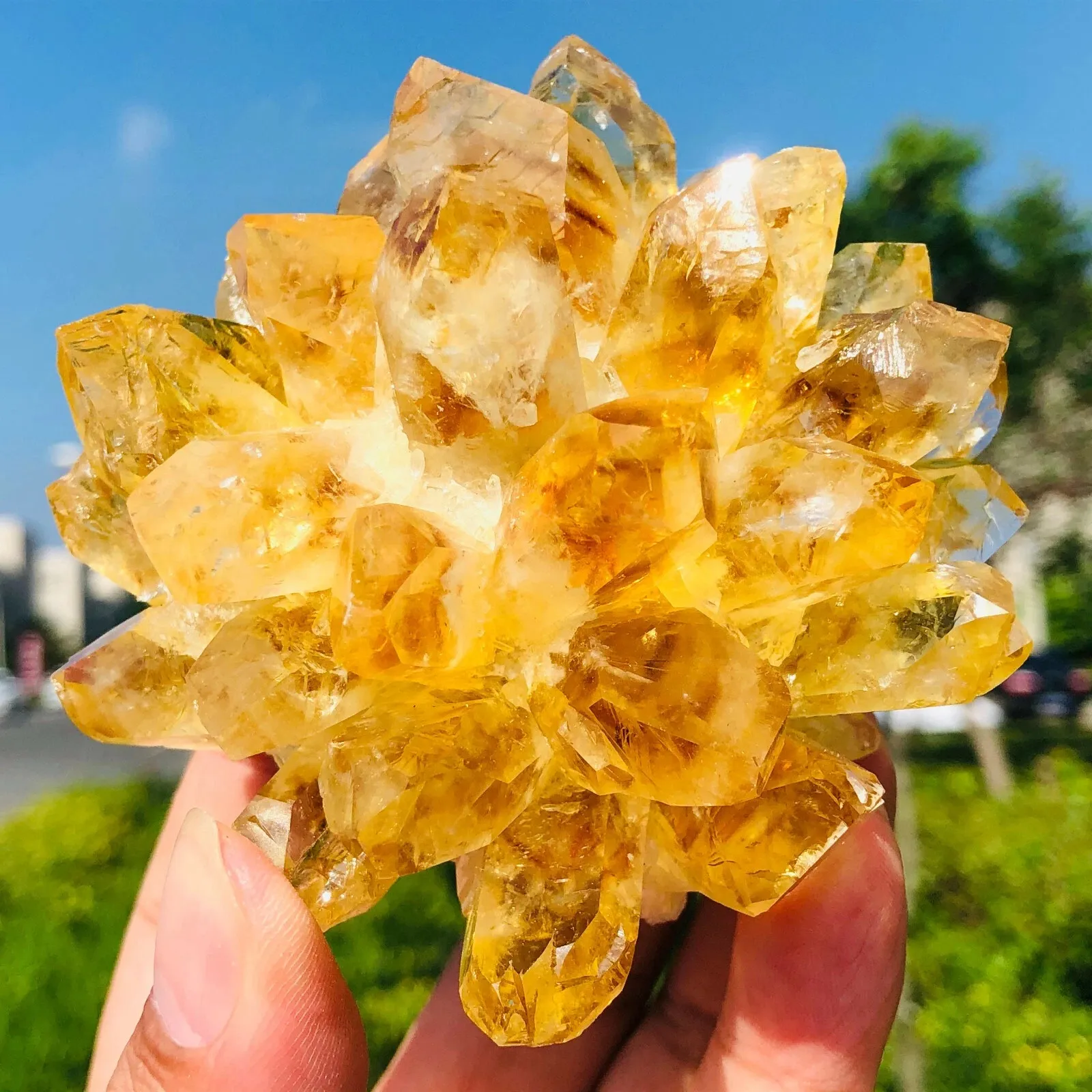
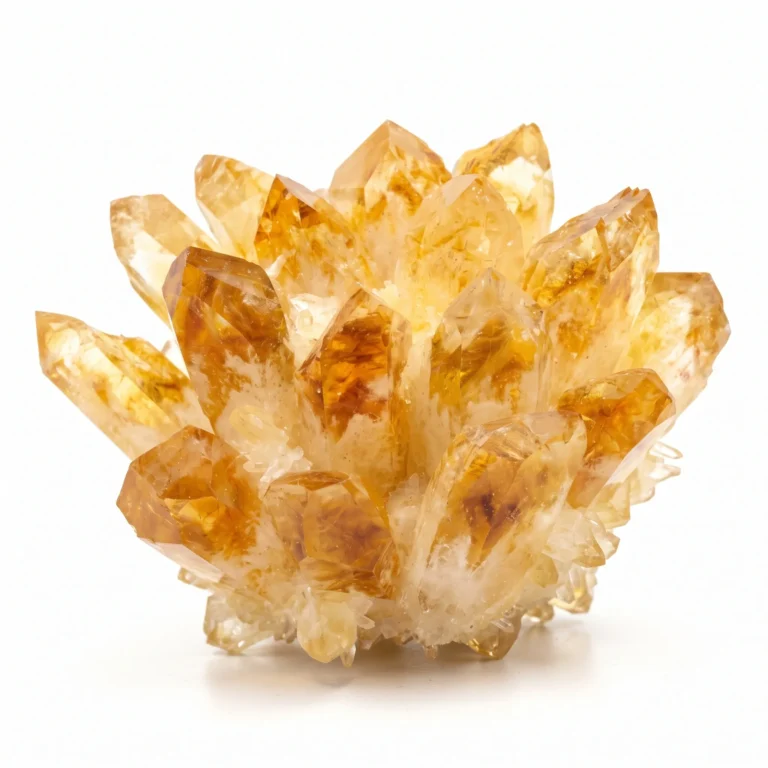
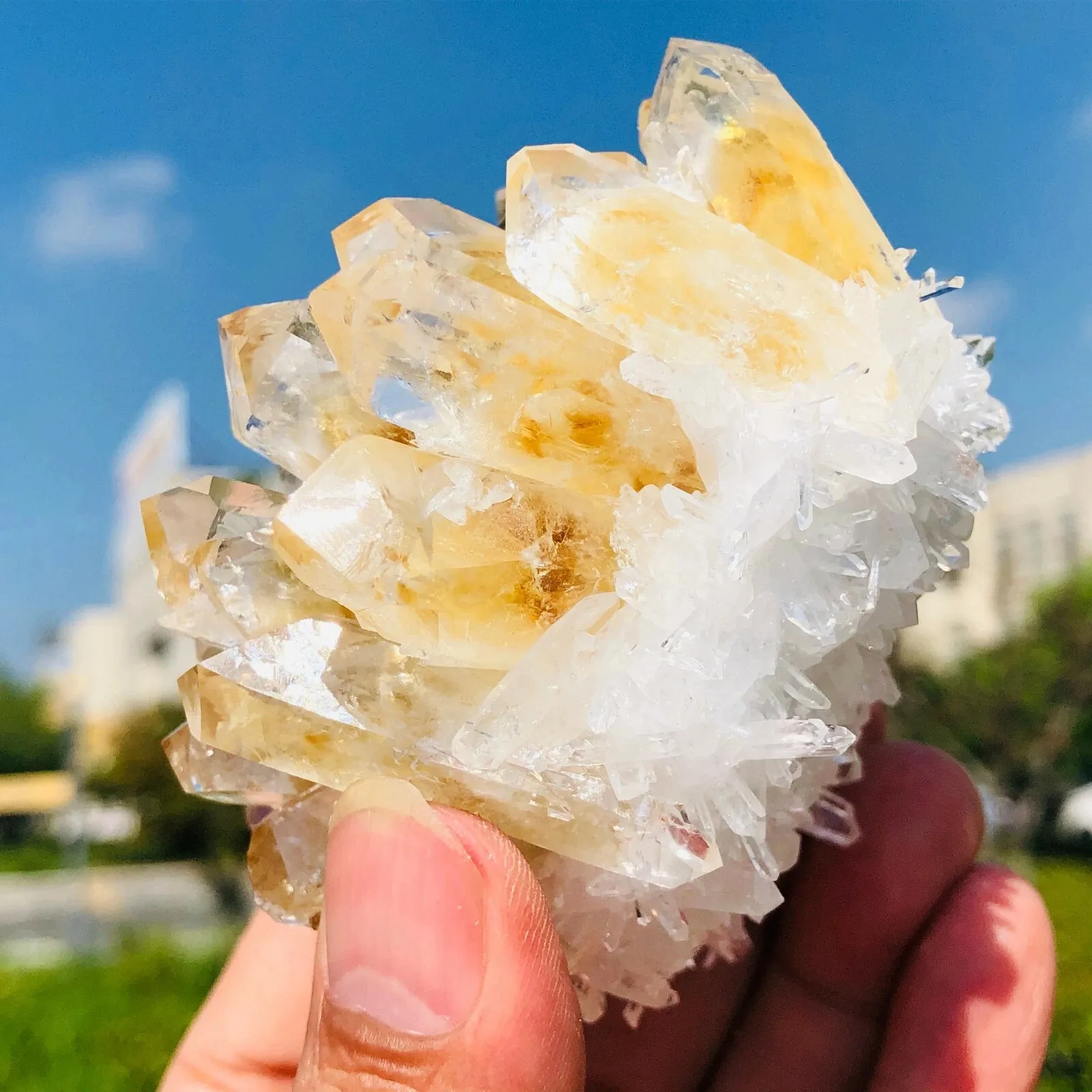
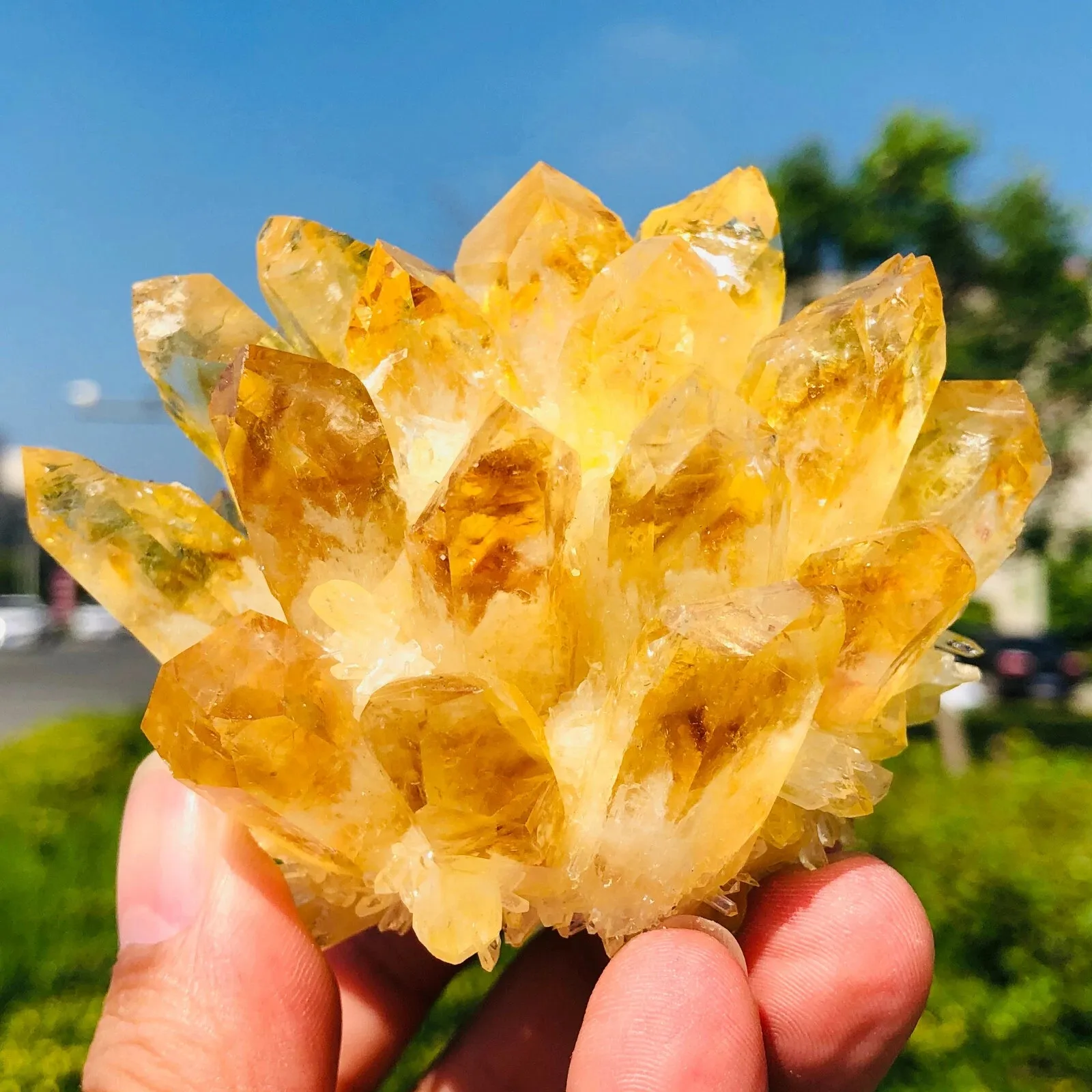
Discover the honey-gold beauty of our citrine-listed quartz cluster, with its sculptural points and intriguing possible internal growth outlines.
Explore original product photographs, specimen checks and thoughtful collector guidance before selecting a cluster for your home, work desk or mineral display.
A remarkable form, with details worth knowing.
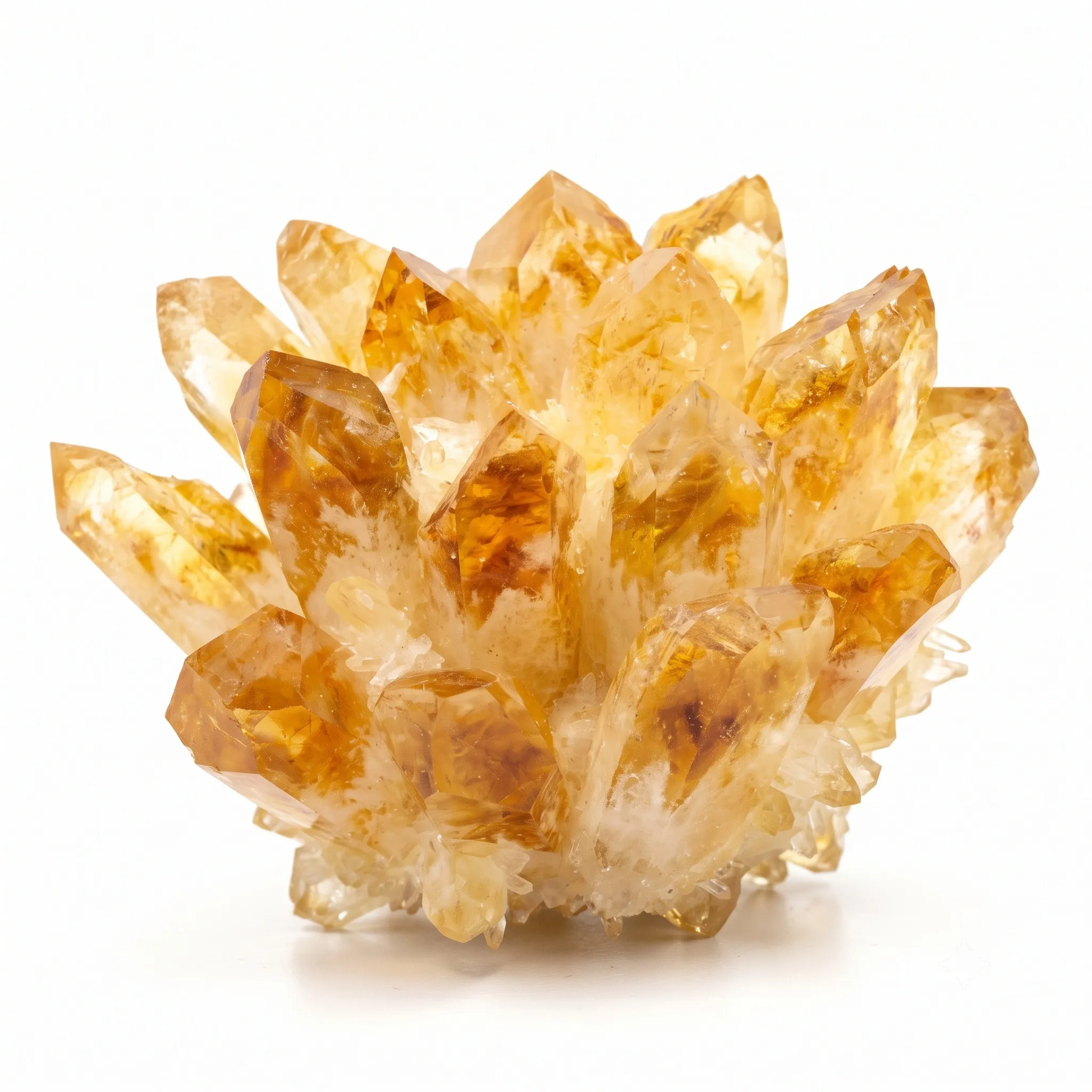
Citrine is the yellow to orange variety of quartz. Its warm appearance and angular crystal forms can make a striking mineral display. A phantom is an internal outline representing an earlier stage of crystal growth, later surrounded by more quartz. Yellow colour alone does not verify such a growth feature, and neither treatment history nor exact growth identity can be confirmed from a general product photograph.
What you’re choosing.
Use the merchandise photographs to examine point formation, transparency, colour zoning and the stability of the base. Where a particular size or batch is supplied, confirm the actual weight, height, width and depth before checkout.

Natural beauty for considered spaces.
The golden tones of a citrine-style quartz cluster can complement a light wooden table, a study, or a carefully arranged mineral cabinet. Display the piece on a stable base away from edges and regular handling.
Citrine is sometimes called the “Merchant’s Stone” in modern crystal traditions, symbolically associated with prosperity, confidence and the solar plexus chakra. These are cultural or personal interpretations, not guarantees of income, health or other results.
We recommend choosing for observable colour, crystal geometry, overall condition and item-specific information.
Understanding phantom growth

Natural-colour citrine and heated amethyst are not the same claim.
Some citrine occurs naturally with yellow colour, but a substantial portion of commercial citrine is heat-treated amethyst or other treated quartz. Both may be sold as citrine depending on nomenclature and disclosure. The supplied photographs do not establish that this individual cluster is unheated, untreated or naturally yellow.
Our team can help you review the laboratory wording and treatment information available for your selected specimen.
For additional mineral education, read GIA’s citrine buyer guidance.
Three checks before choosing

See the cluster
Review the actual photos for crystal geometry, the base, yellow zoning and possible internal outlines. Request macro close-ups if phantoms matter.
Confirm its size
Ask for height, width, depth and weight. A cluster’s irregular shape can look different depending on the camera angle.
Review paperwork
Check whether a lab report accompanies your chosen item and what it actually says about mineral identity and treatment.
Colour, clarity and crystal points.
Individual quartz points may range from pale honey to deeper amber and may contain inclusions or colour zoning. Photographic lighting affects perceived warmth; where an exact shade is important, request an additional daylight view.
Inspect tip condition and the base. An irregular cluster may be visually striking but also fragile. We do not treat different gallery photos as proof that every order contains the same specimen.
A golden reminder of personal intention.
For a personal mindfulness or intention-setting practice, you may place a citrine-coloured cluster beside a notebook or on a secure shelf as a visual prompt for focus and planning. Crystal traditions sometimes associate citrine with the solar plexus chakra and themes of abundance. These symbolic practices are not scientifically demonstrated methods of attracting money or treating stress.
Care for the golden quartz points

Start with a soft dry brush.
Remove dust with a clean dry soft brush or lint-free cloth, working gently around the projecting points. If the specimen contains a fragile matrix, adhesives or surface treatments, do not soak it without assessing those materials. Avoid hard scrubbing or harsh chemicals.
Keep the cluster stable.
Support the base rather than lifting by crystal points. Keep away from edges, sudden temperature changes and strong heat. For long-term colour preservation, prefer indirect light to prolonged intense direct sunlight, and avoid placing magnifying transparent crystal faces where they could concentrate sunlight.
Frequently asked questions
What is citrine?
Citrine is the yellow-to-orange variety of quartz, known for its warm honey and golden tones.
What is the difference between citrine colour and a phantom?
Golden colour is a colour characteristic; a phantom is an earlier crystal-growth outline visible inside the stone. These are separate features.
Does citrine sometimes receive heat treatment?
Yes. Some commercial citrine is heat-treated quartz. For treatment-specific questions about your chosen cluster, our team can help with available material information.
Can I see the cluster from different angles?
Our original product gallery includes specimen views. We can help with extra photographs when you need to examine the base, points or internal details.
How should I choose its size?
Consider the available weight and actual height, width and depth so the cluster fits comfortably on your shelf, desk or display.
What is citrine traditionally associated with?
Citrine is symbolically linked with confidence, abundance and the solar plexus chakra in modern crystal traditions; it makes a beautiful decorative reminder of personal goals.
How should I care for golden quartz?
Begin with a dry soft brush, support the base when lifting and avoid hard impacts, strong heat and harsh cleaning chemicals.