
Divinity Crystals · The mineral guide
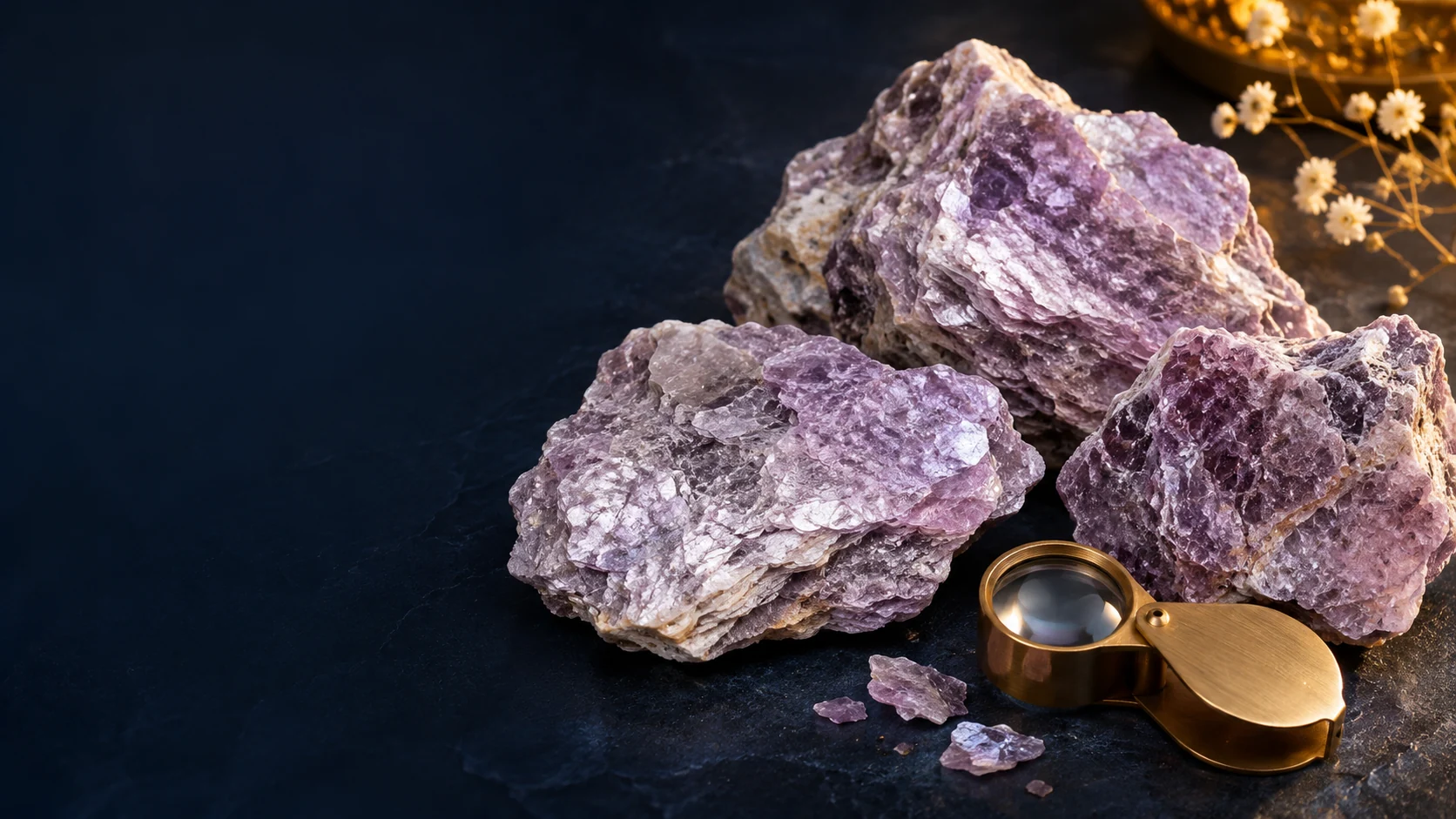
Lepidolite is the familiar name for lilac, pink and violet lithium-bearing mica minerals and mica-rich rocks. Its subtle sparkle, fine layers and changing tones make it attractive to collectors, jewellery enthusiasts and people who enjoy natural mineral specimens.
The name, however, does not identify every purple rock with certainty. Lepidolite is commonly used for a series of related lithium-rich micas, not one uniquely identifiable species in every commercial specimen. A colour match is a starting observation, not proof.
In crystal traditions, Lepidolite is associated with reflection and emotional balance. Those are personal or cultural meanings, not scientifically established treatments for anxiety, insomnia or other medical conditions. This guide separates mineral facts, responsible buying, gentle care and personal ritual.
Explore the Divinity Crystals Lepidolite raw chunk listing alongside the identification notes below.
Key takeaways
- Lepidolite commonly describes lithium-rich mica minerals and mica-bearing rocks.
- Lilac colour and reflective layers are clues—not independent proof of mineral identity.
- Solid mineral lithium is not prescribed lithium medicine or a medical treatment.
- Protect thin mica layers from drops, scrubbing, soaking and ultrasonic cleaners.
- Inspect actual product photographs, treatments and exact quantities before buying.
- Keep personal crystal rituals separate from the physical cleaning required to protect a mineral.
Five views of Lepidolite: what to look for
One original Divinity Crystals merchandise photograph and four different subject-specific editorial illustrations explain specimen appearance, texture and inspection. The illustrations are not photographs of the exact item sold.
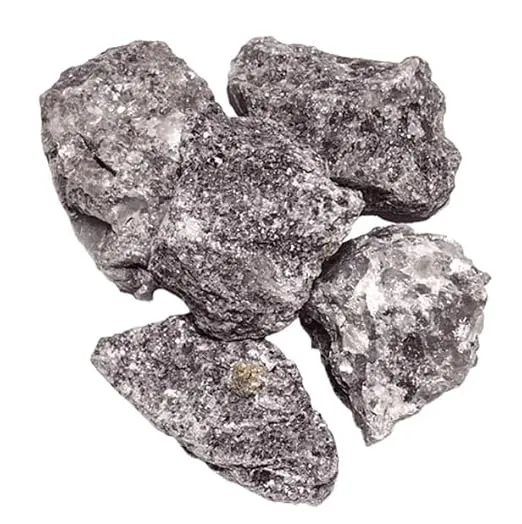
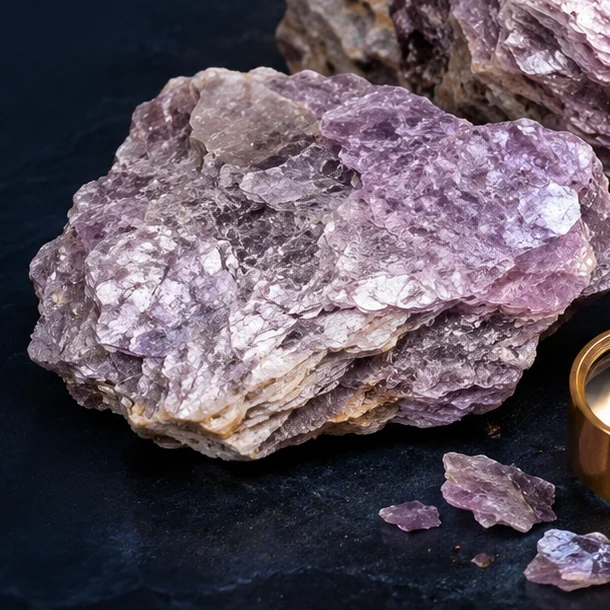
1. Actual product image
Start with the store’s original listing photograph; confirm the exact item, size and any natural variation.
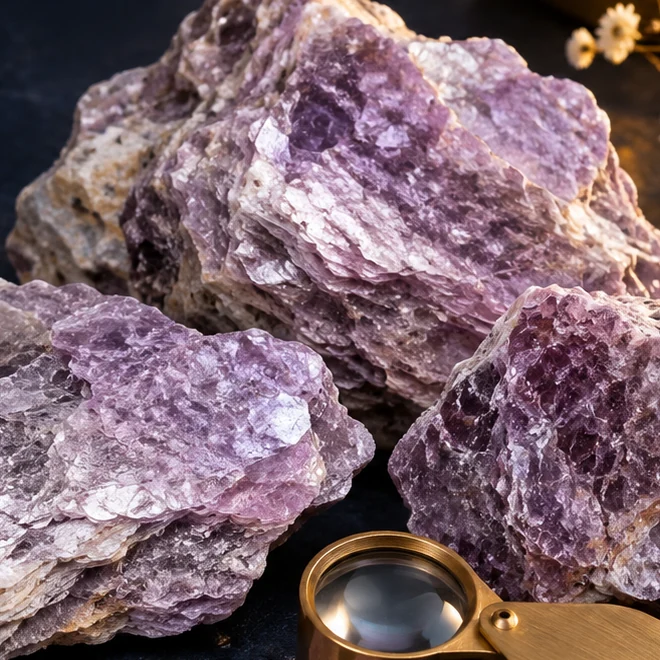
2. Mica-rich close-up
Look for thin reflective layers and a pearly sparkle; appearance alone is not proof.
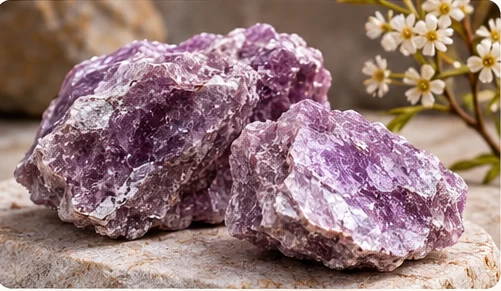
3. Sheet-like texture
Flaky cleavage can make a collector specimen delicate along thin edges.
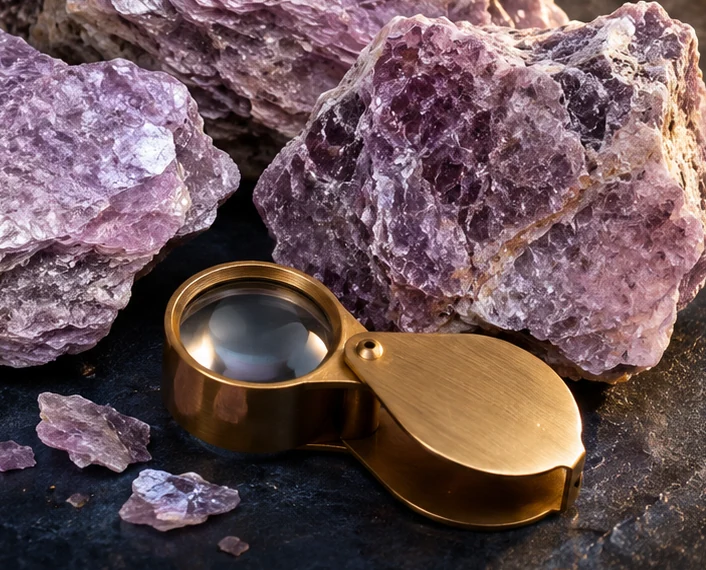
4. Rough stone form
Unpolished pieces can show matrix minerals as well as mica-rich regions.
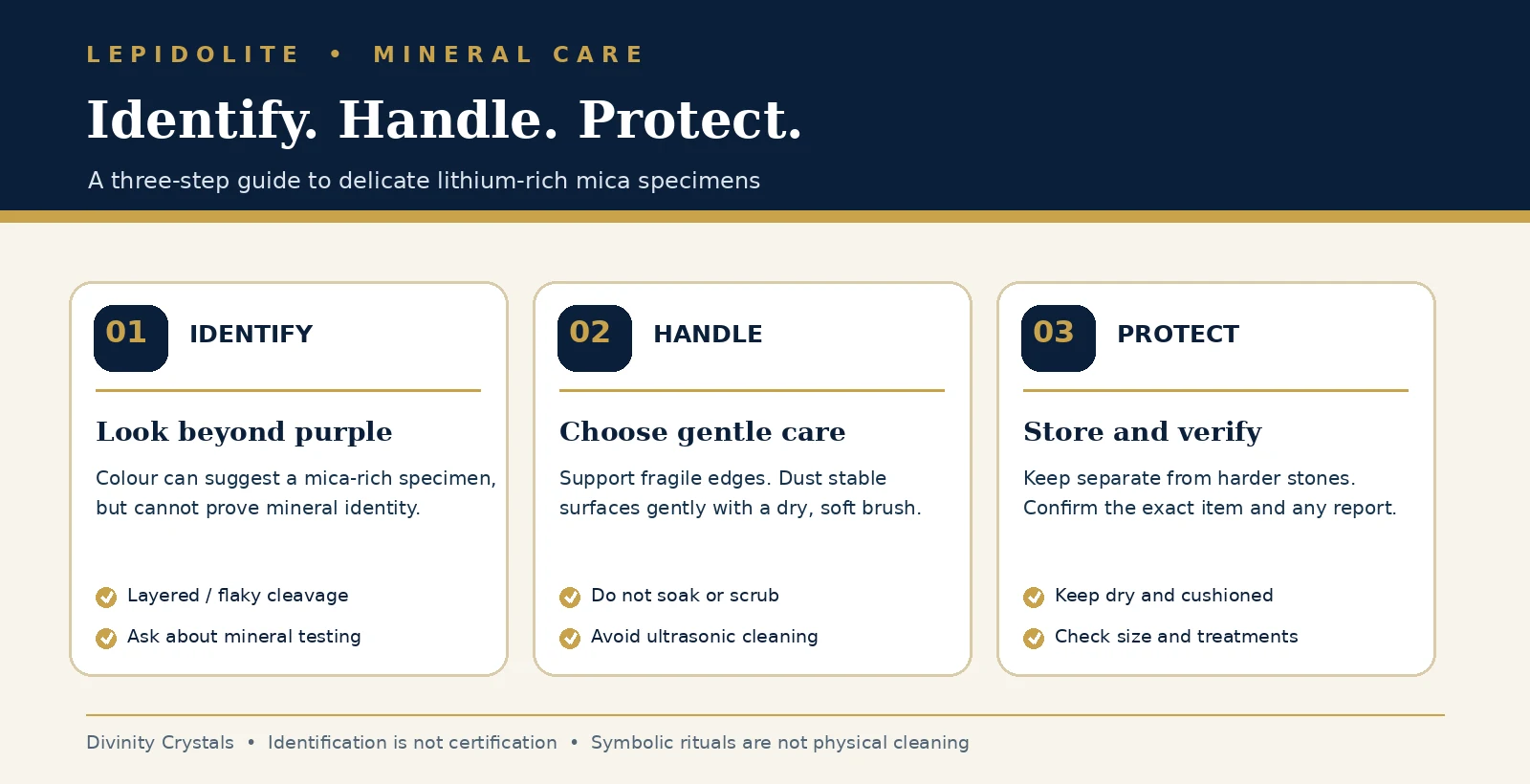
5. Inspect before buying
A loupe helps study texture, but definitive mineral identity may require testing.
Identification & care at a glance
| Aspect | What matters |
|---|---|
| Mineral name | Traditional name for lithium-rich mica minerals, notably material in or near the polylithionite–trilithionite series. |
| Appearance | Lilac, rosy purple or violet are common, sometimes alongside white, grey or other matrix minerals. |
| Structure | Sheet-like cleavage, fine reflective flakes and pearly-looking layers; surface appearance varies. |
| Identification | Photographs and colour are insufficient; ask what testing or mineral assessment was actually performed. |
| Handling | Support from underneath, keep fragile edges free from pressure and minimise unnecessary rubbing. |
| Cleaning | Consider very soft dry dusting on stable areas first. Avoid aggressive washing and abrasive tools. |
| Storage | Pad and store separately in a dry, stable space away from harder mineral specimens. |
| Buying checks | Confirm actual-item photographs, dimensions, weight, treatments, quantity and report scope. |
Before buying a specimen
- Confirm whether the images show the exact stone or a representative specimen.
- Check dimensions, mass and whether the offer contains one piece or several.
- Ask about dyed material, coatings, resin or other stabilisation.
- Examine loose edges, visible chips, fractures or fragile layers.
- Verify laboratory name, report number, tested material and matching identity before relying on a certification claim.
- For expensive or unusual specimens, request assessment by a qualified independent professional.
The first-party product photo above is a listing reference; a photograph alone cannot verify mineral species or certification.
What is Lepidolite made of?
Lepidolite is a historic name used for light-coloured, lithium-rich micas. The name is associated particularly with compositions in or near the polylithionite–trilithionite series within the mica family. Many commercial stones are multi-mineral rocks rather than pure, single-crystal specimens.
Mica minerals are known for pronounced cleavage: they can split along thin, closely spaced planes. This helps explain their layered glimmer, but it also creates vulnerable edges. Purple colour can be associated with manganese-related coloration in lithium-rich mica materials; colour is neither a definitive identification method nor a guarantee of natural origin.
An actual specimen may contain quartz, feldspar or other material adjacent to mica-rich regions. That is why photographs, trade names, care instructions and certificates need to refer to the exact piece. For scientific classification, see the Mindat Lepidolite mineral record.
How Lepidolite differs from similar-looking purple stones
Amethyst is a violet variety of quartz and normally lacks the flaky sheet cleavage typical of mica. Purple fluorite, dyed stones and mixed-mineral specimens can resemble Lepidolite in product photographs. A loupe can reveal interesting structures, but reliable identification may require suitable mineralogical tests. Avoid destructive scratch or chemical tests on a specimen you intend to keep intact.
Look for these features
- Colour: lavender, lilac, rosy purple and uneven natural patterns can occur.
- Reflectivity: many pieces have glistening, pearly-looking mica-rich areas.
- Layers: fine sheet-like faces and fragile cleavage edges can be visible.
- Matrix: pale minerals and different rock textures may occur in one specimen.
- Documentation: clear item details matter more than the word “genuine” alone.
Safer care habits
- Place the specimen on a padded, stable surface before cleaning.
- Inspect fragile areas before touching them.
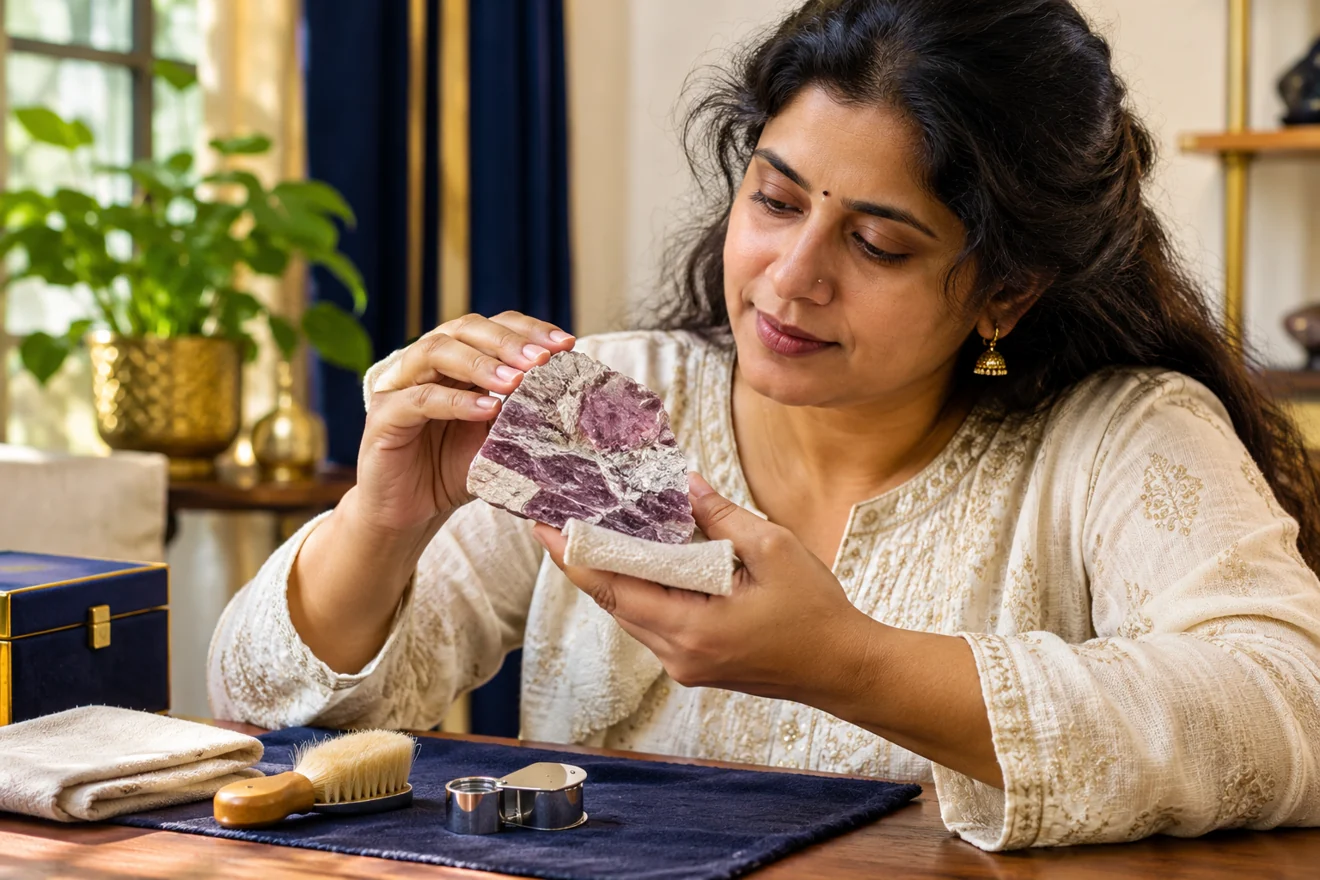
- Only dust stable surfaces with a very soft, dry brush.
- Never scrape thin sheets or force away attached fragments.
- Avoid salt baths, ultrasonic cleaners, harsh acids and soaking.
- Store separately from hard quartz and away from jewellery that may scratch it.
Lithium, emotions & traditional meaning
Lithium compounds are used in medicine under professional supervision, but lithium bound within a mineral specimen is not the same substance or route of treatment as a prescribed medicine. Holding or wearing Lepidolite does not deliver a therapeutic dose of lithium.
Some people choose Lepidolite as a visual focus during breathing exercises, journaling or meditation. Those can be personal lifestyle practices; the crystal itself has not been established as a treatment for anxiety, depression, insomnia or other health problems.
For an optional, non-medical evening routine, see Lepidolite and Sleep: a gentle bedtime routine.
How to care for Lepidolite without damage
Raw mica-rich specimens may be fragile, layered or crumbly. Before cleaning, study the surface in good light and look for loose flakes or bonded areas. Do not assume water tolerance from a single product photograph, especially when a stone may include matrix minerals, dyes or a protective resin.
Dry dusting: the cautious starting point
Place the stone securely on soft padding. Where the surface is stable, use a clean, very soft, dry brush with minimal pressure. Stop if small pieces dislodge. If the specimen is friable, minimise handling and seek professional mineral-conservation advice rather than brushing it vigorously.
Methods to avoid as universal advice
- Soaking and salt baths: these can leave deposits or aggravate damage to fine layers, coatings or matrix minerals.
- Ultrasonic and steam cleaners: unsuitable for delicate, unidentified or composite pieces.
- Acids and strong household cleaners: do not use them on untreated, unknown or mixed mineral specimens.
- Direct sun or high heat: avoid prolonged intense exposure, particularly where colours and treatments have not been verified.
- Drinking-water immersion: do not add unidentified minerals to water intended for consumption.
Mineral-care guidance is necessarily specimen-specific. For broader advice on non-invasive cleaning, see the Western Australian Museum conservation guidance and our Crystal Cleansing Methods: Safe Cleaning Guide.
Display and storage
Keep rough stones in a padded box, secure dish or stable shelf position. Avoid letting harder crystal points press against soft or thin mineral layers. Label specimens and retain purchase details so a future owner can understand the source and any known treatments.
Very damp locations, strong temperature swings and high-traffic shelves are poor choices for delicate objects. If particles begin shedding, handle less, contain fragments and ask a mineral specialist for advice.
Can you use Lepidolite during meditation?
You can choose to admire or hold a stable stone as a personal reminder to slow down, without expecting it to change health outcomes. If a specimen has loose particles, keep it displayed rather than handled. Breathing, journaling and quiet reflection can be practiced with or without a mineral.
Spiritual “cleansing” with moonlight, intention or other symbolic routines does not remove dirt or repair mineral damage. Keep the two meanings separate.
Buying Lepidolite from Divinity Crystals
Our Lepidolite Crystal Raw Chunk product page is a starting point for reviewing original merchandise photography and available specifications. The precise mineral appearance, shade and shape may vary from piece to piece; read the listing terms to establish the quantity and condition being offered.
Do not assume that a title or category label independently verifies laboratory testing of each individual stone. Where laboratory certification is claimed, ask for the issuing organisation, report, test date, specimen identification and any disclosure of treatments. For additional learning, compare the crystal care guide before attempting cleaning.
Responsible buying checklist: exact photograph, count of pieces, measurements, weight, mineral name, matrix presence, treatments, report scope, packaging and care recommendations. For premium purchases, independent assessment can be valuable.
Frequently asked questions about Lepidolite
What is Lepidolite?
Lepidolite is a traditional field and trade name for lithium-rich mica minerals, commonly associated with the polylithionite–trilithionite series. Retail specimens can include other minerals in the same rock.
Is Lepidolite one precise mineral species?
Not necessarily. Modern mineral descriptions commonly treat Lepidolite as a series or informal group name rather than one unambiguous species; a laboratory result should identify what was actually tested.
How can I identify natural Lepidolite?
Inspect the layered, reflective mica texture; compare the actual specimen photographs and request accurate mineral identification where needed. Colour, photographs and a home scratch test cannot establish authenticity on their own.
Does Lepidolite contain lithium?
The name is associated with lithium-bearing mica minerals. Lithium is bound within the solid mineral structure; holding the stone is not equivalent to taking any lithium medicine.
Can Lepidolite treat anxiety or depression?
There is no reliable clinical evidence that holding or wearing Lepidolite treats these conditions. Enjoy its appearance or a personal meditation ritual without replacing professional care.
Does Lepidolite help with sleep?
Some people find a quiet bedtime ritual personally soothing, but a nearby stone has not been demonstrated to cure insomnia, change brain chemistry or prevent nightmares.
Can Lepidolite get wet?
Avoid soaking rough or unidentified specimens. Delicate mica layers, matrix materials, dyes, coatings and adhesives may respond poorly to water, especially during prolonged exposure.
How should I clean raw Lepidolite?
First inspect for loose or fragile layers. If the surface is stable, lift dust lightly with a very soft, dry brush without scraping. Do not brush friable pieces aggressively.
Is it safe to place Lepidolite directly in drinking water?
Do not put unidentified raw minerals, stones or chips in drinking water. Identification and treatment history alone do not demonstrate food-contact safety.
What does ‘lab certified’ mean for Lepidolite?
The phrase is only useful when you can inspect the issuing laboratory, report number, tested sample, method and results. A certificate for one specimen does not automatically cover every piece in a product variation.
Can I wear Lepidolite jewellery daily?
It depends on whether the jewellery uses polished stone, resin-stabilised material, a composite, metal settings or fragile mica-rich surfaces. Avoid impacts, harsh cleaning and excessive moisture, and follow item-specific care.
What should I inspect before buying from a store?
Check the actual product photographs, what the listing quantity includes, dimensions, weight, treatment disclosures, care needs and any verifiable report. Clarify whether the pictures show the exact item or a representative example.
What if my stone begins flaking?
Stop brushing or rubbing it, reduce handling, keep loose fragments contained and protect it from knocks. Ask a conservator or qualified mineral specialist for advice if the specimen is valuable.
Conclusion: appreciate the mineral, protect the layers
Lepidolite’s lavender tones, subtle mica sparkle and layered appearance make it an appealing material for collectors and decorative-stone enthusiasts. Treat exact mineral identification as a scientific question, and treat spiritual meanings as personal traditions rather than established medical effects.
Good product documentation, realistic expectations and gentle dry care matter more than extravagant claims about lithium or guaranteed outcomes. Choose carefully, avoid unnecessary cleaning and protect fragile surfaces over time.