
THE DIVINITY JOURNAL · HEMATITE GEMSTONE IDENTIFICATION
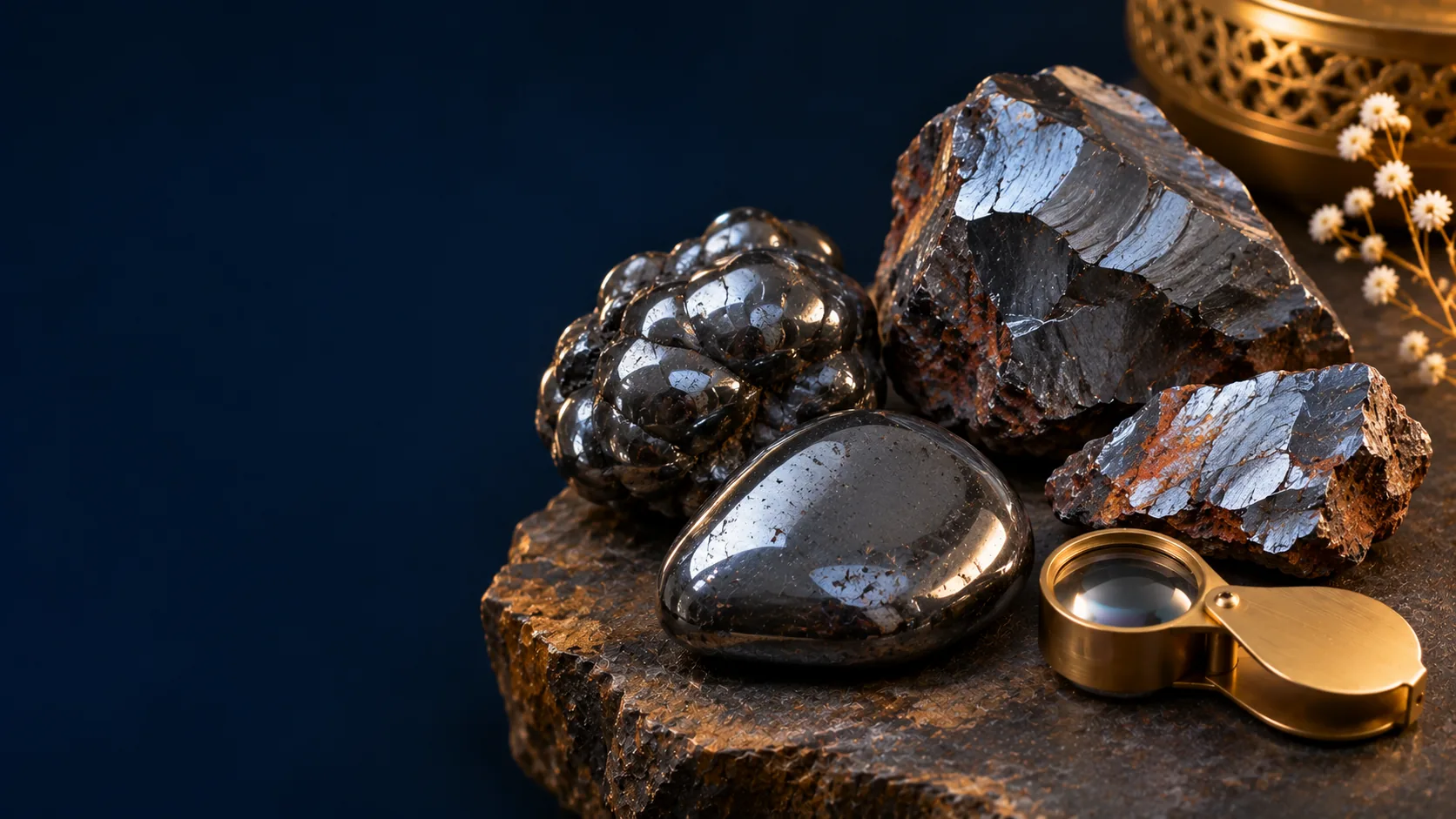
Hematite’s mirror-like grey-black shine makes it memorable, especially when a polished stone catches light. Yet the same mineral may also appear earthy red or brown. Its striking contrast between dark metallic colour and a reddish streak has made Hematite useful to mineral collectors and artisans for centuries.
Hematite is iron(III) oxide (Fe₂O₃), not metallic iron. It is often dense, brittle and not strongly magnetic in its ordinary pure form. Strongly magnetic beads sold as “hematine” may instead be manufactured material, so accurate descriptions matter when buying bracelets.
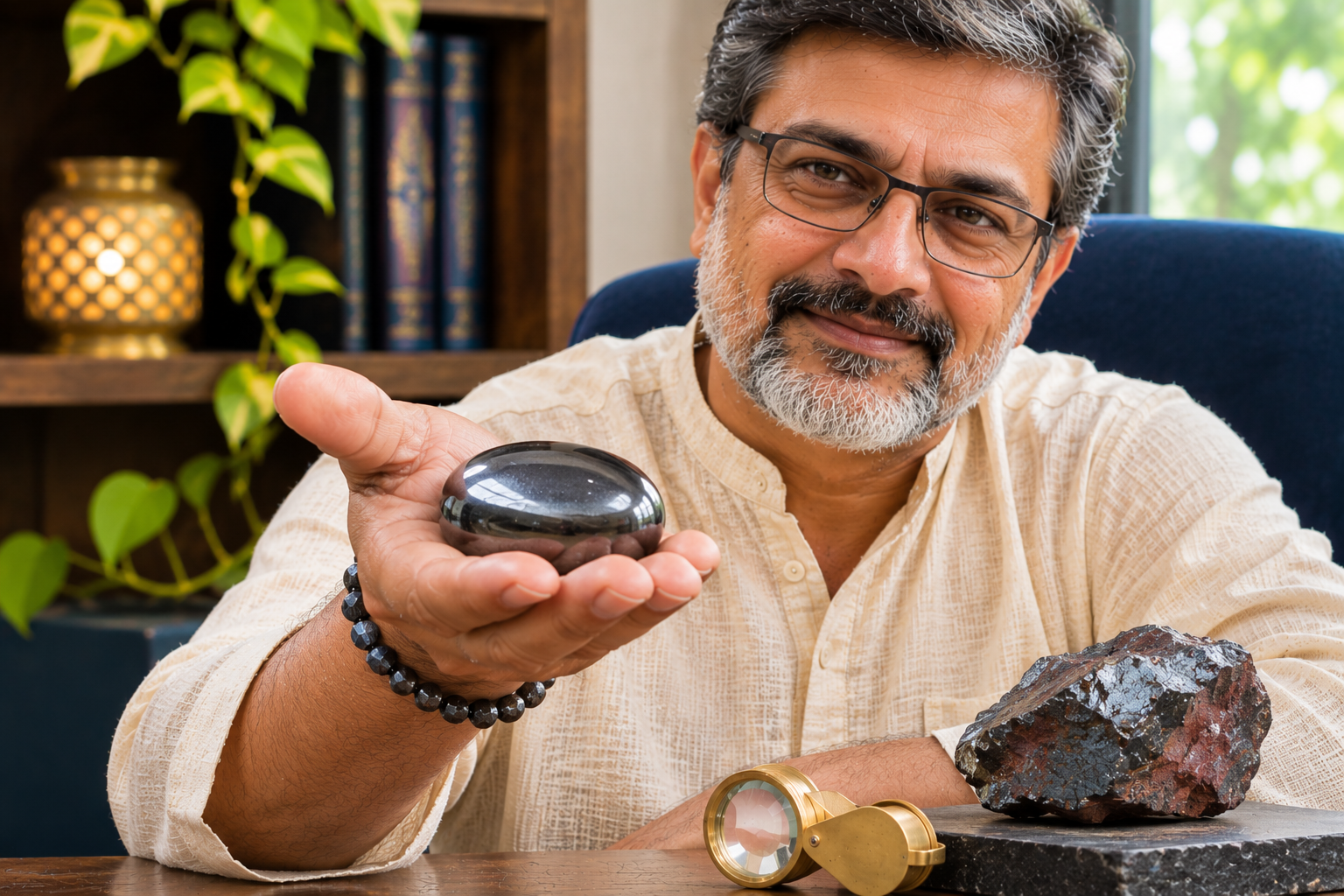
Here you’ll find authentic Divinity Crystals Hematite product photos, a new Indian lifestyle portrait holding a glossy steel-grey stone, an original streak illustration, a comparison of magnetic lookalikes and straightforward product-specific cleaning advice.
FIVE FIRST-PARTY PRODUCT PHOTOS · ONE ORIGINAL MINERAL STUDY
Hematite: Raw Stones, Polished Tumbles, Bracelet & Mixed Kit
Four genuine photographs show our raw, tumbled and threaded Hematite products. A fifth first-party photo shows our separately published Virgo five-stone kit, whose listing includes Hematite. The additional CSS mineral-streak diagram is educational artwork, not another retail item.
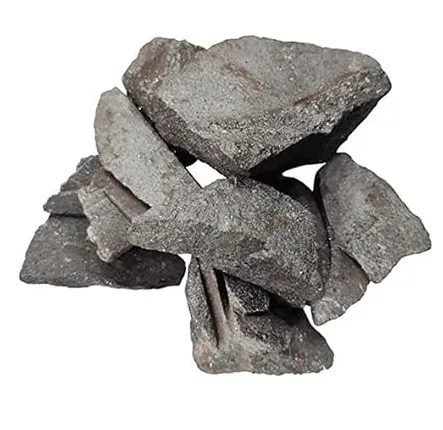
Natural Rough Hematite
Real first-party product photograph of rough Hematite pieces in natural dark and reddish tones; check listed pack dimensions and weight.
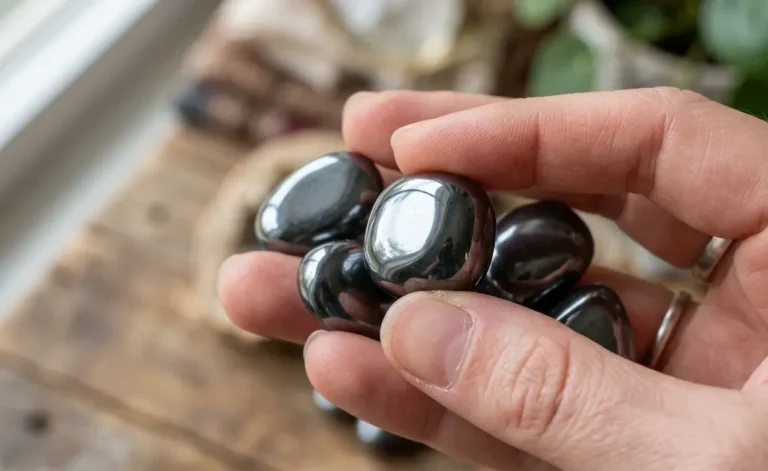
Polished Hematite Tumbles in Hand
Genuine in-hand product photograph showing the reflective steel-grey surface and approximate scale of polished Hematite tumbles.

Polished Hematite Collection
Different first-party tumble product angle: grouped metallic stones on a seashell display. Check quantity and finish on the selected listing.
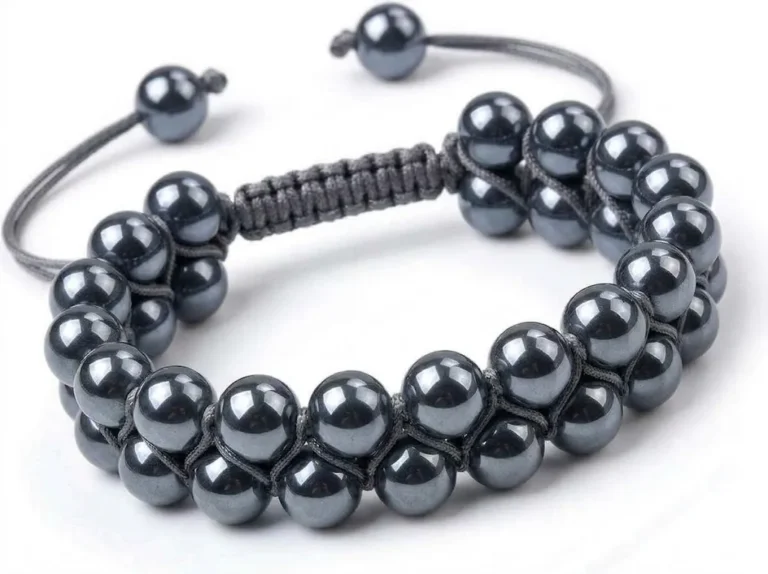
Grey-Threaded Double-Row Bracelet
Verified Hematite double-layer bracelet photo with grey thread and listed 38-bead design. Review actual size, fit and material identification.

Virgo Five-Stone Kit — Includes Hematite
This is our genuine published mixed-stone kit, whose listing includes Hematite. It is not a standalone Hematite specimen and the photograph does not independently identify each stone.
Hematite Streak — Mineral Illustration
Original identification artwork contrasts a metallic-looking stone with the reddish streak often described in mineral references. It is not another retail SKU or a home-test instruction.
IDENTITY & MAGNETISM · MINERAL COMPARISON
Hematite, Magnetite & Hematine
Similar dark materials can have very different magnetism, chemistry and origins.
Natural Hematite · Fe₂O₃
Steel-grey or earthy oxide, typically with reddish streak and no strong magnet response in ordinary pure specimens.
Magnetite · Fe₃O₄
Another natural iron oxide, usually strongly magnetic and typically leaving a dark streak.
Manufactured Hematine
A magnetic, metallic-looking bead material that may be sold as ‘magnetic Hematite’ but is not necessarily natural Hematite.
Illustrative swatches only. Magnetism alone does not reliably identify a mixed or manufactured specimen.
Hematite Mineral Facts and Buying Checks
| Property | What buyers should know |
|---|---|
| Mineral identity | Hematite is an iron oxide mineral, Fe₂O₃, not native metallic iron or the mineral magnetite. |
| Typical colours | Steel-grey to silver-black metallic, or earthy reddish-brown and red; appearance varies by specimen and finish. |
| Diagnostic streak | A red to reddish-brown streak is a key natural mineral clue, while magnetite usually shows dark or black streak. |
| Hardness & toughness | About Mohs 5–6.5, with brittleness that can make corners, beads and thin edges vulnerable to impact. |
| Weight | Specific gravity is roughly 5.2. Natural Hematite can feel heavy for its size but weight alone is not an authentication test. |
| Natural magnetism | Pure ordinary Hematite is not strongly magnetic; magnetite intergrowths or other minerals may alter response. |
| Magnetic hematine | Some very strongly magnetic jewellery beads marketed as ‘hematite’ are manufactured hematine or other ferrite material. |
| Verified store formats | The published catalogue includes rough Hematite, polished tumblestones and a grey-threaded double-row 38-bead bracelet. |
| Traditional meanings | Grounding, focus and root-chakra associations are spiritual or personal symbolism rather than clinically established mineral effects. |
| Care | Soft brush or cloth first; mild soap and controlled water cleaning only when compatible. Dry thoroughly and avoid steam or ultrasonics. |
Mineral references: University of Minnesota Hematite guide, International Gem Society and Mindat.
HEMATITE · REAL PRODUCT AND MINERAL BUYING GUIDE
Check Iron Oxide · Compare Magnetism · Clean Without Damage
Understand Fe₂O₃, the strongly magnetic imitation question, and the practical difference between a polished stone and finished jewellery.
IRON OXIDE Fe₂O₃ · REDDISH STREAK · CAREFUL MAGNET CLAIMS
Three steps for choosing a real specimen, bracelet or polished stone
Recognise the Iron Oxide
Natural Hematite ranges from metallic steel-grey to earthy red-brown. Red streak is a clue, but should never be tested destructively on jewellery.
Check material identity rather than colour alone.
Compare Magnetism & Stock
Strongly magnetic ‘hematine’ beads may be manufactured. Review authentic raw, tumbled and grey-threaded bracelet photos and specifications.
Ask what actual material was tested and what was supplied.
Clean Gently and Dry Well
Use a soft cloth first. For sound compatible stones, controlled mild-soap cleaning can be suitable. Keep threads and coated surfaces protected.
Avoid prolonged soaking, steam and ultrasonics.
Explore genuine Hematite listings: Natural Raw Hematite · Polished Hematite Tumbles · Grey-Threaded Double-Row Bracelet
The term “magnetic Hematite” can be misleading. Ask for the actual composition and any relevant laboratory result, particularly for marketed magnetic therapy beads.
What to Check Before Buying Hematite
- Confirm whether the supplied material is natural Hematite, magnetite, mixed ore or manufactured hematine.
- Examine genuine product photos of the rough stone, finished tumble or bracelet.
- Check stated weight and piece count for loose minerals.
- For the bracelet, confirm grey-threaded double-row construction, 38-bead claim and finished fit.
- Ask about surface coatings, repair, wear and any strongly magnetic behaviour.
- Review sample-specific laboratory evidence rather than relying on “certified” wording alone.
Hematite Cleaning & Storage Checklist
- Dust with a clean soft cloth or very soft brush before wet cleaning.
- Where compatible, wash briefly with mild soap and warm water, then dry thoroughly.
- Avoid leaving a threaded bracelet in water or soaking coatings and adhesives.
- Skip ultrasonic equipment, steam cleaners and abrasive scrubbing.
- Protect brittle beads and stone edges from hard knocks and sharp objects.
- Store securely, away from children, loose abrasive mineral chips and drinking water.
Choosing and Caring for Our Hematite Products
Use these original Divinity Crystals educational visuals to compare the photographed stone type, appearance and care requirements. The illustrations are not substitutes for actual product photos or item-specific laboratory reports.

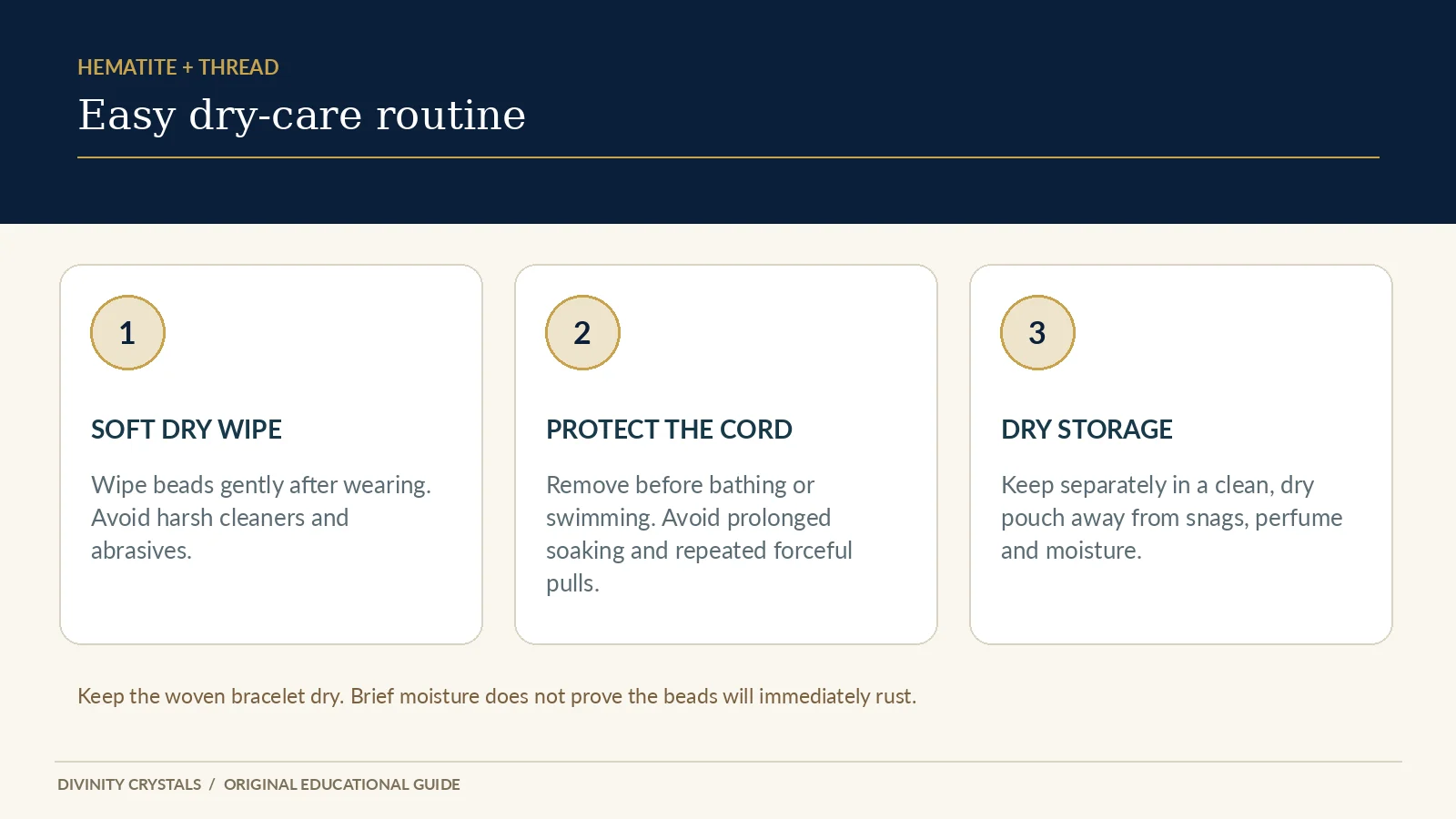
What Is Hematite? Iron Oxide and Mineral Properties
Hematite is a naturally occurring oxide mineral with chemical formula Fe₂O₃. Despite its iron content it is not metallic iron, so it is incorrect to assume that every brief water exposure will make a polished hematite pebble rust instantly. The mineral itself may be metallic grey-black, earthy red-brown or a combination.
Its relatively high density helps explain why genuine pieces can feel heavy for their size. The characteristic reddish-brown streak provides an additional mineral identification clue, but destructive tests should not be performed on polished retail goods.
Mineral facts: Mindat and GIA’s historical mineral-pigment discussion.
Natural Hematite vs Magnetic Hematine
A common buying issue is the sale of strong magnets as “magnetic hematite.” In many cases this material is commercially called hematine and is manufactured rather than natural hematite. Natural hematite is normally not strongly magnetic; different associated minerals can complicate simple magnet tests.
Ask a seller whether a magnetic bead is truly natural hematite and, for meaningful purchases, seek a mineral identification report. Shiny metallic surfaces, unusual weight and magnetic attraction are not by themselves proof of authenticity.
See the International Gem Society’s description of magnetic hematine.
Hematite Meanings, Root Chakra and Grounding
In modern gemstone traditions, hematite is associated with the root chakra, grounding, protection and self-control. Some people carry a polished stone as a physical prompt for taking a break, writing an intention or returning attention to a task.
These associations are spiritual or personal meanings. There is no good clinical evidence that placing hematite near the body stops panic attacks, raises iron levels, improves circulation or directly affects memory and focus. Such outcomes should not be promised in product descriptions.
Three nonmedical ways to use a hematite stone
- Desk display: Choose a sound specimen for decoration or as a reminder to review your priorities.
- Bracelet styling: Wear polished beads if comfortable, checking actual material and protecting the strand from stress.
- Reflection: Use a pebble as a tactile reminder of a breathing or journaling routine without assuming a therapeutic mineral effect.
How to Clean Hematite Without Damaging It
There is no scientific basis for claiming that an iron oxide stone turns instantly into rust after a short rinse. Still, its surface finish, joints, metal findings, paint or other associated minerals can make some pieces moisture-sensitive. Use the least invasive method suitable for the actual item.
The International Gem Society lists a soft brush, mild detergent and warm water for suitable hematite, while advising against mechanical systems such as steam or ultrasonic cleaning. Always dry carefully afterward. If the item is glued, plated, coated or otherwise fragile, prefer a conservative dry method and manufacturer’s guidance.
For broader principles, see our Crystal Cleansing and Mineral Care Guide. Symbolic smoke, salt and selenite practices should not be confused with removing physical grime.
Hematite Jewellery, Raw Stones and Product Selection
A polished tumble gives a rounded and reflective appearance, while some raw hematite has metallic crystal faces or an earthy texture. Bead bracelets introduce additional components, including elastic, strings and possibly other mineral or manufactured materials.
Compare our Hematite Tumbled Stones listing with the Raw Crystals and Tumbled Stones collections. Confirm current stock, exact photos, dimensions, mass, treatments and material identity before ordering.
Descriptions such as “certified,” “natural” and “magnetic” require evidence or careful qualification; a web listing alone is not a mineral identification test.
Hematite in Pigments and Decorative History
Red hematite-rich earth pigments have been used for colouring and artistic work for a very long time. Dense, metallic-looking forms of the mineral have also been carved for jewellery and decorative items. A stone can be valuable for appearance and cultural history without a promised healing outcome.
For historical context see GIA’s article on gemstone materials used as pigments.
Frequently Asked Questions
What is Hematite made of?
Hematite is iron(III) oxide, Fe₂O₃. It is an oxide mineral, not pure metallic iron.
Why can Hematite look silver, black or red?
Hematite’s appearance depends on crystal structure, particle size, texture and surface polish. Metallic specimens can be steel-grey, while earthy specimens may be reddish.
What colour streak does real Hematite leave?
Most Hematite produces a reddish to reddish-brown streak on an appropriate surface, a distinctive mineral clue. Do not perform destructive streak tests on jewellery.
Is natural Hematite magnetic?
Ordinary natural Hematite is generally not strongly magnetic, though some specimens containing magnetite or related phases may show a response.
What is magnetic hematine?
Hematine is a trade term often used for manufactured magnetic beads or ferrite-like material sold as ‘magnetic hematite.’ Ask the seller for an accurate material identification.
What Hematite products does Divinity Crystals sell?
The verified catalogue lists raw Hematite chunks, polished Hematite tumbles and a double-layered grey-threaded bracelet advertised with 38 beads.
Does a ’38 bead’ bracelet guarantee a particular wrist fit?
No. Total bead count, bead diameter, spacers, knots and the inside circumference determine how the bracelet fits.
Does Hematite improve iron levels or blood circulation?
No reliable clinical evidence establishes that wearing Hematite raises iron levels, treats anaemia or improves circulation.
How should Hematite be cleaned?
Begin with a soft brush or cloth. A brief mild-detergent wash may suit sound compatible stones, followed by thorough drying. Avoid steam and ultrasonic systems.
Can strong magnetism prove a Hematite bracelet is authentic?
No. Strongly magnetic beads may be manufactured hematine or a different material, so magnetism alone is not proof of natural Hematite.
What does ‘lab certified’ mean for Hematite jewellery?
Check the actual laboratory report, the tested sample, its findings and whether the report applies to the purchased item; a retail title alone is insufficient.
Is Hematite safe for direct drinking-water immersion?
Do not place untested mineral specimens or jewellery directly in drinking water. Mineral identification alone does not demonstrate food-contact safety.
How can I distinguish Hematite from a black Onyx or glass lookalike?
Hematite is relatively dense and metallic and has characteristic mineral properties. Polished black onyx and glass have different compositions; professional identification is preferable for valuable or disputed stones.
Choose Real Hematite for Its Metallic Mineral Beauty
Hematite brings together a distinctive reflective appearance, an interesting reddish streak and an important history as an iron-rich pigment and mineral. Good buying decisions rely on true material identity, genuine product images, accurate measurements and careful construction, not on magnetic or therapeutic promises.
Its grounding symbolism can be enjoyed as a personal preference while actual mineral facts and care guide the purchase.