


Divinity Crystals · Black Tourmaline, Personal Boundaries & Gemstone Care
Leaving a difficult relationship or reducing contact is not always as simple as making a declaration. Memories may remain vivid, shared responsibilities may continue, and someone who disregards boundaries may pressure you to resume the old dynamic. The first question is not whether an invisible cord still exists: it is what behaviour is affecting you, what you need, and which actions are safe.
In contemporary crystal traditions, Black Tourmaline is often linked with grounding, the root chakra and spiritual protection. Its deep black surface and natural longitudinal ridges make it a distinctive mineral for a shelf, pocket or bracelet. It can serve as a personal symbol of firmness, but it cannot repel another person’s actions, prevent abuse or physically sever an emotional bond.
Our guide focuses on identifying unhealthy behaviour, setting realistic boundaries, understanding when professional support matters and choosing correctly described Black Tourmaline products. The lifestyle image is original editorial artwork, and the actual store listing photographs appear below.
We offer Black Tourmaline tumblestones, double-layered bracelets and decorative chips. You do not need to purchase a stone to make a safer decision or set a boundary.
Six things to understand before trying “cord cutting”
- “Toxic relationship” is a descriptive phrase, not a formal diagnosis of someone else’s character.
- Boundaries describe your choices and actions; they do not guarantee that others will cooperate.
- Leaving, reducing contact or confronting a person can raise safety concerns in coercive or abusive relationships.
- Tourmaline symbolism does not substitute for protective action, trusted people or professional assistance.
- Black Tourmaline is a real silicate mineral; its identity and care matter more than energy claims.
- The actual form—tumbled stone, chips or a specific bracelet—should match the product you intend to buy.
What an unhealthy emotional tie can actually mean
People may use “emotional tie” to describe memories, attachment, fear, guilt, a shared family obligation or recurring communication. Those are ordinary human experiences and circumstances, not evidence of a measurable energy cord. A difficult bond may remain powerful because a relationship was important or because pressure and uncertainty continue—not because you failed to complete a ritual.
Instead of labelling the other person in a way that ends the conversation, describe specific conduct: repeated insults, unwanted calls, control over spending, threats, monitoring, manipulation, or violations of an agreed boundary. The details matter because they help you decide whether a conversation, more distance, workplace support or specialist safety help is appropriate.
Disagreement is not automatically abuse
Relationships can include frustration and different expectations without coercion. A healthy conversation may allow both people to explain needs, accept responsibility and negotiate workable limits. Not every uncomfortable interaction requires permanent separation.
Patterns of coercion deserve attention
Fear, intimidation, stalking, threats, violence and isolation are more serious concerns. If those apply, do not rely on a generic instruction to confront someone or abruptly announce a separation. Support from people and services experienced in safety planning may be important.
Some people need to disengage from a casual acquaintance; others share housing, parenting, finances or employment with the person involved. There is no universal “five-minute cord-cutting” procedure that resolves every situation safely.
What Black Tourmaline is—and why its symbolism appeals
Black Tourmaline is often schorl, a black member of the tourmaline mineral group. Natural pieces may appear opaque black with strong lengthwise grooves, a glassy sheen or rough fractured surfaces. The material is used as mineral specimens, polished stones and jewellery beads.
In spiritual communities, people sometimes call it a protective or grounding stone and associate it with the root chakra (Muladhara). Those traditions can have personal or cultural value. However, descriptions like “repels toxic people,” “blocks jealousy,” “protects your aura,” or “neutralises emotional cords” are not verified physical capabilities of the mineral.
A more modest use is to let an object remind you of an intention. For example, a small smooth black stone on a desk might prompt the question “What limit do I need today?” The stone does not enforce the limit or change someone else’s behaviour; you choose what to do.
How to recognise Black Tourmaline as a physical mineral
Appearance and structure
Schorl commonly forms dark prismatic crystals with longitudinal striations. Some raw pieces show irregular fracture surfaces or attached lighter mineral matrix. Polished Tourmaline can become glossy and resemble other black stones at a distance. Appearance may suggest a mineral but is not a substitute for identification when authenticity matters.
Hardness and daily use
Tourmaline is generally around 7–7.5 on the Mohs hardness scale. It resists ordinary scratching better than softer minerals but can still chip, crack or break. Rough specimens need a stable display; bead bracelets need attention to elastic, threading, wear and fit.
Do not assume every black glossy stone is Tourmaline. Black Obsidian is volcanic glass, while Onyx, Hematite, dyed glass and other materials can look similar in casual photographs. Ask about the actual material, treatment, dimensions and any relevant documentation. Avoid scratching, burning or chemically testing your own finished merchandise.
Five actual gemstone-product photographs from our store
These images come from published Divinity Crystals listings: two angles of tumblestones, chips, a double-layered bracelet, and a clearly labelled mixed-stone bracelet. The illustrations elsewhere on this page are not exact stock photos.

Black Tourmaline Tumblestones
Published product photograph of polished dark tumblestones. Check pack quantity, dimensions and finish on its listing.

Tumbles: Alternative Gallery View
A second photographed view of the same published tumblestone listing helps compare surface appearance; not a separate SKU.

Black Tourmaline Chips
Small irregular dark mineral fragments, sold in chip packs for contained crafts and displays rather than comfortable hand-holding.

Double-Layered Black Tourmaline Bracelet
Published photograph of the threaded two-row black-bead bracelet. Check construction, bead count and wrist fit.
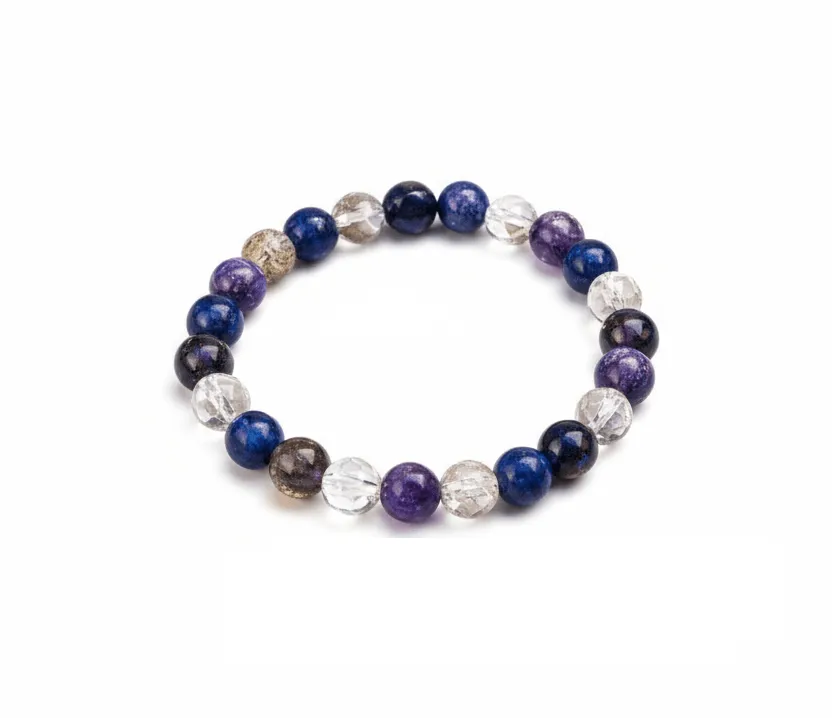
Numerology 8 Mixed-Stone Bracelet
A different mixed-stone product that lists Black Tourmaline together with Amethyst and Lapis Lazuli. It is not a pure Tourmaline bracelet.
Four practical steps for boundaries and a calmer next decision
There is no mandatory ritual, particular time of day or need to hold a stone. The following questions can be useful when reflecting on difficult contact, but they are not a substitute for a safety plan or specialised help where harm is possible.
Identify the repeated behaviour
Instead of relying on a broad label such as “toxic,” describe what is happening: insults, broken boundaries, pressure, monitoring, threats, or repeated disrespect. You do not need to prove someone’s motives to take your experience seriously.
Decide what limit you can enforce
A practical boundary names your own action: “I will end the call if I am shouted at,” or “I won’t respond outside agreed work hours.” The goal is not to control the other person’s behaviour.
Consider safety and support
If there is fear, coercion, stalking, abuse or a risk of retaliation, a simple confrontation may not be safe. Reach out to trustworthy people or appropriate specialist services and plan around your circumstances.
Follow through and reassess
Take one manageable step—reduce an optional interaction, document a concerning event, request help, or end a conversation when safe. Reassess the boundary if conditions change.

You might write one sentence such as “I will not continue a conversation when I am being insulted, and I will leave the call when safe.” This describes your own decision. It does not depend on the other person agreeing that you are right, and it does not promise to end a difficult pattern instantly.
What healthy boundaries might look like in everyday situations
After an ended friendship
If contact keeps reopening a disagreement, you may choose not to reply immediately, stop a repeated argument or reduce optional conversations. You do not owe a new explanation every time, but consider practical shared responsibilities and respectful communication where needed.
With a difficult colleague
Try defining the work-specific behaviour and channels you need: meeting expectations, no out-of-hours messaging, or documented assignment changes. Workplace policies, managers or HR may be relevant if conduct is persistent or serious.
With a family member
Family history may make a limit emotionally complicated. You might choose shorter visits, change topics or clarify what support you can offer. Where there are threats or controlling behaviour, prioritise a safe and appropriate plan rather than an announcement made without support.
After an abusive or coercive relationship
Safety comes first. Sudden confrontation or a public declaration may increase risk. Consider a trusted local support service, legal advice, a professional advocate or emergency help as appropriate to the circumstances. Stones and visualisation cannot provide this protection.
There is no virtue in allowing someone to ignore your needs repeatedly. Equally, boundary-setting is not a competition to appear invulnerable; it may require patience, practical resources, help from others and careful choices over time.
When safety matters, practical support comes first
Crystal language should never suggest that a person experiencing intimidation, stalking or abuse is responsible because they have “weak protection,” failed to cleanse a stone or did not cut an energetic cord. The cause of harmful conduct is not a lack of gemstones.
If you think you or someone else may be in immediate danger, seek local emergency assistance. For ongoing coercion or harassment, an appropriately trained support organisation can help consider safety, communication and legal options. If memories or anxiety are disrupting daily life, qualified mental-health support can also be valuable. None of these decisions requires spiritual performance.
How to choose a Black Tourmaline form that actually fits
| Form | What it looks like | Useful checks before buying |
|---|---|---|
| Tumblestones | Rounded black stones with variable gloss and surface patterns. | Check number of pieces, dimensions, natural imperfections and the actual listing view. |
| Natural chips | Small angular dark fragments with rough edges. | Check pack weight, piece-size variation and suitability for contained decorative crafts. |
| Double-layered bracelet | Two distinct rows of black gemstone beads with threaded construction. | Check stated bead count, row configuration, string, clasp or fit and certification claims. |
| Diamond-cut bracelet | Faceted black beads in a wearable single-row design. | Verify bead size and faceting against the precise product photographs; images and descriptions must agree. |
| Mixed-stone bracelet | Different materials used together in one finished bracelet. | Check every named stone. A bracelet combining Tourmaline, Amethyst and Lapis is not solid Tourmaline. |
The site currently has a Black Tourmaline diamond-cut bracelet listing in addition to the products photographed above. Evaluate its exact bead style and material claims on its own page rather than assuming an editorial photo demonstrates the shape.
Authenticity: dark colour alone is not proof
Black Tourmaline may have visible linear ridges in a raw crystal, while finished beads can be highly polished. Dark stones can also be sold under broad names such as “protection stone.” Accurate buying requires the actual material name and enough product specifics to judge the format.
A credible listing should identify whether it is rough or polished, approximate dimensions, bead diameter or pack weight, and what any testing or certification supports. If origin or treatment is important, ask for evidence tied to the actual item. A laboratory report for one specimen should not be assumed to cover every piece in a mixed parcel.
Read our real-versus-fake crystal guide and the Black Tourmaline mineral guide for deeper identification principles. For any difficult-to-identify black stone, a qualified gemologist is preferable to destructive home tests.
Practical care for Tourmaline stones and bracelets
Dust gently and avoid sudden heat
Use a soft dry cloth or brush for routine dusting. Treat a heavily fractured crystal carefully, and avoid exposure to strong cleaning agents, rapid heating or thermal shocks. The presence of a coating, dye, adhesive or setting may alter what cleaning method is appropriate.
Store the real physical item safely
Keep rough pieces securely supported and separate from delicate jewellery. Bracelets can be damaged by snagging, impacts, repeated wetting or metal and stringing fatigue. Small tumblestones and loose chips should remain away from children and pets.
You do not need to place Tourmaline in saltwater, burn incense beside it or keep it in direct sun to maintain its physical properties. Some people enjoy symbolic cleansing practices, but these are belief-based and should not be confused with removing dirt. Our stone-safe cleaning guide explains that difference.
An optional personal reminder without magical claims
If you enjoy crystals, a small Black Tourmaline tumblestone can sit on a desk as a prompt to ask whether a conversation is respectful or a request is reasonable. A bracelet might have a similar personal meaning. Nothing about the object makes you untouchable or changes a person who is violating your boundaries.
Instead of visualising a shield as guaranteed protection, write down a real choice: a sentence you can say safely, a person you can ask for help, or a practical step you can take. A meaningful object can accompany action; it should never replace it.
Related articles on Rose Quartz and resentment and Amethyst and forgiveness discuss different reflective themes. Neither forgiveness nor reconciliation is compulsory for personal safety.
Frequently asked questions about Black Tourmaline and boundaries
We separate gemstone facts and traditional meanings from relationship decisions and safety concerns.
Can Black Tourmaline cut emotional cords?
There is no scientific evidence that a gemstone literally severs an invisible connection between people. “Cord cutting” is a symbolic expression used in some spiritual practices; real boundaries depend on choices, support and circumstances.
Does Black Tourmaline protect against an abusive person?
No. A crystal cannot physically prevent violence, stalking, manipulation or harassment. Prioritise real-world safety planning, trusted contacts and appropriate professional or emergency support when needed.
What is Black Tourmaline?
Black Tourmaline is commonly schorl, a black member of the tourmaline mineral group. Natural pieces often show lengthwise striations and glassy or dull black surfaces.
Is Black Tourmaline the same as Obsidian?
No. Obsidian is volcanic glass, while Black Tourmaline is a crystalline silicate mineral. A glossy black appearance alone cannot reliably distinguish them.
Can a bracelet make other people treat me better?
No gemstone can control another person’s behaviour. Clear communication, enforceable limits, organisational procedures and support are more relevant to managing difficult interactions.
Should I contact a former partner to perform a cord-cutting ritual?
No contact is required. Respect no-contact requests, legal orders and your own safety. A symbolic private exercise should never be used to justify unwanted contact.
What if my boundary is ignored?
Focus on safe, realistic actions you can take, and seek additional support if the situation escalates. In an abusive setting, generic advice to confront someone can be dangerous, so tailor decisions to safety.
Can I hold a rough Tourmaline chunk during journaling?
Only if its edges are comfortable and the specimen is stable. Rough material can have sharp edges or splinters; a smooth tumbled stone may be easier to handle.
Is a polished black stone necessarily tourmaline?
No. Many black materials look alike in photos. For authenticity questions, inspect seller details, treatment disclosure and appropriate gemological evidence rather than relying on a colour test.
Does the Numerology 8 bracelet contain only Black Tourmaline?
No. The cited listing combines Black Tourmaline with other named stones including Amethyst and Lapis Lazuli. Do not mistake its mixed-bead image for a solid Black Tourmaline bracelet.
How do I avoid relying on a crystal instead of getting help?
Treat a stone as optional decoration or a private reminder. For significant relationship distress, coercion, harassment or risk of harm, prioritise trusted people and suitable professional or emergency resources.
Final perspective: a stone can remind, but boundaries are actions
Black Tourmaline is valued as a mineral and as a symbol of grounding in some spiritual traditions. Its dark crystal habit and varied jewellery forms give it genuine physical appeal. Those qualities do not make it a protective device against coercion, abuse or another person’s choices.
Choose the correct Black Tourmaline product for its material, texture, size and intended use. For a difficult relationship, focus on behaviour, realistic limits, support and safety. We can appreciate a stone without asking it to solve what people, systems and practical action must address.