
THE DIVINITY JOURNAL · MOONSTONE & RAINBOW MOONSTONE
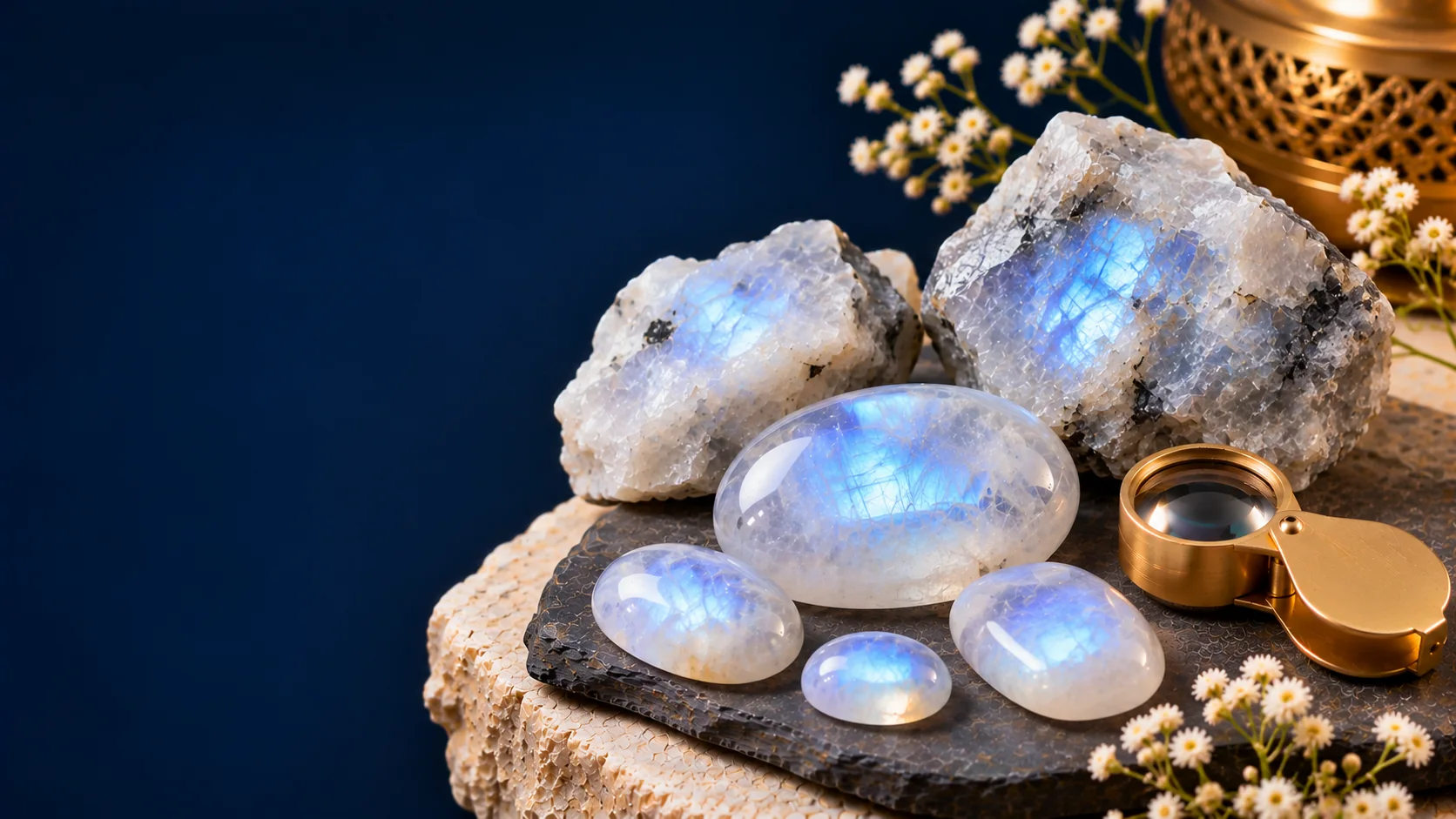
Moonstone is admired for its floating internal glow, while Rainbow Moonstone can display vivid blue or multicolour flashes on a pale stone. Both belong to the beautiful feldspar mineral family, but their commercial names do not always identify the same species.
Traditional Moonstone is generally orthoclase-based feldspar. Rainbow Moonstone is commonly the trade name for pale Labradorite, a related plagioclase feldspar. Understanding that distinction helps buyers compare a polished tumble, a rough specimen or a finished bracelet with clearer expectations.
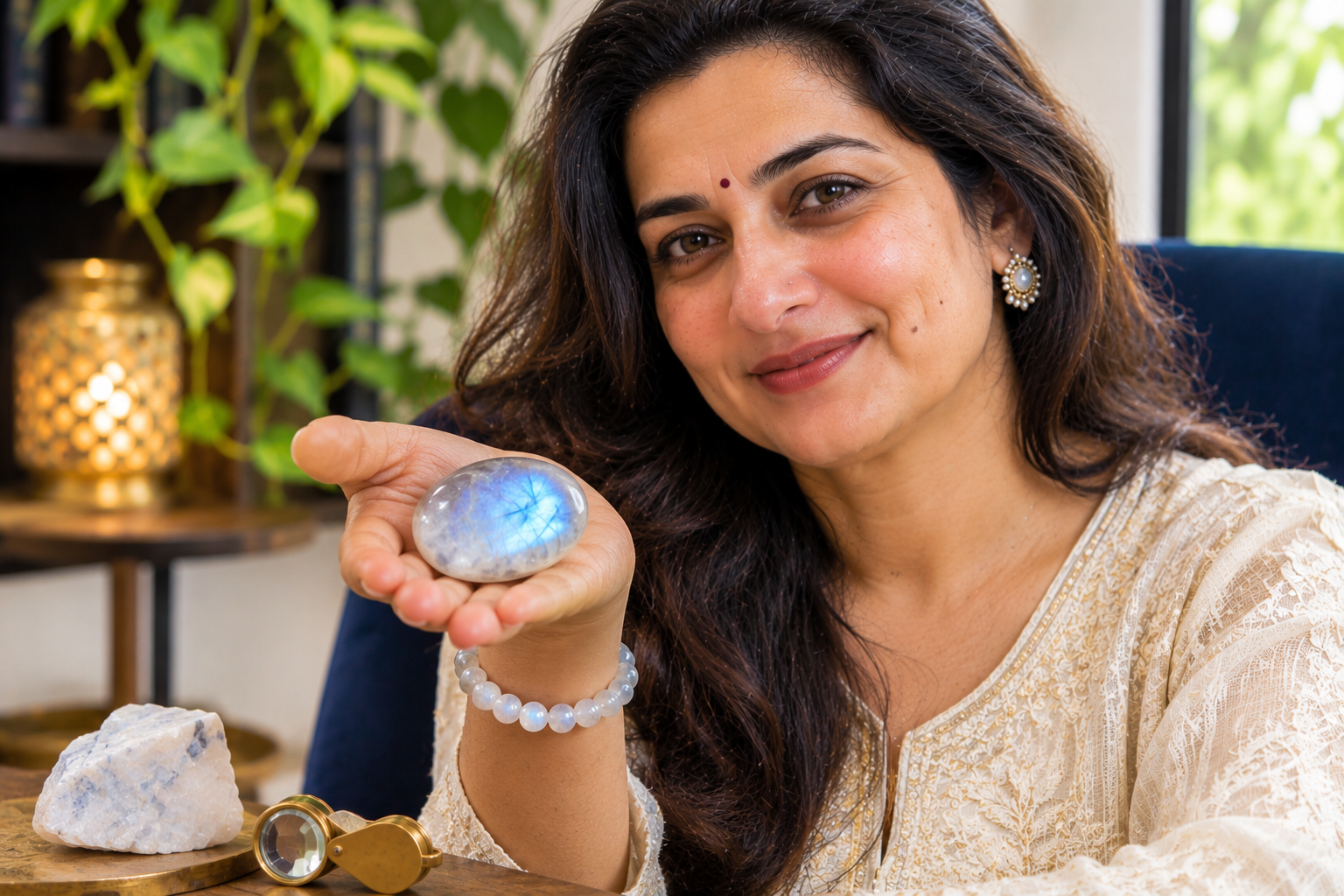
Explore five real Divinity Crystals Rainbow Moonstone product photographs, an original Indian lifestyle portrait showing the blue flash, a gemstone comparison, and care advice for delicate feldspar jewellery. Lunar and intuition symbolism remains a personal tradition rather than a medical benefit.
FIVE ACTUAL DIVINITY CRYSTALS RAINBOW MOONSTONE PRODUCT PHOTOGRAPHS
Rainbow Moonstone: Polished, Raw, Threaded and Loose Chip Forms
These original catalogue images show real product formats, including the correct sky-blue thread of the double-row bracelet. A bright blue-flash image is only one angle of the stone.
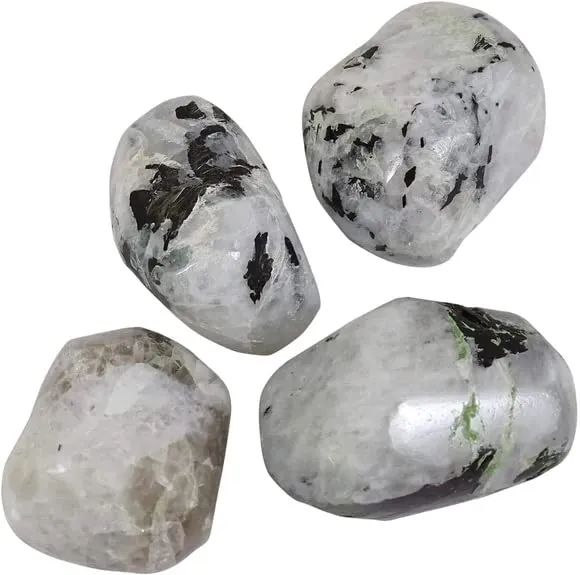
Rainbow Moonstone Polished Tumbles
Real Divinity Crystals polished Rainbow Moonstone tumble photograph. Compare pale bodycolour, finish and actual pack details.

Directional Blue-Flash Tumbles
Another original catalogue photograph showing blue-flash areas. Blue sheen varies with lighting and angle.
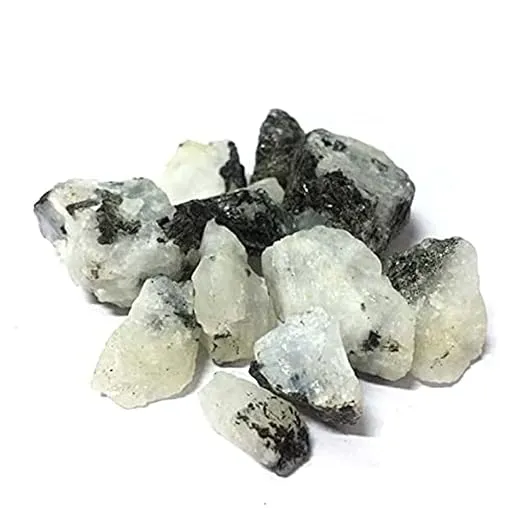
Raw Rainbow Moonstone Chunks
Genuine rough feldspar product photo, showing irregular natural-looking edges and fracture-sensitive surfaces.
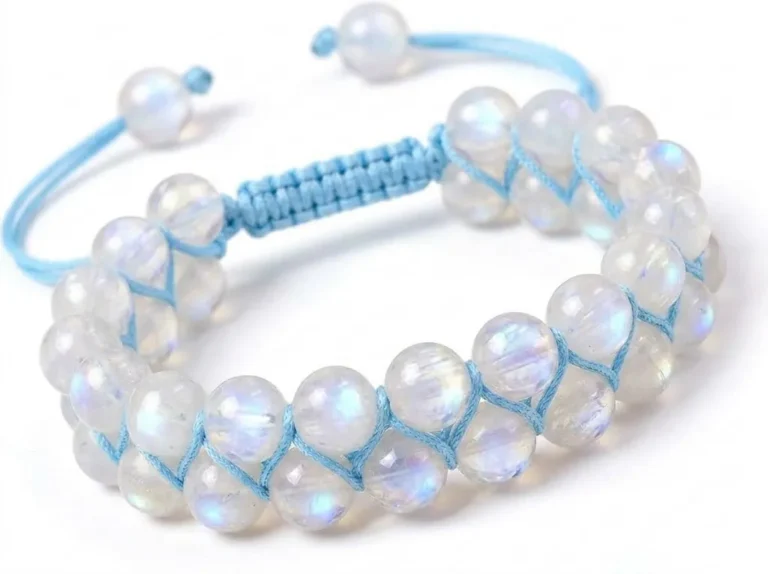
Sky-Blue-Threaded Double-Row Bracelet
Actual two-row Rainbow Moonstone bead bracelet with light blue thread. Check fit, bead count, colour and any sample report.
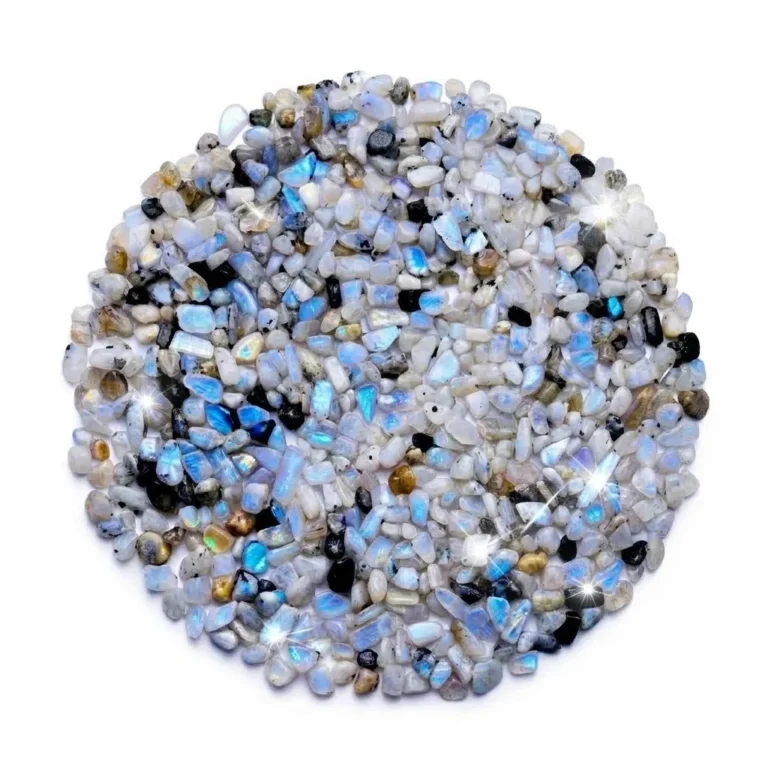
Small Rainbow Moonstone Crystal Chips
Actual loose small-chip catalogue photograph for craft and grid arrangements; not the same format as smooth tumbles.
MINERAL IDENTITY · OPTICAL GLOW
Moonstone vs Rainbow Moonstone
Traditional Moonstone
Orthoclase-based feldspar with white or blue billowing adularescence, often appearing as a soft inner glow.
Rainbow Moonstone
Usually light-coloured Labradorite, a related plagioclase feldspar with vivid blue or multicolour flashes.
Opalite-Style Glass
Often manufactured opalescent glass, not the same feldspar mineral. A glow cannot authenticate a piece.
Colour swatches are educational only. Mineral identification depends on the specimen and suitable evidence, not a colour match.
Moonstone Mineral Facts, Optical Sheen & Buyer Checks
| Property | What buyers should know |
|---|---|
| Mineral family | Moonstone and Rainbow Moonstone belong to the feldspar family, not to quartz or natural opal. |
| Traditional Moonstone | Commonly orthoclase-based alkali feldspar with fine albite layers producing a floating white or blue glow, called adularescence. |
| Rainbow Moonstone | A widely used trade name for light-coloured Labradorite, a plagioclase feldspar, displaying blue or multicolour optical sheen. |
| Optical effect | Internal mineral layers interact with light. The glow can change dramatically as the stone or light source moves. |
| Hardness | Generally Mohs 6–6.5. Feldspar cleavage makes corners, beads and crystal edges susceptible to chipping under impact. |
| Opalite lookalikes | Much commercial opalite is manufactured opalescent glass. The name, glow or blue tint alone cannot prove a feldspar species. |
| Verified store products | Rainbow Moonstone polished tumbles, rough chunks, sky-blue-threaded double-row bracelet and small loose chips. |
| Jewellery checks | Ask for actual rotating photos, bead size and fit, surface condition, disclosure of treatments and relevant lab documentation. |
| Care | Warm mild soapy water may suit sound compatible pieces, but protect stringing and fragile stones. Do not use steam or ultrasonic cleaners. |
Independent gemstone references: GIA Moonstone Buyer’s Guide and GIA Care & Cleaning Guide.
MOONSTONE · GENUINE FELDSPAR & JEWELLERY BUYING GUIDE
Identify Feldspar · Inspect the Flash · Protect Jewellery
A product-specific visual checklist explaining the real material, changing sheen and safe care of finished Rainbow Moonstone.
FELDSPAR FAMILY · BLUE SHEEN · MOHS 6–6.5
Understand the difference between traditional Moonstone, Rainbow Moonstone and glass
Confirm the Feldspar Type
Traditional Moonstone is generally orthoclase-based, while Rainbow Moonstone usually refers to pale Labradorite. Opalite glass is another material.
Look for an accurate mineral description, not simply a blue glow.
Inspect the Real Product
Compare tumblestones, raw chunks, loose chips and the sky-blue-threaded two-row bracelet. Ask for rotating images, physical dimensions and condition.
Flash varies by angle; photos alone do not establish a lab result.
Protect the Soft Edges
Feldspar cleavage makes chips and beads more fracture-prone than their polish suggests. Use gentle care and protect fittings and strings.
Warm mild soapy water for suitable items; no steam or ultrasonics.
Explore actual Rainbow Moonstone listings: Polished Tumbles · Raw Moonstone · Blue-Threaded Double-Row Bracelet · Crystal Chips
Before Buying Rainbow Moonstone
- Ask whether the seller means traditional Moonstone or pale Labradorite.
- Compare the actual product under multiple lighting angles to judge the optical flash.
- Inspect cracks, dark inclusions, drill holes and polished edges.
- Confirm selected tumble count, raw-chunk size, chip pack weight or bracelet fit.
- For the double-row style, inspect sky-blue thread and the claimed 38 beads.
- Review the actual report, identification, sample reference and treatment disclosures.
Safe Moonstone Jewellery Care
- Wipe gently with a soft clean cloth first.
- For sound compatible pieces, clean gently with warm mild soapy water and dry promptly.
- Avoid steam and ultrasonic jewellery cleaners.
- Protect against impact, especially along feldspar cleavage edges.
- Keep strong chemicals and prolonged soaking away from uncertain finishes and threads.
- Store separately from harder gems, with loose chips contained securely.
What Is Moonstone? Understanding Feldspar and Adularescence
Moonstone is a traditional gem name associated with orthoclase feldspar and thin albite intergrowths. Light scattering through the very fine layers creates a floating, shifting internal glow called adularescence. The bodycolour can range from colourless and white to grey, peach, green or brown, while the sheen may be silver, white or blue.
GIA describes moonstone as a feldspar gem with a Mohs hardness of about 6–6.5. This moderate hardness can be misleading because cleavage and poor toughness make many specimens more susceptible to chips than some harder jewellery gemstones. Read GIA’s Moonstone overview.
Rainbow Moonstone vs Traditional Moonstone: Why the Name Matters
Not everything sold under the name moonstone has identical mineral chemistry. Traditional moonstone is normally an alkali feldspar such as orthoclase with fine albite layers. Rainbow moonstone, despite its familiar retail name, commonly refers to transparent or white labradorite—a plagioclase feldspar—with blue or multicolour labradorescence.
GIA explicitly explains this distinction in its Moonstone buyer’s guide. The trade label is not necessarily deceptive when the actual mineral is clearly described. For valuable purchases, a gemological report can help establish whether the tested sample is orthoclase-based moonstone, labradorite or another feldspar.
Moonstone and labradorite are related but different, so the product description should be precise. Our Labradorite guide offers additional context.
How to Spot Glass Opalite and Moonstone Lookalikes
Many pieces sold as “opalite” in craft or jewellery channels are manufactured opalescent glass. That material may show a luminous milky blue or orange cast but is not itself a feldspar gemstone. The retail word opalite can be used imprecisely, and an image alone is insufficient to diagnose a stone.
Natural moonstone and rainbow moonstone can also have internal features, blue sheen or dark mineral inclusions, but none of those traits is universal. Do not assume every real piece must feel cold, include black spots or flash at exactly the same angle. Avoid scratch, flame or solvent tests on jewellery.
Check the disclosed mineral identity and compare GIA’s visual and optical quality criteria. If the distinction matters financially, request independent identification of the relevant sample and review treatment disclosures.
Moonstone Meaning, New Beginnings and Lunar Traditions
Moonstone is associated with lunar cycles, reflection, intuition, feminine symbolism and new beginnings in various historical and modern practices. Some people display a small stone while journaling, choose a bracelet because they enjoy the shifting blue sheen, or use a specimen as a personal reminder when starting a project.
These are meaningful cultural or personal interpretations, not established physiological effects. Moonstone has not been clinically shown to increase fertility, regulate hormones, cure insomnia, improve psychic abilities or treat anxiety. Physical outcomes require evidence-based medical or practical approaches.
Three ways to enjoy moonstone without unsupported claims
- Display: Keep a stable piece on a soft-lined shelf away from accidental knocks.
- Occasional jewellery: Choose beads or cabochons for their appearance and handle carefully.
- Reflection: Use a decorative stone as an optional visual prompt for journaling or meditation.
How to Clean and Store Moonstone Safely
Moonstone and rainbow moonstone can be delicate despite their appealing polish. Their feldspar cleavage makes them vulnerable to sharp knocks and rapid temperature changes. GIA recommends warm, soapy water for cleaning moonstone and advises avoiding ultrasonic and steam cleaners.
For intact and compatible items, use a soft cloth or brush with mild soapy water and dry carefully. If the piece is fractured, glued, coated, set in delicate metalwork or strung with elastic, choose the least invasive appropriate method and follow the seller’s care instructions. Do not place unknown stones directly in drinking water.
Full-moon or selenite “recharging” rituals may be personally meaningful, but they do not physically repair cleavage damage, sterilize a gemstone or demonstrate an energy-transfer mechanism. See the Crystal Cleansing Methods Guide.
Buy Rainbow Moonstone at Divinity Crystals
The Divinity Crystals catalogue includes Rainbow Moonstone Tumbled Stones, Rainbow Moonstone Raw Chunks and a Double-Layered Rainbow Moonstone Bracelet. The Moonstone Crystal Chips listing offers another format.
Compare actual photographs, bead or piece dimensions, optical flash, fractures, treatment disclosure, price and current inventory. When a product title says “lab certified,” request the report and confirm the issuing laboratory, tested material, report number and whether the findings apply to that particular stone or lot. A marketing title alone is not laboratory proof.
Browse related Tumbled Stones and Raw Crystals collections for alternative formats.
Frequently Asked Questions
What is traditional Moonstone made of?
Traditional Moonstone is an orthoclase-based feldspar gem associated with fine layers of other feldspar such as albite; optical effects make light appear to float inside.
Is Rainbow Moonstone really Moonstone?
Rainbow Moonstone is a familiar trade name but gemologically commonly refers to transparent or pale Labradorite, which is plagioclase feldspar rather than traditional orthoclase Moonstone.
What is adularescence?
Adularescence is the floating internal billowing glow associated with traditional Moonstone and its fine feldspar layers.
How is Rainbow Moonstone different from Labradorite?
Rainbow Moonstone usually refers to lighter or transparent Labradorite that displays blue or multicolour light effects. Darker bodycolour Labradorite is more often sold simply as Labradorite.
Is Opalite the same as Moonstone?
No. Much jewellery sold as opalite is manufactured glass with an opalescent appearance. Trade labels can be imprecise; verify actual material.
How do I examine the optical flash before buying?
Review several real photos or a short video of the exact piece rotating under steady light. Look at the normal bodycolour, flash, fractures and surface polish.
Is Moonstone suitable for daily bracelets?
It can be worn with care, but its feldspar cleavage means impacts, rough work and poor bead drilling may cause breakage. Protect the bracelet and its thread.
Which Rainbow Moonstone products does Divinity Crystals offer?
The verified catalogue lists polished tumbles, raw chunks, a sky-blue-threaded double-row bracelet and small crystal chips.
How are Moonstone chips different from tumblestones?
Chips are smaller irregular fragments typically sold by weight; tumbles are rounded polished pieces that are easier to handle individually.
What does ‘lab certified’ mean for a bracelet?
A listing’s claim should be checked against a specific report. Review sample identity, tested material, issuing laboratory and applicability to the actual item or lot.
How should I clean Moonstone?
For suitable sound stones, GIA recommends gentle warm soapy water and a soft brush. Avoid ultrasonic and steam cleaning. Be extra cautious with damaged beads, elastic and adhesives.
Can Moonstone cure sleep or hormonal concerns?
There is no reliable clinical evidence that any Moonstone gemstone treats insomnia, hormonal disorders, infertility or anxiety. Its lunar and intuition associations are traditional.
Choose Moonstone for Real Optical Beauty and Clear Mineral Facts
Traditional Moonstone and light-coloured Labradorite can both create memorable shifting light effects, but knowing their mineral differences helps you select the right object. Authentic product photos, transparent specifications and gemstone-appropriate care matter far more than generic promises attached to the name.
Enjoy lunar symbolism and reflections as personal traditions while keeping health and life outcomes separate from gemstone effects.