

Description
Asscher Cut Moissanite
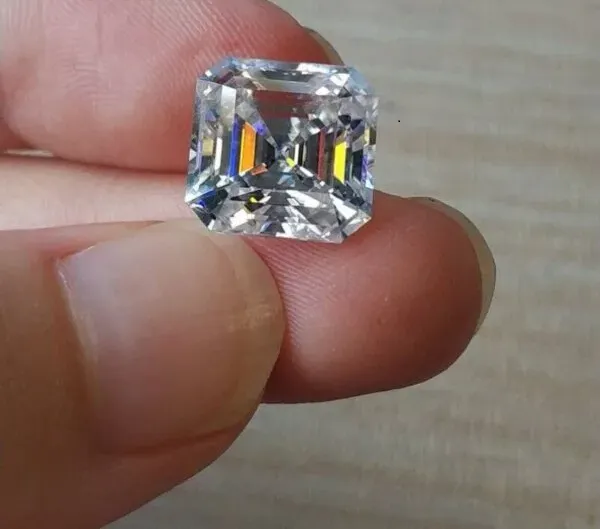
Geometry made luminous. Our lab-grown Asscher-cut moissanite brings a balanced square outline, cropped corners and Art Deco-inspired step-cut elegance to your jewellery design.
Discover our existing gemstone photographs, cut details and the practical checks that matter before you choose.

Quiet brilliance. Captivating depth.
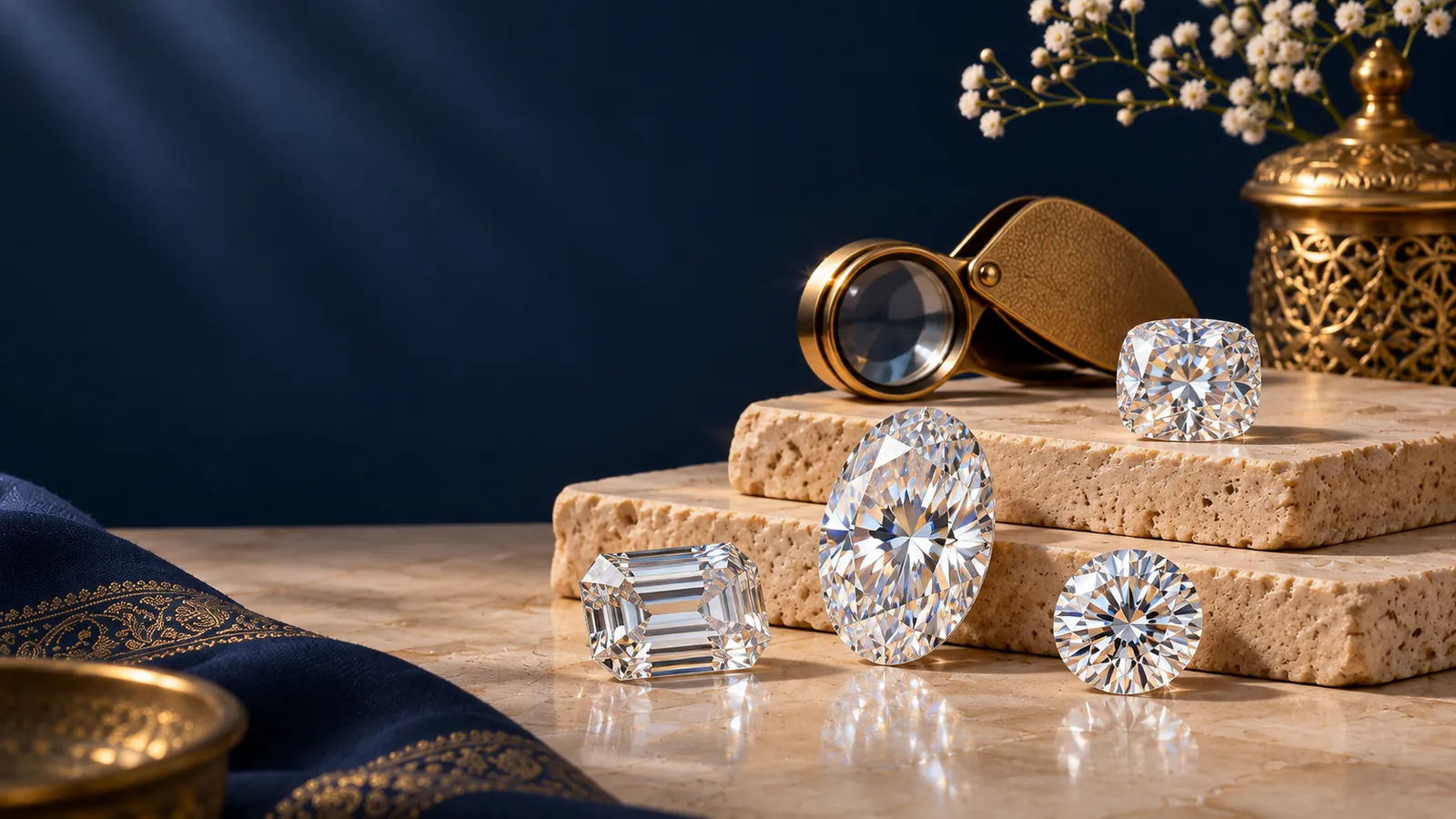
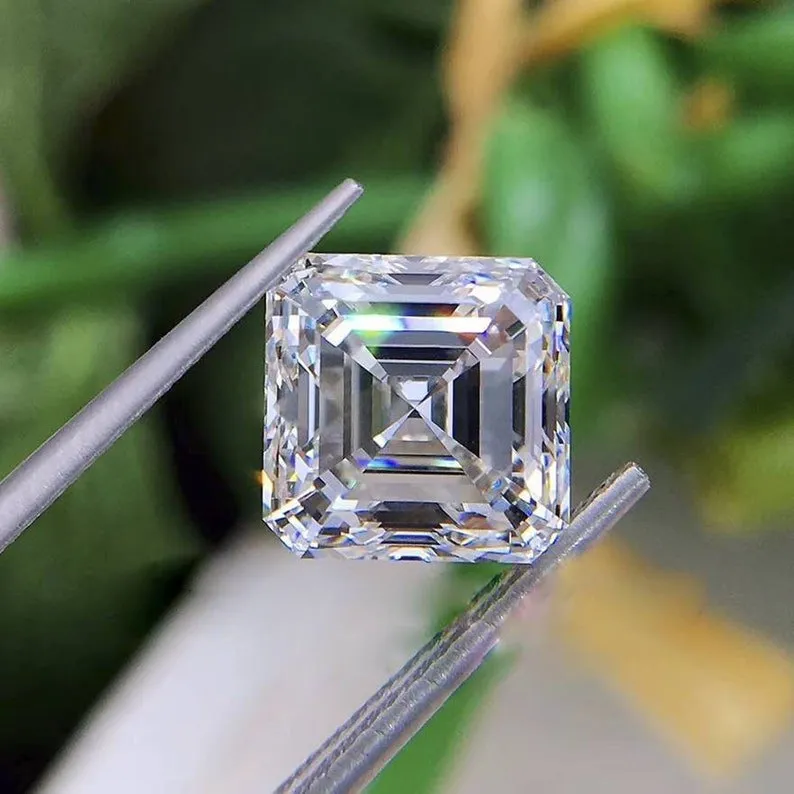
An Asscher cut is recognisable by its nearly square face, clipped corners and series of concentric step facets. These create broad reflections sometimes described as a hall of mirrors. It looks different from a radiant or princess brilliant cut: the visual interest comes from ordered facets and depth, not simply from tiny flashes of light.
Know its geometry and specifications.
Before designing jewellery, compare the chosen variation’s face-up dimensions, step pattern and depth. Two stones with a similar carat weight can have different measurements and appearances.
For designs that feel personal.
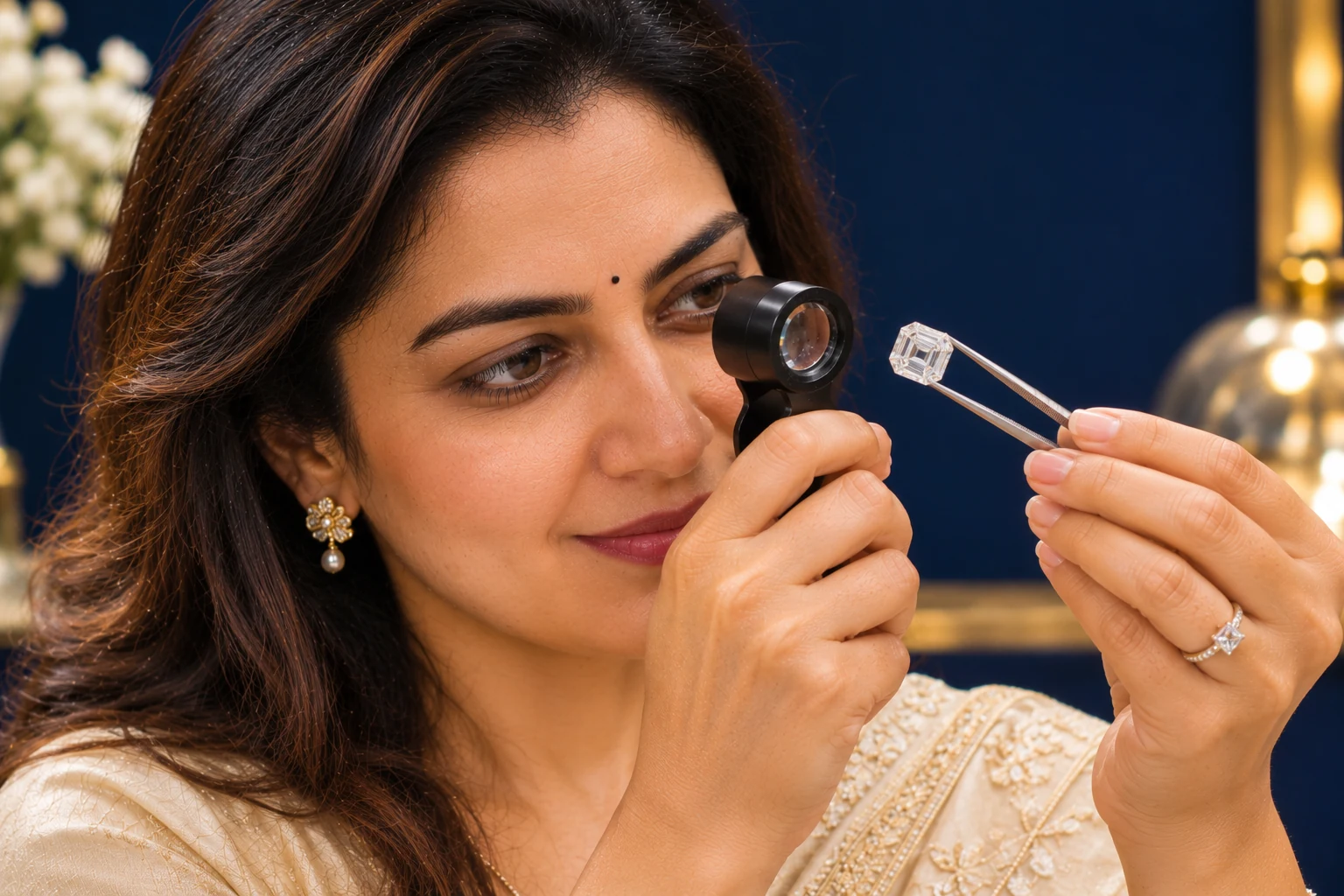
Our step-cut jewellery edit celebrates calm geometry and thoughtful craftsmanship. An Asscher stone can look especially beautiful in geometric solitaires, bezel settings and vintage-inspired designs.
We recommend having a jeweller check your chosen stone’s actual dimensions and corner protection before commissioning a mounting.
Inside the Asscher cut

Asscher, princess and emerald are not interchangeable.
Asscher cuts typically have a square outline with cropped corners and steps that produce broad reflections. Princess cuts more often have sharper square corners and brilliant-style faceting. Emerald cuts also use steps, but their face-up outline is usually elongated and rectangular.
Each can suit custom jewellery. Compare their actual face-up proportions, facet patterns and the intended mounting rather than relying only on shape labels.
Three checks before checkout

Examine the steps
Look at the original product views for balanced cropped corners, a centred table and the step-facet appearance you prefer.
Confirm millimetres
Review length, width and depth for the selected carat option; a weight alone cannot confirm setting compatibility.
Match paperwork
Request a legible item-specific GRA card or report where applicable, then compare its details with the supplied gemstone.
A modern heirloom silhouette.
Consider a minimalist Asscher solitaire, a sculptural bezel or a geometric Art Deco-inspired ring. Cropped corners provide design flexibility, but secure prong or bezel support depends on each stone’s proportions.
Our jewellery photographs are styling references, not finished pieces included with the loose-stone option.

Check the stone, not just the wording.
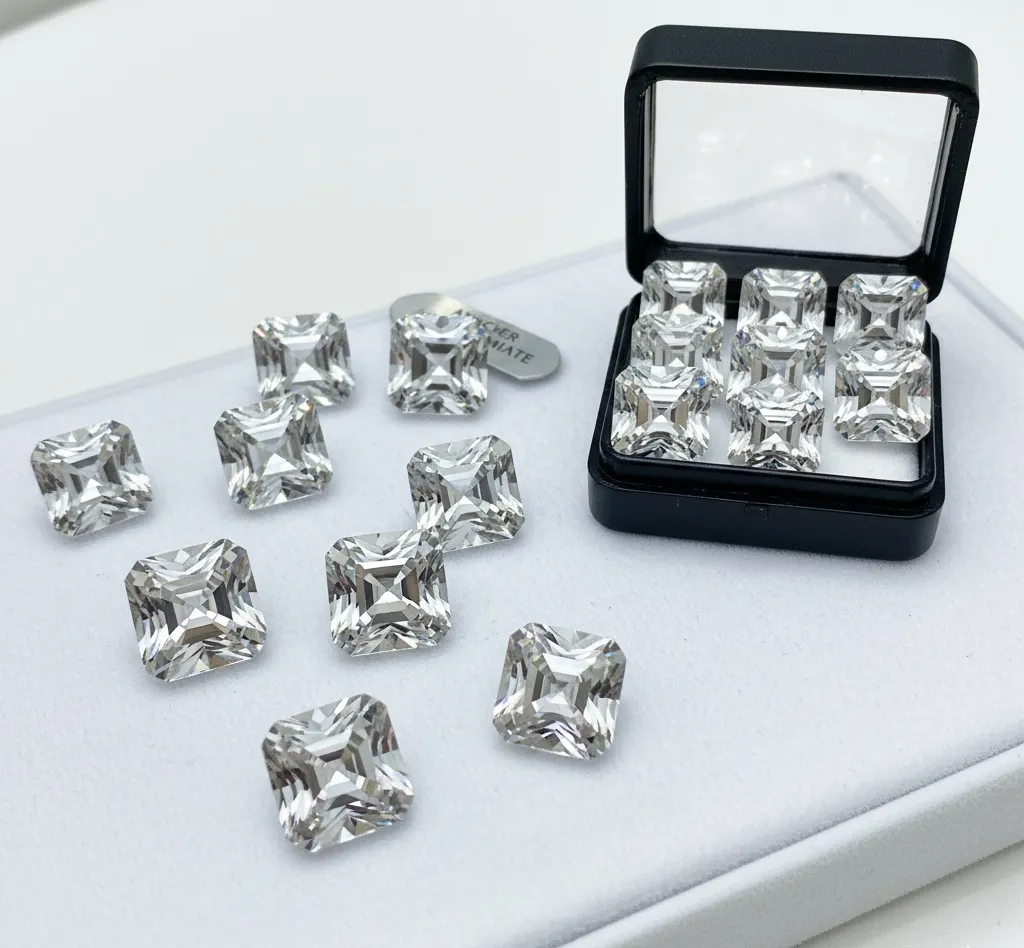
Our original title lists D colour, VVS1 clarity and GRA documentation. A photograph or marketing description alone does not independently verify an individual stone’s grade. Ask us for documentation linked to your selection and compare its report number, cut, weight and measurements where available.
Included accessories, such as polishing cloths or cards, should also be confirmed for the selected option rather than assumed from a generic product description.
Moissanite and diamond are different gemstones.
| Characteristic | Lab-grown moissanite | Diamond |
|---|---|---|
| Composition | Silicon carbide (SiC) | Carbon (C) |
| Mohs hardness | About 9.25 | 10 |
| Optical character | Commonly doubly refractive; often vivid coloured fire | Singly refractive; a different balance of brilliance and fire |
| Identification | Appropriate moissanite-specific testing and gemological examination | Appropriate diamond identification and grading |
Hardness describes scratch resistance, not immunity to impact or chipping. Some basic thermal-only diamond testers can respond to moissanite, so they cannot independently identify the gemstone as a diamond.
A thoughtful care routine

Maintain those luminous steps.
Gently wipe an unmounted gemstone with a clean, lint-free cloth. When appropriate, use a little mild soap with lukewarm water, rinse carefully and dry completely. Keep the stone away from abrasive surfaces, impact and careless storage.
The setting matters too.
Have a jeweller confirm that the prongs or bezel fit the selected gem, including its cropped corners. Do not assume every mounted piece is suitable for ultrasonic or steam cleaning; adhesives, repairs and accompanying gems may require different methods.
Frequently asked questions
What does our asscher cut look like?
Its square outline, clipped corners and layered step facets create an elegant Art Deco appearance.
Is this a lab-grown diamond?
No. Our loose gemstone is lab-grown moissanite (silicon carbide), a distinct gemstone with its own brilliance and optical properties.
How do I choose the correct size?
Select the available carat option and compare actual length, width and depth in millimetres. These dimensions help your jeweller plan a secure setting.
Is a finished ring or pendant included?
We offer the loose moissanite gemstone, ready for custom jewellery. Finished jewellery is not included unless expressly specified in the selected option.
Where can I review D/VVS1 and GRA details?
We describe the stone with D colour, VVS1 clarity and GRA-related specifications. Our team can help you review the relevant document details for the selected gemstone.
What jewellery setting suits this cut?
Asscher cuts suit crisp geometric settings; your jeweller should match the mounting to the precise stone measurements.
How do I keep the stone looking its best?
Use a lint-free cloth and, when appropriate, mild soap with lukewarm water. Avoid impacts, and have prongs or bezels on finished jewellery inspected regularly.