

THE DIVINITY JOURNAL · ANGELITE & DAILY STRESS
Angelite’s soft powder-blue colour makes it a distinctive decorative gemstone. For some people, the gentle appearance also carries personal symbolism of calm, compassion and thoughtful communication.
Angelite is blue-grey anhydrite, a calcium sulfate mineral rather than a separate crystal species. Unlike durable quartz, it is soft and sensitive to water. These practical characteristics matter when buying, displaying or caring for Angelite.
Explore three genuine Divinity Crystals product photographs, two original mineral studies, the stone’s chemical identity, a dry-care buying guide and a short optional daily stress reset. A crystal may be a personal reminder, but it has not been shown to treat anxiety or cause medical improvement.

THREE ACTUAL PRODUCT PHOTOGRAPHS · TWO ORIGINAL EDITORIAL STUDIES
Five Views of Angelite: Real Tumbles and Mineral Care
Compare authentic pale blue tumbled stones with distinct original close-up and dry-display illustrations. The editorial artwork is not presented as stock.
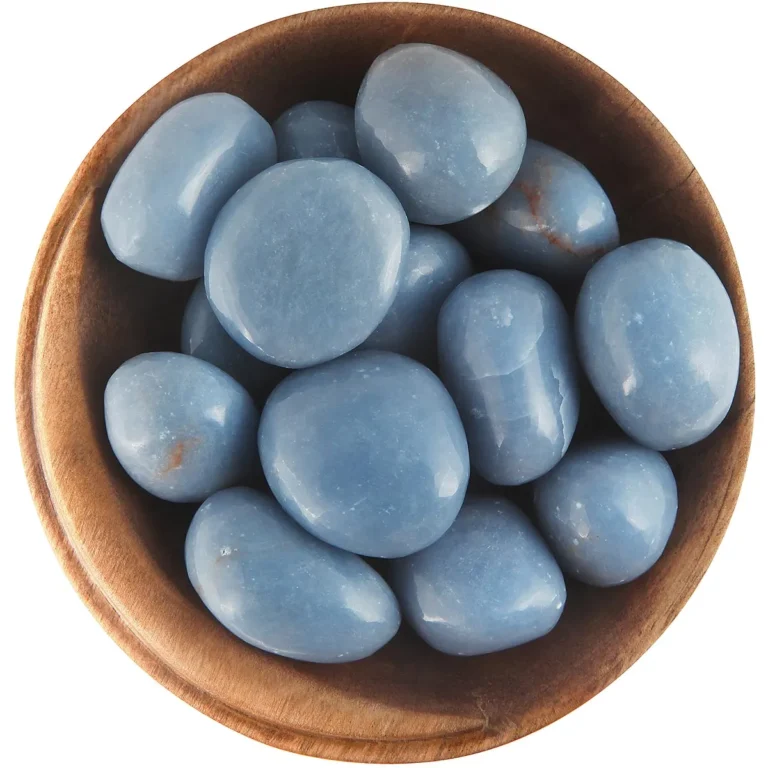
Angelite Polished Stones in Bowl
Genuine Divinity Crystals Angelite tumble photograph. Compare the light blue colour, smooth polish and size.

Angelite Tumbles on White
A second original catalogue view, showing a grouping of pale blue Angelite polished stones and their individual variation.
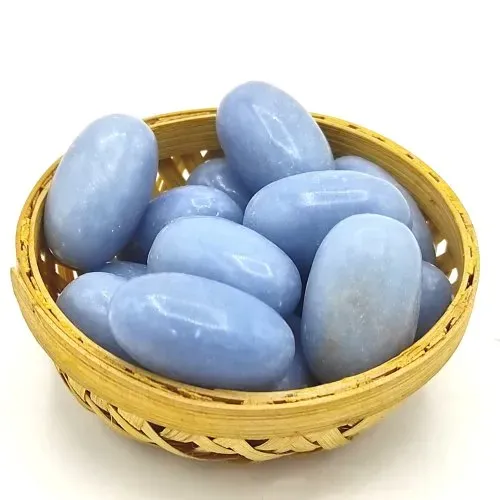
Angelite Stones in Basket
Third authentic product photograph of Angelite tumbles in a basket; review the actual listing’s quantity and weight.
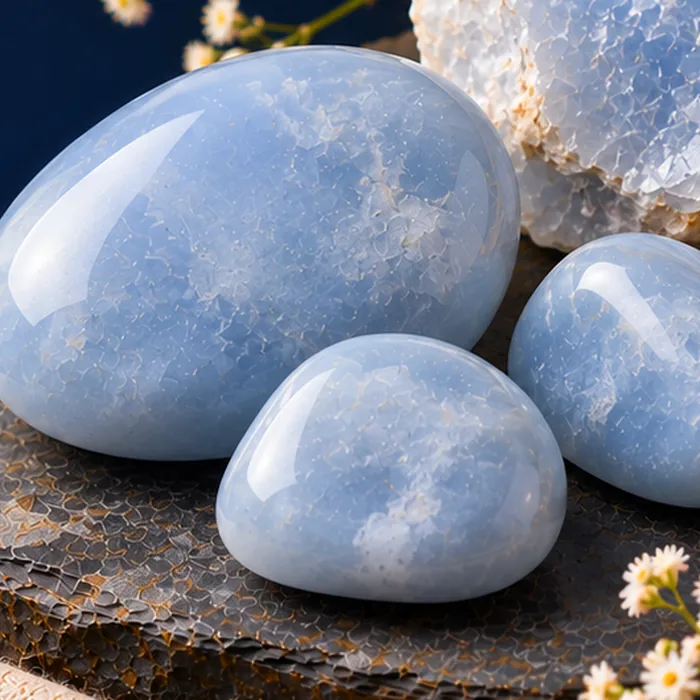
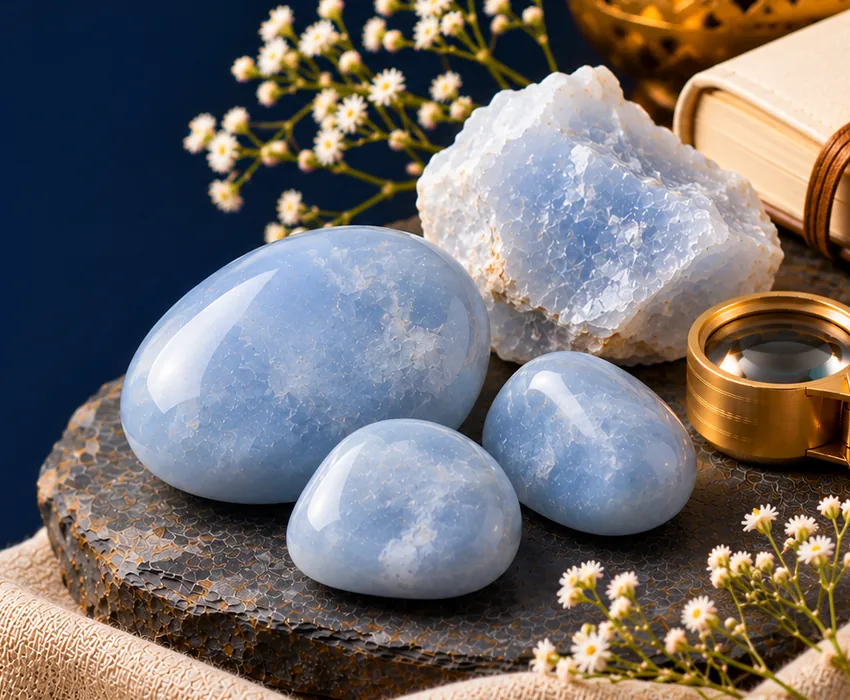
Powder-Blue Mineral Surface
Original editorial mineral-texture study of Angelite-like blue surfaces, not additional merchandise.
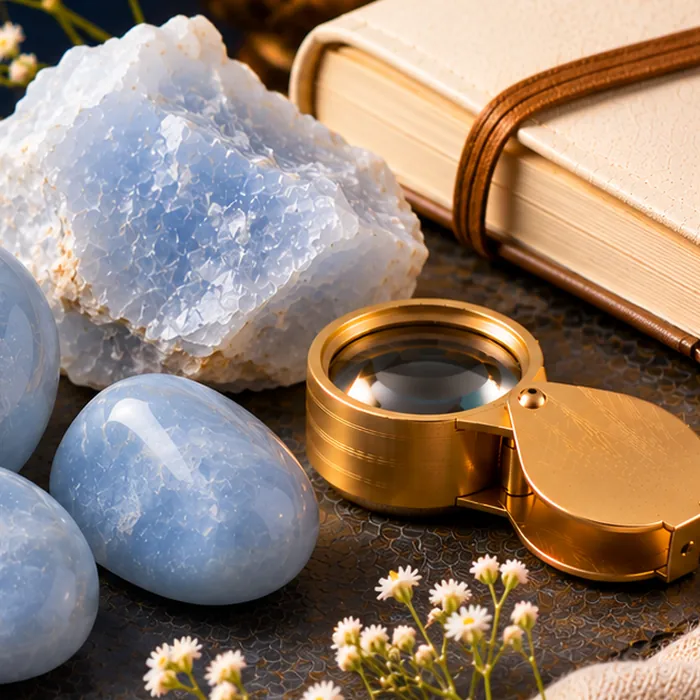
Angelite Dry-Shelf Display
Original illustration of a dry decorative Angelite-like stone display with a journal, not another saleable SKU.
Angelite Mineral Identity, Hardness and Dry Care
| Stone feature | What matters |
|---|---|
| Mineral identity | Angelite is a trade name for pale blue-grey anhydrite, a calcium sulfate mineral with chemical formula CaSO₄. |
| Appearance | Usually pale powder-blue to blue-grey, sometimes with subtle white markings and a soft polished finish. Actual stones vary. |
| Hardness | Mohs hardness about 3–3.5. Common quartz and household grit may scratch Angelite’s softer surface. |
| Water sensitivity | Anhydrite can take up water and partly alter to gypsum over time. Keep Angelite dry and away from soaking, saltwater and steam. |
| Angelite versus Celestite | Angelite is anhydrite (CaSO₄); Celestite is strontium sulfate (SrSO₄). Similar pale blue colour does not make them the same mineral. |
| Current store format | Natural Angelite Tumbled Stones, photographed in a bowl, white-background cluster and basket arrangement. No distinct Angelite bracelet verified. |
| Traditional meaning | Modern crystal traditions associate Angelite with peaceful communication, gentleness and spiritual reflection; these are beliefs, not medical effects. |
| Buying and care | Check actual photos, pack quantity, dimensions, treatments and any specimen report. Use dry gentle dusting and separate cushioned storage. |
For mineral data, see Mindat’s Anhydrite entry. Confirm specimen-specific claims from actual product descriptions and relevant reports.
ANGELITE · MINERAL IDENTIFICATION & SAFE BUYING GUIDE
Identify Blue Anhydrite · Compare Tumbles · Keep It Dry
A gemstone-specific visual guide focused on Angelite’s actual mineral properties, the genuine retail format and essential water precautions.
CaSO₄ · MOHS 3–3.5 · WATER-SENSITIVE STONE
Know the mineral before selecting and displaying an Angelite tumble
Identify Angelite
Angelite is pale blue anhydrite, a soft calcium sulfate mineral. It can have white markings and variable blue-grey shades.
Colour alone does not establish mineral identity or untreated status.
Compare Genuine Tumbles
Your actual listing shows polished Angelite in three first-party photographs: wooden bowl, stone grouping and basket display.
Verify selected pack size, finish, quantity, weight and seller descriptions.
Keep the Stone Dry
At Mohs 3–3.5, Angelite scratches easily and can change with moisture. Avoid water immersion, salt, steam and abrasive scrubbing.
Choose soft dry dusting and a protected shelf or pouch.
Explore the verified Angelite listing: Natural Angelite Tumbled Stones — compare genuine product photos, available options and care instructions.
A Gentle Three-Minute Daily Reset
- Choose a comfortable spot and observe what is happening around you.
- Notice a few ordinary sights or sounds without trying to force calm.
- Let breathing remain natural and easy, or focus on your surroundings.
- Identify one specific worry, task or request you can address.
- Choose a manageable next action or ask someone for practical help.
- Stop or adjust the practice if it makes you uncomfortable; a stone is optional.
Angelite Buying & Dry-Care Checklist
- Confirm the material is sold as Angelite / blue anhydrite.
- Check the actual photographs, colour, finish, quantity and dimensions.
- Ask about coatings or any relevant specimen identification report.
- Keep away from soaking, cleansing water, steam and damp surfaces.
- Use soft, dry, gentle dusting rather than abrasive wiping.
- Protect the stone from harder gemstones and impacts.
What Everyday Stress Is—and Why a Gentle Pause Can Help
Stress can arise when responsibilities, difficult interactions or uncertainties feel larger than the resources available at a particular moment. It may affect sleep, attention, mood and how people communicate. Stress is not a moral failure, a sign of ‘impure karma’ or evidence that someone is blocking prosperity.
The NHS stress guidance recommends practical steps such as identifying small tasks, planning ahead, talking to someone supportive and practising manageable relaxation exercises. A small pause may create space for a response without implying that everything must be fixed immediately.
When stress persists, affects work or relationships, or comes with significant physical symptoms, healthcare advice can be more useful than repeating a gemstone ritual. A calming object is optional and does not replace assessing the causes of ongoing distress.
Angelite Is Blue Anhydrite: Chemistry, Hardness and Identification
Angelite is the gemstone trade name for a pale blue to blue-grey variety of anhydrite. Its chemistry is calcium sulfate (CaSO₄), and it is much softer than quartz, with a Mohs hardness of 3–3.5. The mineral has strong cleavage, so sharp knocks or repeated rubbing can mark or break it.
The International Gem Society’s Angelite reference identifies the material as anhydrite and describes why its fragility limits jewellery use. Mindat’s anhydrite mineral record documents its formula, hardness and propensity to alter to gypsum when hydrated.
Because some pale blue stones resemble one another, photos alone do not distinguish Angelite reliably from dyed material, Blue Lace Agate or other blue gems. Avoid scratch, acid and heat tests at home. For a significant purchase, use product-specific disclosures and competent gemological examination rather than relying on general online rules.
The Three-Minute Angelite Stress Reset: Simple and Optional
This exercise combines gentle attention, realistic next steps and an optional decorative stone. It is not a medical or energetic treatment. You can keep your eyes open and place a dry, sound Angelite tumble on the table rather than holding it.
- Minute 1 — Notice where you are. Sit with back support or stand comfortably. Feel your feet against the floor and name three nearby shapes or colours. If you enjoy the stone, notice its powder-blue surface as a visual focus.
- Minute 2 — Let breathing stay comfortable. Notice one or two natural breaths. Optionally breathe in gently through the nose and out through the mouth without forcing a deeper breath, holding it or meeting a rigid count. If this feels uncomfortable, return to sounds and sights instead.
- Minute 3 — Choose a practical next step. Name what is stressing you in a few words, identify one task or boundary you can control, and decide whether to do it, delegate it or write it down for later. Put the stone aside and return to your routine.
The NHS breathing guide recommends a comfortable position and breathing without forcing it. Feeling no immediate change does not mean an exercise failed. Stop or adapt if distress increases, and seek support for recurring problems.
Angelite Spiritual Meaning and the Difference Between Belief and Evidence
In some modern crystal traditions, Angelite represents gentleness, compassion, spiritual guidance and the throat chakra. Its soft blue appearance is sometimes compared to an open sky. People may enjoy a symbolic intention such as speaking calmly or being kinder to themselves after a difficult day.
These associations are cultural and personal interpretations, not measured properties of calcium sulfate. There is no reliable evidence that Angelite communicates with angels, dissolves an aura barrier, cancels harmful karma or attracts financial abundance.
For communication, a practical approach can be to pause, write a clear sentence, ask a clarifying question and listen without interrupting. A decorative reminder may accompany those actions but cannot make another person’s response predictable. For another blue stone with different mineral composition, see our Blue Lace Agate mineral guide.
How to Handle and Clean Angelite Without Water Damage
Angelite needs a different care approach from quartz or agate. Over time, anhydrite can react with moisture and transform partly into gypsum, while rough rubbing can scratch its soft surface. Store the stone in a dry place and avoid unnecessary soaking, saltwater, steam and wet cleansing rituals.
The International Gem Society advises keeping anhydrite dry and patting, not wiping, dust from it with a lint-free cloth. Hard particles of household dust can scratch softer stones. For fragile or damaged pieces, consult a qualified mineral conservator rather than scrubbing or using chemical cleaners.
Use a stable tray or lined container. Avoid impacts and rubbing against harder stones. If a piece is threaded into jewellery, inspect beads, knots, coatings, glue and metal components separately. Never place loose mineral chips into drinking water; decorative mineral ‘elixirs’ do not have proven health benefits. See our Crystal Cleaning & Safe Mineral Care article.
Shopping Genuine Angelite Tumbles at Divinity Crystals
The catalogue includes Natural Angelite Tumbled Stones. We have used three existing first-party product photographs—wooden bowl, grouped tumbles and basket view—to illustrate variation. The other imagery is original editorial artwork rather than individual products offered for sale.
Review the listing for current stock, pack quantity, weight or dimensions, finish and photographs. Ask about coatings, treatments or the exact mineral identification if that matters to the purchase. A marketing phrase such as ‘high vibration’ is not a gemological certification or a promise of relief from anxiety.
Explore the Tumbled Stones collection for available formats. For general authenticity guidance, see How to Tell If Crystals Are Real. This stress-reset routine can also be done without buying anything.
Frequently Asked Questions
What is Angelite made of?
Angelite is the trade name for blue-grey anhydrite, a calcium sulfate mineral with formula CaSO₄.
Is Angelite a separate gemstone species?
No. Angelite is a commercial name for a particular blue appearance of anhydrite; the mineral species is anhydrite.
Can Angelite go into water for cleansing?
Avoid soaking or prolonged water exposure. Anhydrite can react with moisture and partly turn into gypsum. Dry, gentle cleaning is a safer starting point.
Is Angelite as hard as quartz?
No. Angelite is around Mohs 3–3.5 while quartz is about Mohs 7, so Angelite scratches more easily.
How is Angelite different from Celestite?
Angelite is calcium sulfate (anhydrite). Celestite is strontium sulfate and has different physical and chemical properties; blue colour alone cannot identify either.
Does Angelite remove daily stress or anxiety?
No reliable clinical evidence supports such effects. A stone can be an optional personal reminder; practical coping and suitable professional support are separate.
Can I practise the three-minute stress reset without a stone?
Yes. Notice the surroundings, breathe comfortably if helpful, and identify one manageable next action. Angelite is not required.
What type of Angelite products does Divinity Crystals offer?
The verified listings is Natural Angelite Tumbled Stones. The gallery shows three real photographic views of that product and two distinct editorial illustrations.
Are the blue mineral illustrations actual product photographs?
No. The surface and dry-display visuals are original educational artwork. The three labeled tumble photographs correspond to genuine catalogue media.
How should I store polished Angelite?
Keep it dry on a lined shelf or in a soft pouch, separated from harder stones and protected from falls, rubbing and direct splashes.
Does a photograph guarantee genuine untreated anhydrite?
No. Photographs cannot establish mineral species, treatments or geographic source independently. Review documentation where those claims matter.
Can Angelite be placed inside drinking water?
Do not immerse untested mineral specimens in drinking water. Angelite is water-sensitive and is not a purification or medical product.
Choose Angelite for Its Gentle Colour and Know How to Protect It
Angelite offers distinctive blue anhydrite beauty with real care needs. Compare the first-party tumble photographs, avoid moisture and abrasive contact, and let traditional symbolism remain a personal preference rather than a medical promise.