
Divinity Crystals · Material Science, Symbolic Objects & Safe Display
An orgone-style pyramid and a white selenite plate may appear side by side in a meditation corner, but they are not interchangeable objects. The first is usually a manufactured casting of resin containing metal pieces and mineral chips. A plate sold as selenite is commonly carved from gypsum, a naturally occurring mineral with a delicate surface.
Customers sometimes encounter claims that pyramids transform negative energy, shield a room from Wi-Fi and 5G, or that gypsum discs recharge crystals placed on top. Such symbolism may be personally meaningful, but the advertised electrical, medical and mineral-recharging claims lack established scientific support. This does not take away from the objects’ beauty or decorative purpose; it clarifies what can actually be checked.
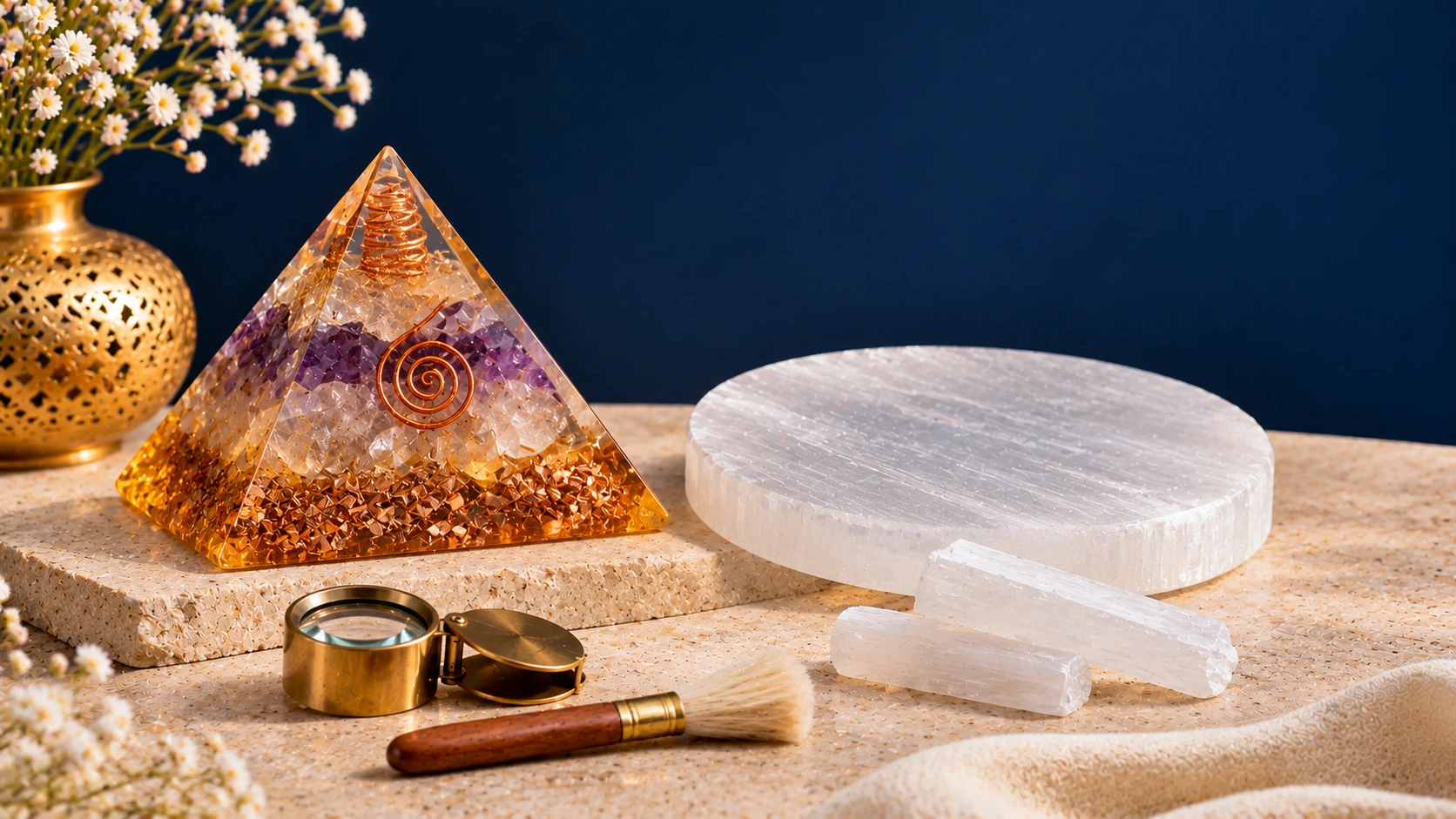
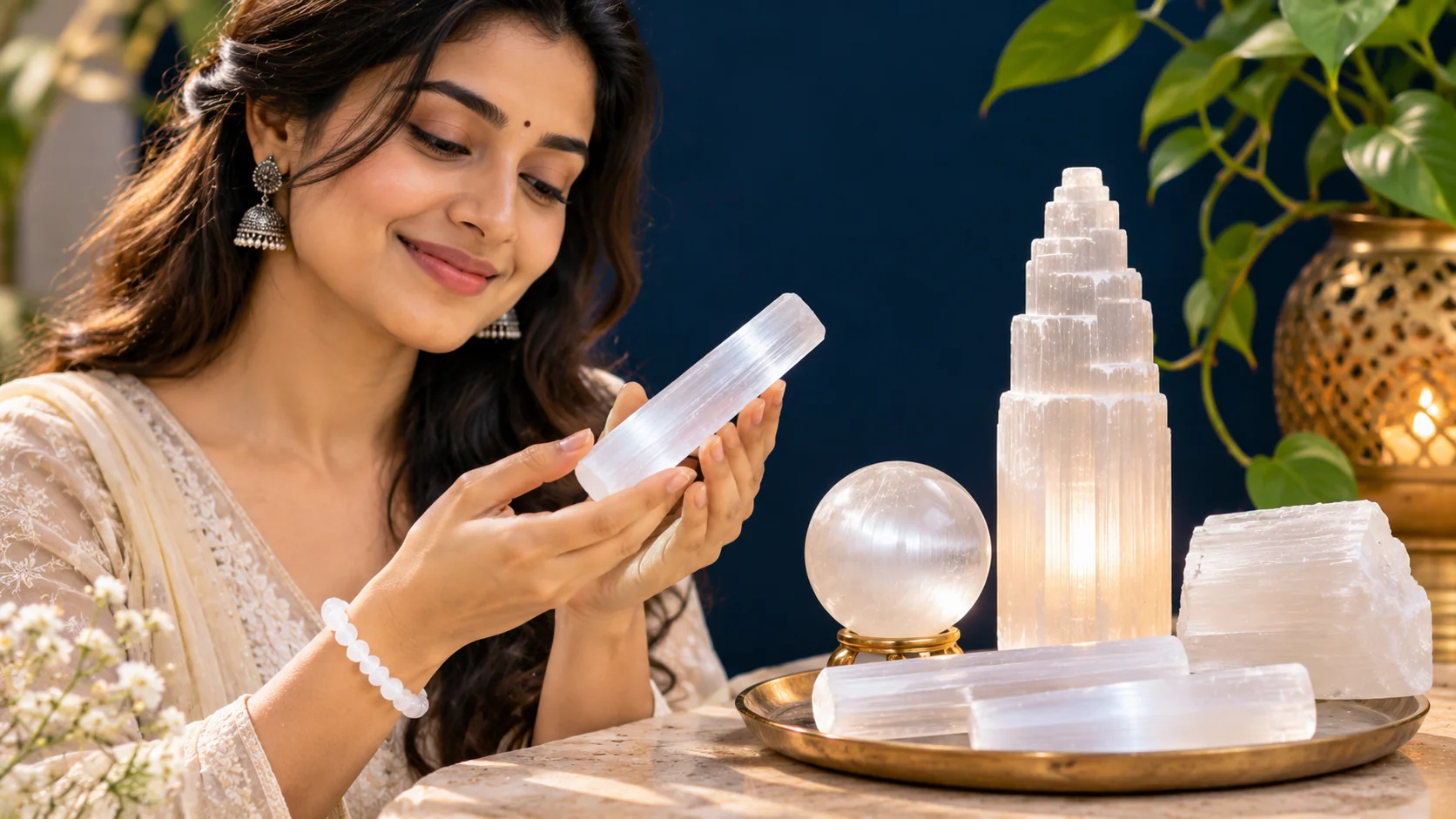
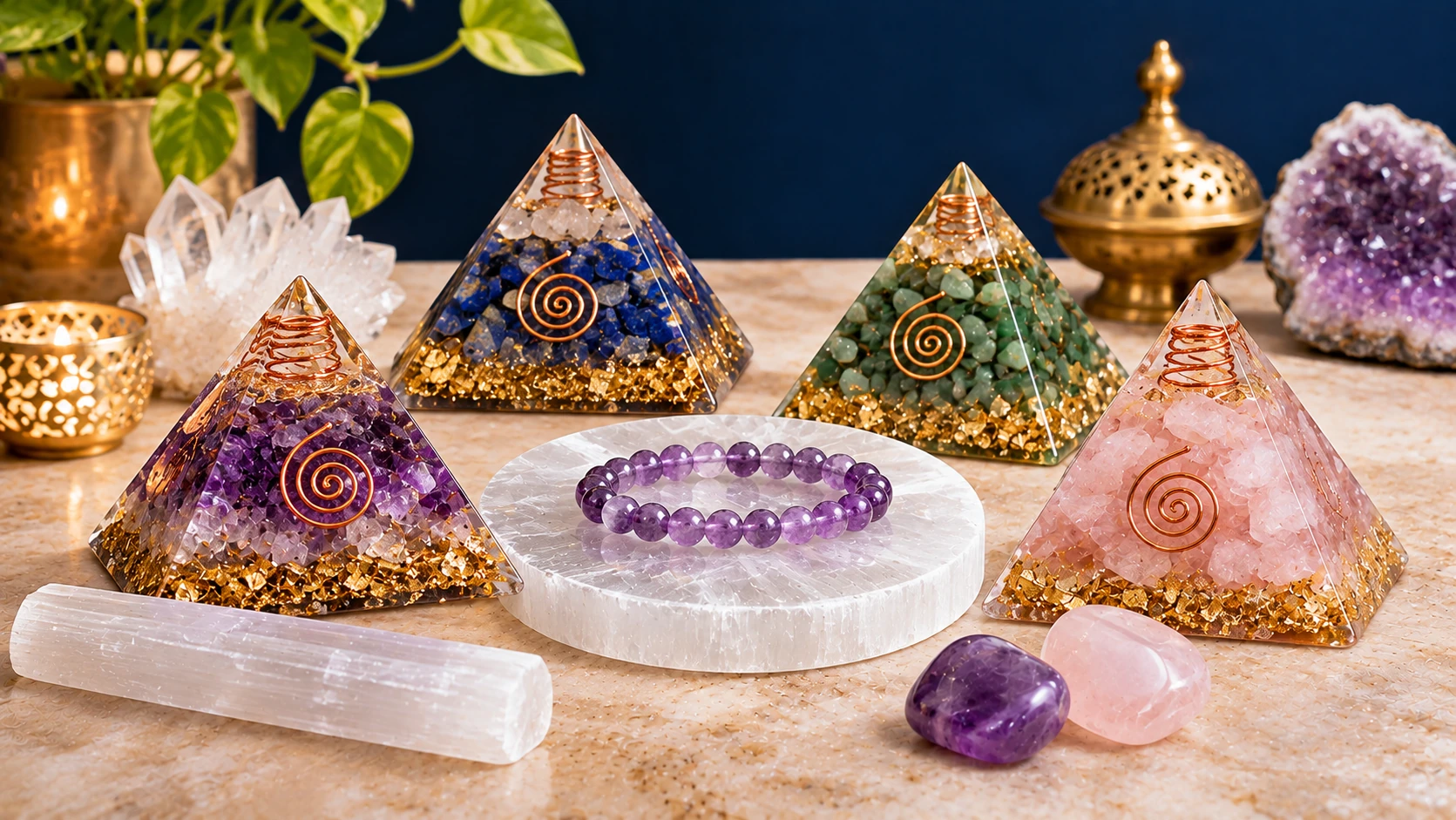
At Divinity Crystals, we sell gemstones and mineral objects through our own store. In our current published catalogue we found no complete orgone-style pyramid or finished selenite charging-plate listing. We do sell Selenite-labelled tumblestones and chips, plus related minerals. The featured pyramid-and-disc cover and secondary comparison scene on this page are original, illustrative editorials, not photographs of items currently available to buy.
Below you will find the construction differences, proper mineral terminology, a practical materials comparison, five genuine first-party photos of related products, a six-step buyer checklist and detailed guidance for keeping soft gypsum and manufactured resin crafts in good condition.
Seven important facts at a glance
- Orgonite-style pyramids are manufactured: resin forms the shape; metal and minerals are decorative inclusions.
- Selenite and satin spar are gypsum: chemically calcium sulfate dihydrate, generally Mohs hardness 2.
- A charging plate is not an electronic charger: no validated physical gemstone-recharging process is established.
- EMF and medical promises are unproven: a resin pyramid is not tested shielding or medical equipment.
- Gypsum is fragile: keep it dry and separate from hard, sharp or heavy objects.
- Look at material and test scope: one mineral report does not authenticate an entire resin casting.
- Buy only actual catalogue formats: our tumblestones and chips are not sold as finished pyramids or plates.
Orgone-style pyramid versus selenite plate: a practical comparison
The word orgone comes from Wilhelm Reich’s historical speculative ideas, while orgonite is used today for colourful resin crafts incorporating metals and stones. Gypsum, by contrast, is a clearly established mineral species studied by geologists. Their properties are fundamentally different.
| Comparison | Resin / orgone-style pyramid | Selenite / satin-spar gypsum disc |
|---|---|---|
| Physical material | Manufactured polymer or epoxy/polyester resin with decorative metal, pigments and mineral inclusions. | Natural gypsum when correctly identified; calcium sulfate dihydrate. |
| Typical visual form | Pyramid, cone or other moulded shape with coils, coloured layers or embedded fragments. | Carved or polished round, square or oval slab; may show silky white fibres. |
| Material identification | Ask about resin type, cure, metal species, enclosure and actual stone fragments. | Ask whether the material is gypsum, including selenite or satin spar habit. |
| Weight and surface | Depends on mould dimensions, resin and filler composition; may chip or crack. | Soft, easily scratched and potentially fragile across fibre or cleavage planes. |
| Cleaning | Follow manufacturer instructions; avoid heat, solvents and damaged resin surfaces. | Gentle dry dusting; avoid soaking, abrasive rubbing, heat and chemicals. |
| “Energy” claims | Not established to block radiation, convert negative energy or treat medical conditions. | Not scientifically established to recharge jewellery, cure illness or remove emotional residue. |
| What we actually list | No matching finished orgone pyramid found in published products. | Gypsum-labelled tumblestones and chips, not finished charging discs. |
What is inside an orgone-style resin pyramid?
Contemporary resin pyramids may contain clear or coloured casting resin, metal shavings, wire spirals, mineral fragments and pigments. The resin holds the entire object together. Decorative contents can vary among makers: one pyramid might contain purple chip-like material and copper-coloured wire, another green stones and golden metal fragments, and another little more than glitter and resin.
Resin makes the pyramid
Epoxy, polyester and other polymer systems can make transparent or coloured castings. Inspect whether the finished surface is smooth and fully cured, with no exposed sharp edges, leaking uncured material or unstable joins. A good-looking surface does not identify the exact resin chemistry.
Wire, spirals and shavings
Copper-coloured coils, metal foil or shavings provide visual contrast. Ask what metal is actually used and whether sharp ends are safely encapsulated. Metallic-looking Pyrite mineral fragments are chemically different from copper or aluminium metal shavings.
Quartz and other stones
Some castings contain clear or Rose Quartz fragments, Amethyst, other coloured minerals or imitations. Identification needs evidence appropriate to the claim. A lab report for one enclosed chip would not prove the composition of every inclusion or the object as a whole.
Layers, geometry and polish
A well-made pyramid may be valued for proportion, translucent layers and craftsmanship. Check its height, base dimensions, weight, bubble or crack condition, sharp corners and practical display safety rather than assuming geometric shape gives it protective power.
Some descriptions of orgonite cite quartz piezoelectricity: quartz can produce measurable electrical effects under particular physical conditions. That physical property alone does not establish continuous energy generation, cancellation of nearby electromagnetic fields or beneficial effects from resin ornaments. The construction should be evaluated as a manufactured craft rather than a verified electrical device.
Gypsum, selenite and satin spar: the real mineral facts
Gypsum is calcium sulfate dihydrate, CaSO₄·2H₂O. The clear, often transparent crystal habit is commonly called selenite, while white fibrous material with silky striations is commonly called satin spar. Both belong to the same gypsum mineral species; retail names can be applied loosely. Fine-grained gypsum can also be sold as alabaster, though not all material called alabaster is gypsum.
Gypsum sits at 2 on the Mohs scratch-hardness scale. Quartz is around 7; even everyday rubbing against comparatively harder materials can damage a gypsum disc or polished piece. Gypsum is also somewhat soluble in water, and prolonged wetting may change a finish or cause deterioration. These mineral properties—not a belief in charging—determine safe physical care. The Ohio Department of Natural Resources and University of Minnesota mineral reference describe these defining characteristics.
Selenite habit
Transparent or translucent plate-like and prismatic crystal forms may be called selenite. Good natural specimens can show cleavage and growth features that differ from fibrous satin spar. They remain soft gypsum regardless of the elegant appearance.
Satin spar habit
Parallel fibres and silky luster can create a luminous white appearance. Many retail wands, palm stones and discs are called “selenite” even when the fibrous texture fits satin spar. Check the actual type rather than inferring it from a generic product label.
Carved gypsum surfaces
A round white charging plate is a shaped decorative object, not a naturally occurring geometric disc. Evaluate its diameter, thickness, cracks, flatness and surface finish. Gypsum can be scratched by the sharp edge of a Quartz point or metal jewellery.
Our available gypsum formats
Our current catalogue lists white Selenite tumblestones, orange Selenite tumblestones and loose Selenite chips. They are genuinely different physical formats from a charging plate. Keep the material and size claims aligned with the actual listing.
A plate can still be an attractive object for a personal display or a place to rest carefully chosen lightweight stones. Such an arrangement is aesthetic or symbolic; placing a gemstone on gypsum has not been shown to replenish an independently measurable stored healing energy.
Five real Divinity Crystals photographs—not fictional pyramids or plates
These five first-party product views come from five distinct published listings: white and orange Selenite tumblestones, Selenite chips, Pyrite chips and a Rose Quartz tumble. The two pictured resin-pyramid scenes elsewhere on this page are original editorial illustrations. The store’s chips and tumblestones are not complete orgone pyramids or carved charging plates.

White Selenite-Labelled Tumblestones
Genuine first-party gallery photograph of our white Selenite-labelled tumbled stones. These are separate gypsum pieces, not a large finished charging plate.

Orange Selenite-Labelled Tumblestone
Existing smaller first-party orange/peach gypsum-style tumble photograph. The 214-pixel source limits detail; do not treat it as a large slab or an exact lab identity test.

Selenite-Labelled Mineral Chips
Actual first-party Selenite chips listing image, showing small fibrous white pieces rather than a carved disc. Confirm chip quantity, condition and identity on the listing.

Pyrite Chips — Separate Mineral Product
Our first-party Pyrite mineral chips photograph, included only as an example of decorative mineral material. Pyrite chips are not copper or aluminium shavings and do not make a shielding device.
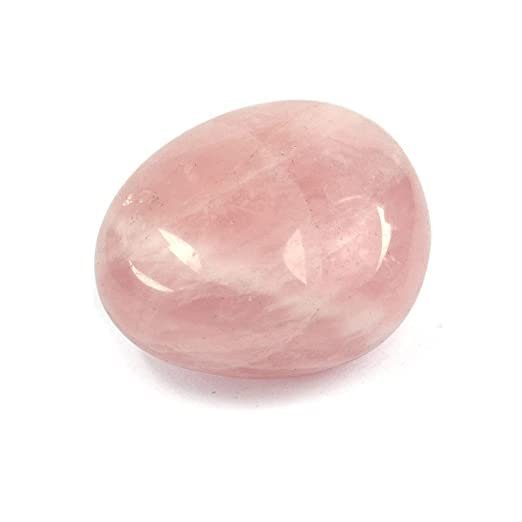
Rose Quartz Tumblestone — Separate Mineral Product
Our actual first-party Rose Quartz tumble photograph, illustrating a polished Quartz variety that can be used as separate décor. It is not a manufactured orgonite pyramid or selenite plate.
What these five genuine product photographs actually show
The gallery is intentionally honest about what belongs to our catalogue. Two cards show Selenite-labelled tumblestones in white and orange, the third shows loose gypsum-labelled chips, and the other two show separate minerals—Pyrite and Rose Quartz. A chip photograph should never be sold as an image of a full resin pyramid or a carved white disc.
Compact, softly lustrous pieces
Our Selenite tumblestone listing uses first-party photographs of small white pieces. Their apparent silky texture makes a useful point of comparison with a larger satin-spar plate, but they are not a plate and should not be described as a substitute charging instrument.
Colour does not change mineral care
Our Orange Selenite tumblestone listing contains a small older close-up image. The tone may reflect inclusions or coloration; this guide does not verify a chemical cause or treatment. The small source resolution also limits zoom quality.
Craft fragments, not machined plates
The Selenite chips product shows small fibrous fragments for craft or display use. Their narrow or uneven edges can be fragile. A 50 g or 100 g chip pack is not evidence that any complete selenite disc is included.
Mineral shine is not metallic wiring
The Pyrite chips product is iron sulfide material. It can look metallic but should not be confused with copper coils or shavings. It also needs more moisture care than many resin decorations; a product photo does not confer EMF protection.
A separate polished Quartz variety
Our Rose Quartz tumblestone listing illustrates a familiar pink mineral that may inspire decorative resin compositions. Its actual material and treatment still matter, and the loose stone sold here is not contained within a finished orgone pyramid.
Why we keep these separate
The cover and colourful pyramid composition are original artwork. They are not product photos. We therefore do not link those illustrated pyramids to a checkout button. The five cards link to actual related products so buyers can see the material format we really offer.
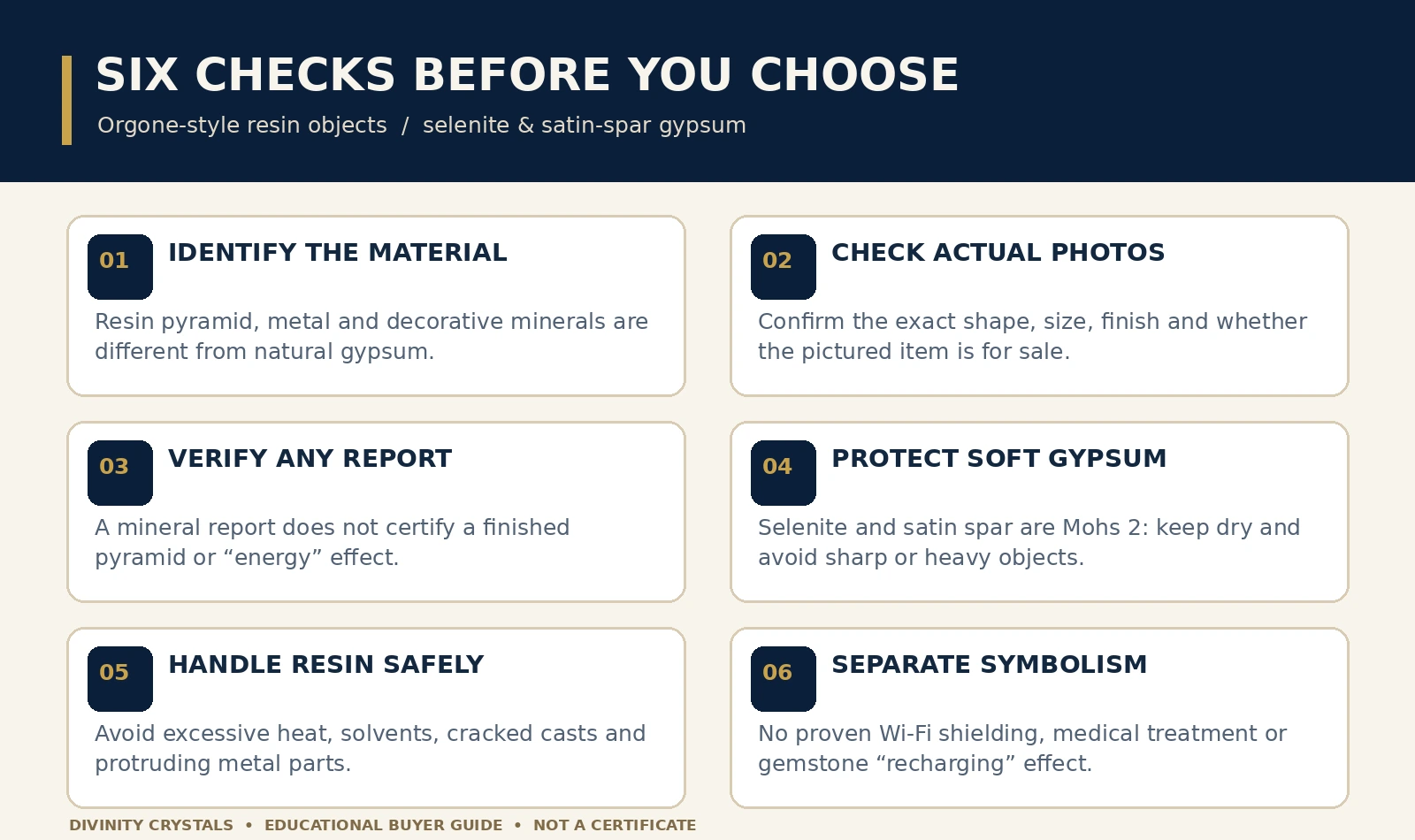
Six checks before buying or displaying resin and gypsum objects
These practical checks are useful whether buying related minerals from Divinity Crystals or comparing a manufactured decorative pyramid elsewhere. They focus on facts customers can inspect instead of treating a visual symbol as an engineering certificate.
-
Identify what is actually manufactured
An orgone-style pyramid is typically a manufactured resin composite with decorative metal and stone pieces; a “selenite charging plate” is usually cut from gypsum. Neither is identified solely by shape or symbolism.
-
Inspect the exact item, not an editorial illustration
For a pyramid, check whether the metal is fully enclosed and the resin is cured without sharp edges. For a gypsum slab, check actual diameter, thickness, cracks, fibre direction, weight and condition. Ask for matching item photos.
-
Read each report within its proper scope
A gemological or mineral report might identify a sample of Quartz or gypsum; it does not certify a completed resin device or its purported frequency, protection, therapy or recharging effect. Check issuer, tested item and exact conclusion.
-
Protect natural gypsum from water and abrasion
Selenite and satin spar are forms of gypsum with Mohs hardness around 2. Keep dry, gently dust, store separately and do not load a soft plate with heavy, sharp or abrasive mineral pieces.
-
Care for resin and decorative metal as manufactured materials
Protect resin crafts from direct heat, flames, strong solvents, heavy impact and damaged metal wires. Do not sand or drill unknown resin composites without suitable material-safety procedures or supplier instructions.
-
Enjoy symbolism without promising protection
Some people value a pyramid shape or mineral arrangement as décor or a reminder to reflect. There is no accepted evidence that these objects treat illness, filter indoor air, block 5G or recharge other gemstones.
Understanding energy, Wi-Fi and EMF claims without fear-based marketing
The language of orgone, negative energy, 5G shielding, cosmic frequencies and crystal charging is common in some modern crystal and wellness marketing. These expressions have cultural or speculative meanings, but they should not be confused with tested electromagnetic shielding or proven medical intervention.
An object that shields radio frequencies has to meet relevant measurable engineering criteria across specified frequencies and use conditions. The existence of copper pieces inside resin or quartz’s piezoelectric property does not by itself demonstrate that a small ornament blocks Wi-Fi, protects a body against phone signals or cancels environmental fields. Our article does not market any decorative pyramid as safety equipment.
Likewise, no scientific mechanism has established that a gypsum disc reliably transfers a quantifiable healing charge to other crystals after a particular number of hours. If a customer enjoys placing a stone on an attractive white disc as part of a reflective routine, that choice is personal. The object still needs ordinary cleaning, appropriate handling and sensible display placement.
Care for a selenite-style plate: dry, gentle and separate
Because gypsum is soft, the safest routine is conservative. Before cleaning or stacking objects, check whether a disc is truly gypsum, coated or laminated, and whether it has any joins, repairs or fissures. A glossy white look alone cannot rule out other materials or surface treatments.
Dust rather than soak
Start with a clean soft dry cloth or brush, moving gently along exposed surfaces. Do not submerge gypsum in water, put it in saltwater, steam-clean it or use aggressive household chemicals. Water can alter or weaken gypsum and some surface finishes.
Keep hard objects from rubbing it
Quartz and metal jewellery are harder than gypsum. Avoid sliding crystal points across a plate, stacking sharp chips directly on its polished surface or placing a heavy rigid pyramid where its edges can concentrate pressure.
Store with padded support
Choose a flat stable surface with an appropriate non-abrasive liner. Separate thin discs and rods from hard mineral collections, children and pets. Be cautious of uneven supports, falls and humidity or condensation near windows.
Document chips or cracks
Small chips and fissures can develop along natural features or after handling. Photograph the item if condition matters, stop placing heavy objects on a damaged plate and seek professional conservation advice for significant pieces rather than gluing them carelessly.
Our Crystal Care & Cleansing Guide gives further mineral-specific recommendations. The word cleansing is used in both physical and symbolic contexts; here physical cleaning means removing actual dust and residue without damaging the mineral.
Care for an orgone-style resin pyramid as a manufactured craft
A cast pyramid is not fragile in precisely the same way as gypsum, but it can still scratch, crack or discolour. Different resin systems and coatings respond differently to sunlight, solvents and heat, so maker-specific instructions matter. If a casting is damaged, its metal inclusions or sharp corners can become exposed.
Inspect edges and encapsulation
Check whether the base is flat, the resin is solid and the surface is free of jagged cracks or protruding wires. Avoid treating a resin-copper spiral as a safe-to-handle object if sharp metal has become exposed.
Avoid excessive heat and solvents
Do not place resin next to flames, hot lamps or other intense heat sources. Some solvents can damage a finish. Never assume a household chemical is safe merely because the object looks like polished stone.
Provide a separate support
Use a stable shelf or pad where the pyramid cannot tip, fall or scratch the underlying surface. Separate a heavy object from a soft gypsum plate unless its safe support and load distribution are specifically established.
Do not modify without knowing the resin
Avoid drilling, grinding, sanding or heating unknown resin composites; dust and fumes can carry separate hazards. Get suitable manufacturer or material-safety information before any modification.
Can you put a resin pyramid on a gypsum charging disc?
It may look attractive in an editorial photograph, but that does not mean it is a safe physical arrangement. Gypsum can be scratched by a sharp edge, cracked by concentrated weight, or damaged if a decorative metal base abrades the surface. A lightweight smooth object might be arranged carefully on a suitable pad, but this is a display-design question, not an energy requirement.
| Display choice | Potential issue | Practical option |
|---|---|---|
| Large pyramid directly on gypsum disc | Concentrated pressure, scratches, tipping, chipped edges. | Use separate stable bases; a protective interlayer only where suitable. |
| Quartz point resting on gypsum | Hard, sharp point can mark Mohs-2 surface. | Rest it in an individual dish or padded compartment. |
| Loose small chips on a display tray | Pieces can roll, spill or be swallowed by children or pets. | Use a contained tray out of reach, with correct material separation. |
| Display beside a window or plant | Condensation, water splashes, direct heat or light exposure. | Choose a dry, cool, stable place away from routine splashing. |
| Occasional symbolic reflection | Can lead to unnecessary smoke, candles or fragile arrangements. | Use a notebook or a quiet moment; no burning or “charging” is required. |
In the original editorial image, the resin piece and gypsum disc are shown as adjacent decorative objects. We deliberately do not depict the pyramid as a certified or guaranteed product that a customer can buy on this page.
How to choose genuine minerals rather than accept vague labels
The word selenite on a product page is a claim about a mineral, and a description of an “orgonite” pyramid is a claim about an object made by someone. In either case, the customer deserves appropriate specifics. Product photography can show appearance and form, but cannot alone establish exact chemical identity, treatments or a laboratory result.
| Buyer question | What we should disclose | What a photograph does not prove |
|---|---|---|
| What is the gypsum form? | Selenite, satin spar, chips or tumble as actually described. | Chemical testing, treatment-free status or a full disc where only chips are pictured. |
| What is in a resin pyramid? | Known casting resin, metal type, stones, colour layers and dimensions. | That every purple or gold inclusion is natural, or the object is certified. |
| What does a laboratory report cover? | Issuer, item or parcel tested, findings, report number and limitations. | Unmeasured magnetic, electric, health or “orgone” outcomes. |
| Which product is currently for sale? | Exactly linked published listing, actual pack count, dimensions and photo. | That an artistic room scene shows in-stock finished ornaments. |
| How should it be cared for? | Mineral-specific and resin-specific handling, suitable storage and physical precautions. | Universal soaking, heat treatment, flame cleansing or miraculous durability. |
For expanded guidance on reports, treatments and misleading identification shortcuts, read our Gemstone Authentication Guide. That article helps distinguish a genuine mineral observation from a promise that an object produces an invisible medically useful field.
Meaningful symbols do not need fictional science
A pyramid may evoke geometry and craftsmanship, and a luminous gypsum disc may add calm visual texture to a room. Someone might choose these objects as prompts for journaling, reflection, prayer or a personal routine. Such practices can be meaningful to individuals without converting the objects into tested medical equipment.
There is no need to say a pyramid attracts wealth, fixes Vastu faults, prevents emotional illness or shields a room from all modern electronics. We would rather describe our own materials accurately and let customers appreciate their physical beauty than ask them to trust claims unsupported by evidence.
The Divinity Crystals standard is simple: genuine first-party merchandise photos where a product exists, clearly labeled illustrative images where it does not, relevant scientific or cultural context, transparent treatment and testing claims, and safe-care instructions that protect both customer and object.
Our available related materials—and what is not listed
The published catalogue currently has separate white Selenite tumblestones, orange Selenite tumblestones and Selenite chips. These are different retail formats and should not be advertised as full charging plates.
We also list separate Pyrite chips and Rose Quartz tumblestones, which help show the kinds of mineral appearances sometimes used in decorative arrangements. They are not resin castings or pre-made orgone pyramids. Customers should only be offered available products, with the correct contents and images from our own listing pages.
Frequently asked questions about orgone pyramids and selenite plates
Practical answers on resin construction, soft gypsum mineralogy, physical cleaning, energy myths, available products and safe display.
What is an orgone pyramid made from?
Most contemporary orgonite-style pyramids are resin castings containing decorative metal pieces, coils and stones or mineral chips. Their exact ingredients vary by maker and must be described accurately.
Is an orgone pyramid a natural crystal?
No. The complete pyramid is a manufactured object, even when some enclosed inclusions are natural minerals.
Do orgone pyramids block 5G or Wi-Fi?
There is no reliable evidence that an ordinary decorative resin pyramid provides tested radio-frequency or electromagnetic shielding. It should not be sold as validated safety equipment.
Is satin spar the same as selenite?
Both are varieties or habits of gypsum. Selenite commonly describes clear crystals, while satin spar describes silky fibrous material; retail naming may use selenite loosely for satin spar.
What is a selenite charging plate?
It is a decorative plate or disc commonly carved from gypsum, often satin spar. The word charging refers to a symbolic custom, not an independently measured replenishment process.
Does a selenite disc recharge other crystals?
No reproducible scientifically established gemstone recharging mechanism has been demonstrated. A disc can be a surface for careful personal display.
Can I put selenite in water?
Avoid soaking or washing gypsum under running water. Gypsum is soft and somewhat water-soluble; prolonged water contact can alter the surface.
Can I put a heavy pyramid on a gypsum charging plate?
This is not advisable as a default. The soft gypsum surface can be scratched or cracked by a rigid heavy object; use separate stable bases or a suitable protective interlayer when appropriate.
How can I clean a white gypsum plate?
Start with gentle dry dusting using a clean soft brush or cloth. Avoid chemicals, aggressive scrubbing, soaking, steam and ultrasonic cleaning.
Do we currently sell finished orgone pyramids?
No matching published finished orgone pyramid listing was found in the product catalogue during this audit. The article’s pyramid images are illustrative, not buyable product photos.
Do we currently sell selenite charging plates?
No matching finished charging-plate product was verified in the published catalogue. We do list Selenite tumblestones and Selenite chips, which are different formats.
What should a certificate for a resin pyramid prove?
Only explicitly tested facts. A mineral report for one inclusion does not establish authenticity of every component, manufacturing safety or claimed energetic and electromagnetic effects.
Is it safe to expose a resin pyramid to sunlight and heat?
Prolonged heat, strong sunlight and unsuitable chemicals may damage or discolor some resins. Follow the particular maker’s materials and care instructions.
Final perspective: buy the material, appreciate the symbolism, care for the object
Orgonite-style pyramids and Selenite-labelled plates are visually linked in modern décor but fundamentally different in material. A pyramid is a manufactured resin composite; a gypsum plate is a soft mineral surface shaped for display. Their physical properties can be checked, while promised healing, EMF shielding and gemstone recharging remain unproven.
At Divinity Crystals we want every article to help customers understand what our own website actually sells. Our related Selenite tumblestones, chips and minerals have genuine linked merchandise photographs. The colourful resin pyramids and plate shapes illustrated above are educational artwork only. Choose based on real materials, condition, presentation and appropriate care—not fear or guarantees that cannot be verified.