
DIVINITY CRYSTALS · GEMSTONE BUYER’S GUIDE
Moissanite and lab-grown diamonds can both look brilliant in jewellery, but they are different materials. Moissanite is silicon carbide; lab-grown diamond is crystalline carbon.
Understanding their optical character, hardness, cuts, measurements and documentation helps you choose a gemstone on its own merits.
Compare their properties below, then explore five genuine Divinity Crystals moissanite product photographs, each linked to its exact listing.
Key takeaways
- Moissanite is silicon carbide, not lab-grown diamond.
- Lab-grown diamond is diamond material made by controlled manufacturing.
- Both are suitable for jewellery when selected and set appropriately.
- Moissanite often shows more coloured fire under comparable conditions.
- Check actual millimetre dimensions, not carat weight alone.
- Verify gemstone reports; GRA paperwork is not a diamond grading report.
Five genuine Divinity Crystals moissanite product photographs
Images come from our own published product gallery records. Each cut is linked to its exact product listing. These photographs depict moissanite products, not lab-grown diamonds, so they must not be treated as side-by-side laboratory comparisons.
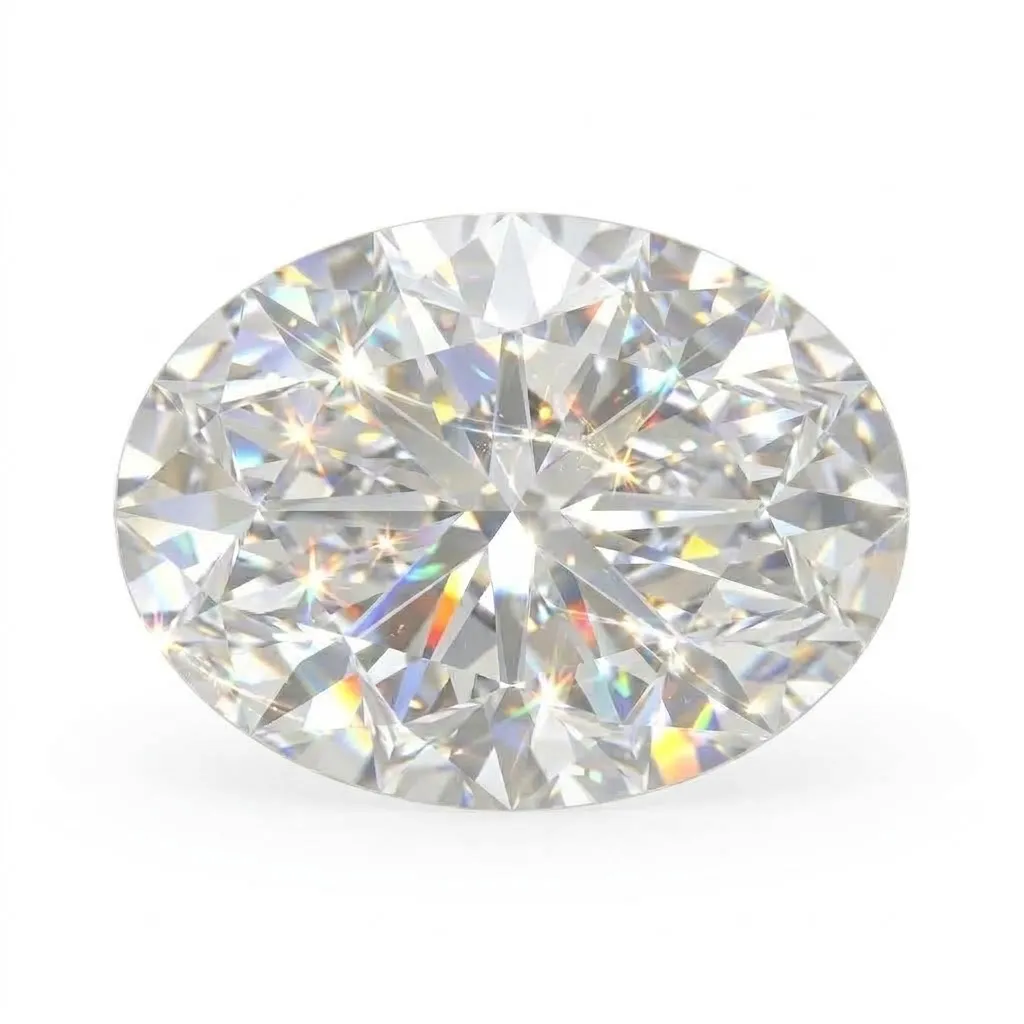
Oval cut
Elongated brilliant-style outline

Cushion cut
Rounded corners and a soft square profile
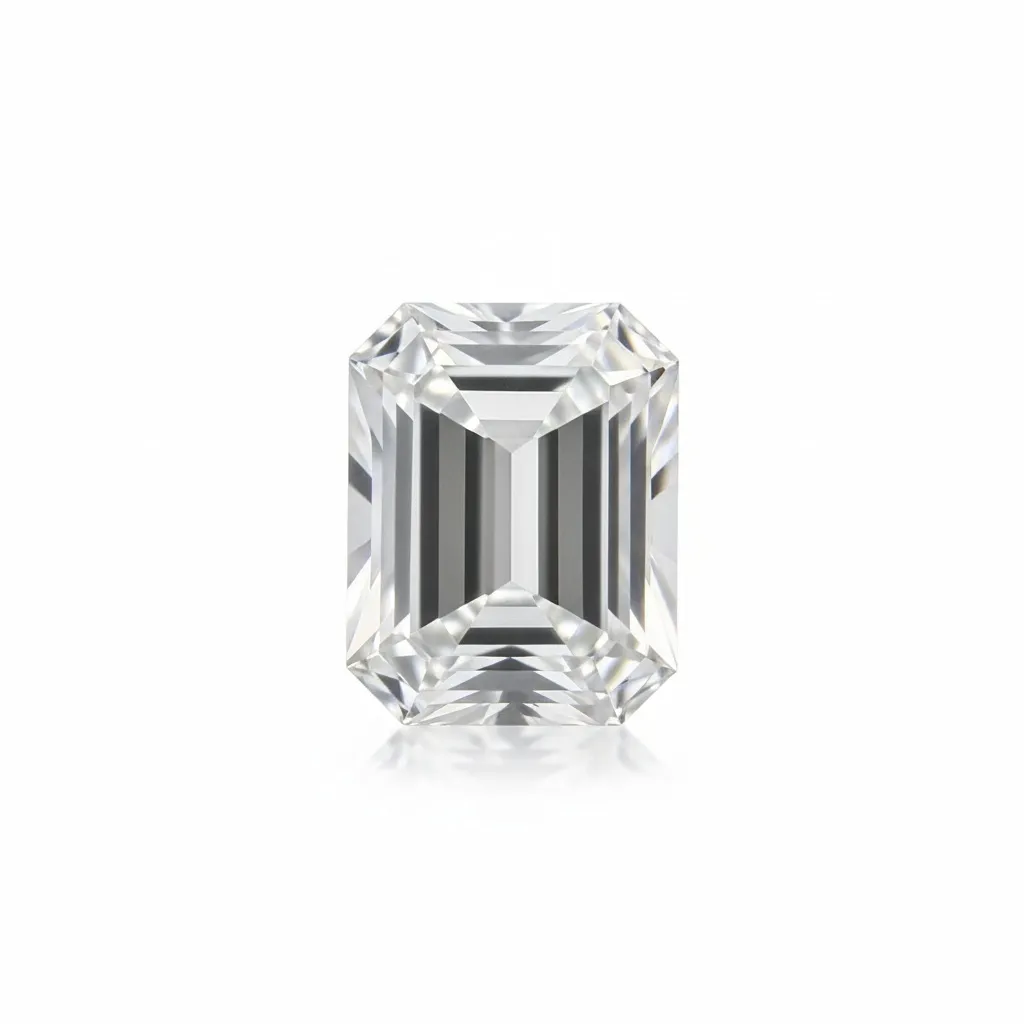
Emerald cut
Step facets and rectangular geometry

Princess cut
Square outline with sharp corners
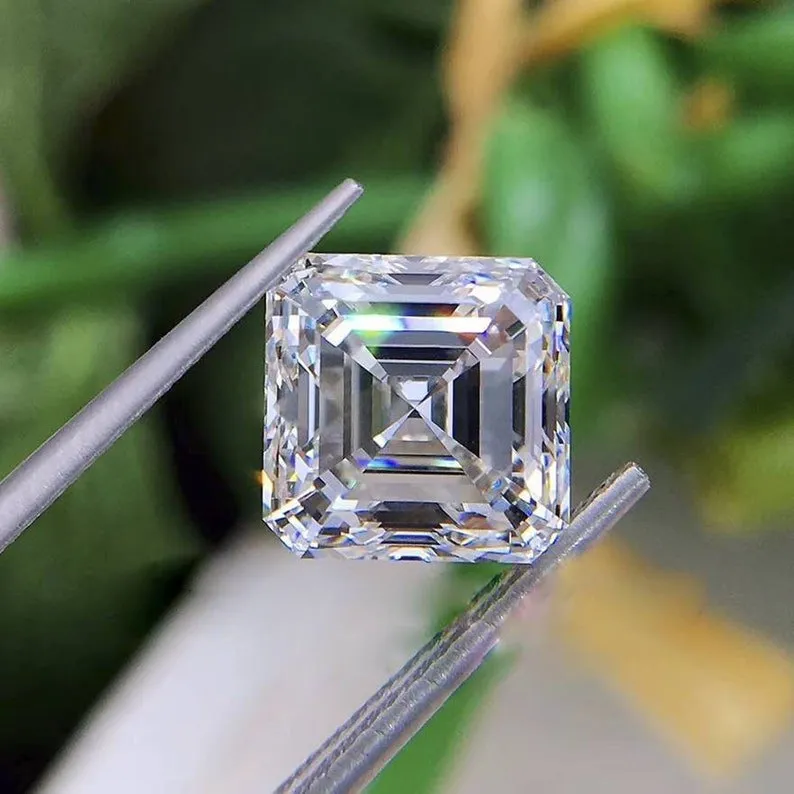
Asscher cut
Square step-cut symmetry
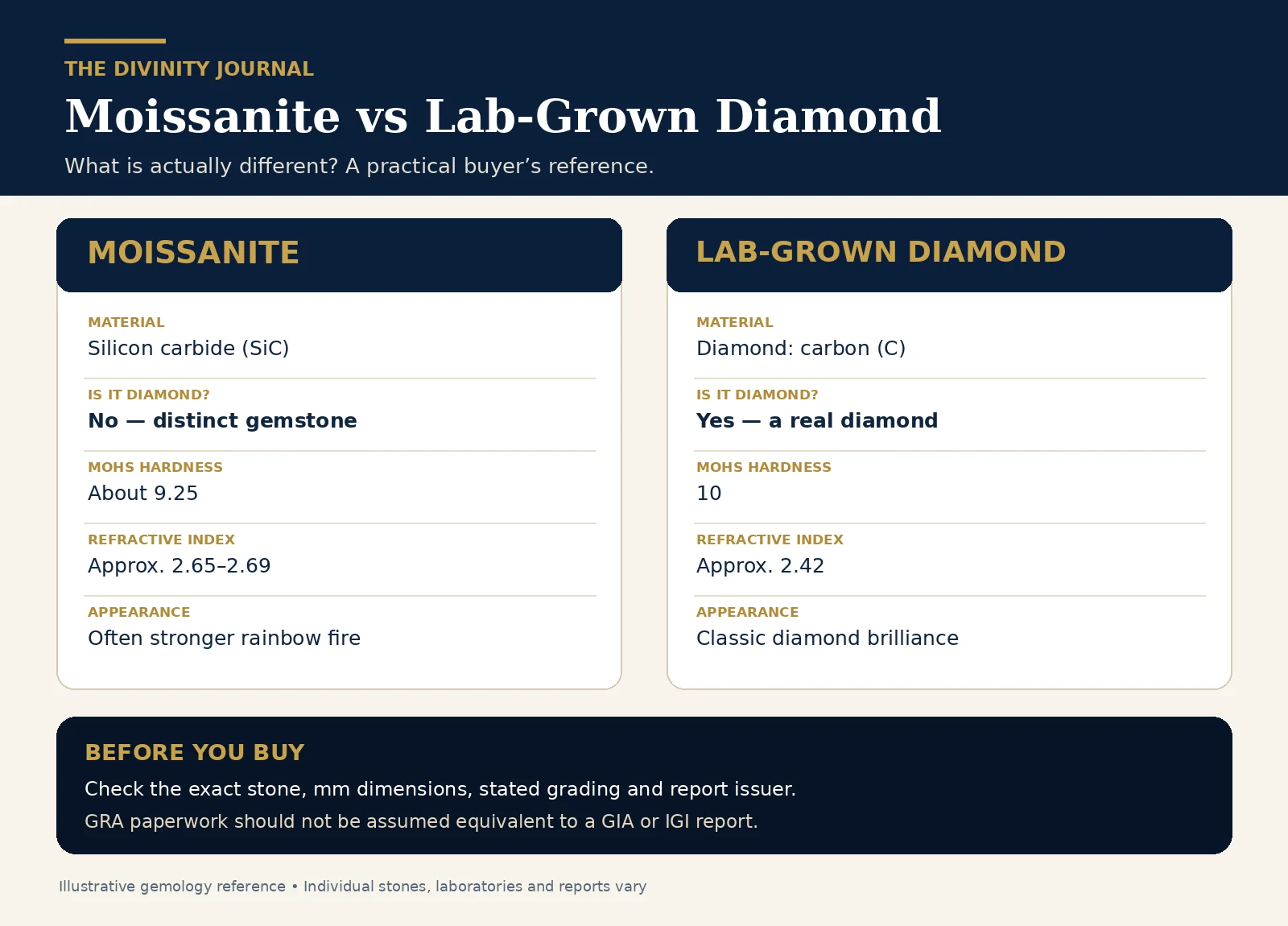
Moissanite vs lab-grown diamond at a glance
| Feature | Moissanite | Lab-grown diamond |
|---|---|---|
| Chemical composition | Silicon carbide (SiC) | Carbon (C) |
| Origin | Gem-quality jewellery moissanite is lab-created | Lab-grown diamonds are manufactured; natural diamonds form geologically |
| Mineral identity | Moissanite: its own gemstone species | Diamond: same crystal material as mined diamond |
| Mohs hardness | Approximately 9.25 | 10 |
| Optical character | Often pronounced coloured fire and strong brilliance | Typically different balance of brilliance and dispersion |
| Refraction | Normally doubly refractive; facet doubling may be observed | Singly refractive in the ideal case |
| Grading/report | Check issuing body, stone identity, measurements and report consistency | Check the diamond-specific laboratory report and growth origin |
| Resale | No guaranteed appreciation | No guaranteed appreciation |
The figures and descriptions are general gemological references, not product-specific grading statements.
Three buying checks that matter most
We want customers to understand what a particular stone actually is and what they will receive.
Stone identity
Read whether the item is SiC moissanite or carbon diamond. Marketing terms must not blur the two materials.
Cut & dimensions
Compare shape, length, width, depth and the stone’s actual colour and appearance in product photographs.
Report scope
Review who issued any report, what it covers and whether its details match the exact stone offered.
Inspecting a real gemstone
Lighting can change how a colourless faceted gemstone looks on camera. A practical inspection considers face-up view, side profile, corners, symmetry, surface condition and dimensions rather than one dramatic sparkle photograph.
- Inspect a clear image of the actual cut and its facet arrangement.
- Review mass and millimetre dimensions separately.
- Ask about included documentation and what it identifies.
- For a significant purchase, consider independent gemological verification.
Choosing a cut for jewellery
- Oval: elongated sparkle and soft outline.
- Cushion: rounded-square, romantic silhouette.
- Emerald: architectural step-cut facet pattern.
- Princess: square silhouette; protect corners in setting.
- Asscher: square stepped geometry and symmetry.
Questions before ordering
- What exact mineral is specified in the listing?
- What are the millimetre dimensions and stated mass?
- Are colour or clarity grades stated as product specifications or independently evaluated?
- What document is included and who issued it?
- What are the return terms for a loose stone?
What is moissanite made of?
Moissanite is silicon carbide (SiC), a gemstone with a different chemical composition and optical character from diamond. Its jewellery-grade material is commonly grown in a laboratory. Because it is its own gemstone, descriptions should never imply it is mined diamond or lab-grown diamond.
Moissanite can produce conspicuous spectral colour flashes, often called fire. The cut, lighting, proportions and observer’s preference influence its appearance.
What makes a lab-grown diamond a diamond?
A lab-grown diamond is crystalline carbon made by a controlled manufacturing process such as HPHT or CVD. It shares the essential diamond material identity with mined diamond, although growth features and inclusions may enable specialists to distinguish their origins.
Neither gemstone should be described as an investment with guaranteed appreciation. Price and resale terms are subject to market conditions.
Mohs hardness and daily-wear durability
Diamond is 10 on the Mohs hardness scale; moissanite is approximately 9.25. That scale measures resistance to scratching, not toughness against every kind of impact. Pointed corners on princess, marquise or pear shapes still require protection in suitable settings.
Durability also depends on secure mountings, careful cleaning and avoiding contact with hard surfaces.
Cut shapes and practical measurements
Oval and cushion cuts tend to give a rounded visual impression. Emerald and Asscher cuts use step facets that emphasize geometry. Princess cuts have a square outline with corners that merit thoughtful setting design.
Check length, width and depth in millimetres, as well as mass and cut proportions. Two stones described with the same carat figure may not share the same face-up dimensions.
Reading a GRA or other gemstone report
The term “GRA certified” appears in some moissanite retail listings, but a printed card alone does not establish identity or quality. Compare the actual item with the document: issuer, material name, measurements, description, report number where available, and any independent verification method.
Do not equate moissanite paperwork with GIA/IGI diamond reports. If purchasing an expensive stone, an independent qualified gemological examination offers greater confidence than a marketing claim.
Pricing, origin and sustainability
Moissanite frequently offers a different price proposition from diamond, but there is no universal savings percentage. Material, shape, size, grading language and retail policies all matter.
Lab-created origin alone does not prove a gemstone is carbon-neutral, conflict-free or environmentally preferable under every production condition. Demand evidence for such comparative claims.
Cleaning and safe storage
Use a suitable soft cloth and mild gemstone-appropriate care. Protect both loose stones and set jewellery from accidental impact. Ask a jeweller before ultrasonic cleaning, especially if the setting contains other gems or delicate components.
Store loose gemstones separately so they cannot scratch softer jewellery, and handle pointed cuts carefully.
Frequently asked questions
Is moissanite a lab-grown diamond?
No. Moissanite is silicon carbide, while lab-grown diamond is crystalline carbon. Both may be manufactured, but they are different gemstones.
Is moissanite a fake diamond?
Moissanite is a genuine gemstone in its own right. It is misleading to sell it as diamond, but it is not inherently a fake material when accurately described.
What does a GRA certificate prove?
Review the report’s actual wording and issuing body. It should be checked against the gemstone’s measurements and identifying details. A GRA card alone should not be represented as an independent diamond grading report.
Does a diamond tester distinguish them?
Some basic thermal conductivity devices can give diamond-like readings for moissanite. A qualified gemologist can use appropriate instruments for reliable distinction.
Are all lab-grown diamonds sustainable or conflict-free?
Such claims require sourcing, electricity and supply-chain evidence. Lab-grown origin alone does not establish a particular environmental or ethical outcome.
Does a larger carat number mean the stone looks identical in size?
No. Carat is a unit of mass; dimensions, density and shape affect apparent size. Always compare actual millimetres.
Which one is best for an engagement ring?
Both can be durable jewellery choices. Decide using preferred appearance, budget, exact dimensions, verified material identity and setting.
How should loose moissanite be cleaned?
Handle by the edges with clean fingers or tweezers and use an appropriate gentle cleaning method; settings and coatings may impose additional precautions.
Find your preferred cut with confidence
Divinity Crystals presents loose moissanite in different shapes. Choose based on real product photographs, exact dimensions, material identity and supporting documentation rather than blanket guarantees.
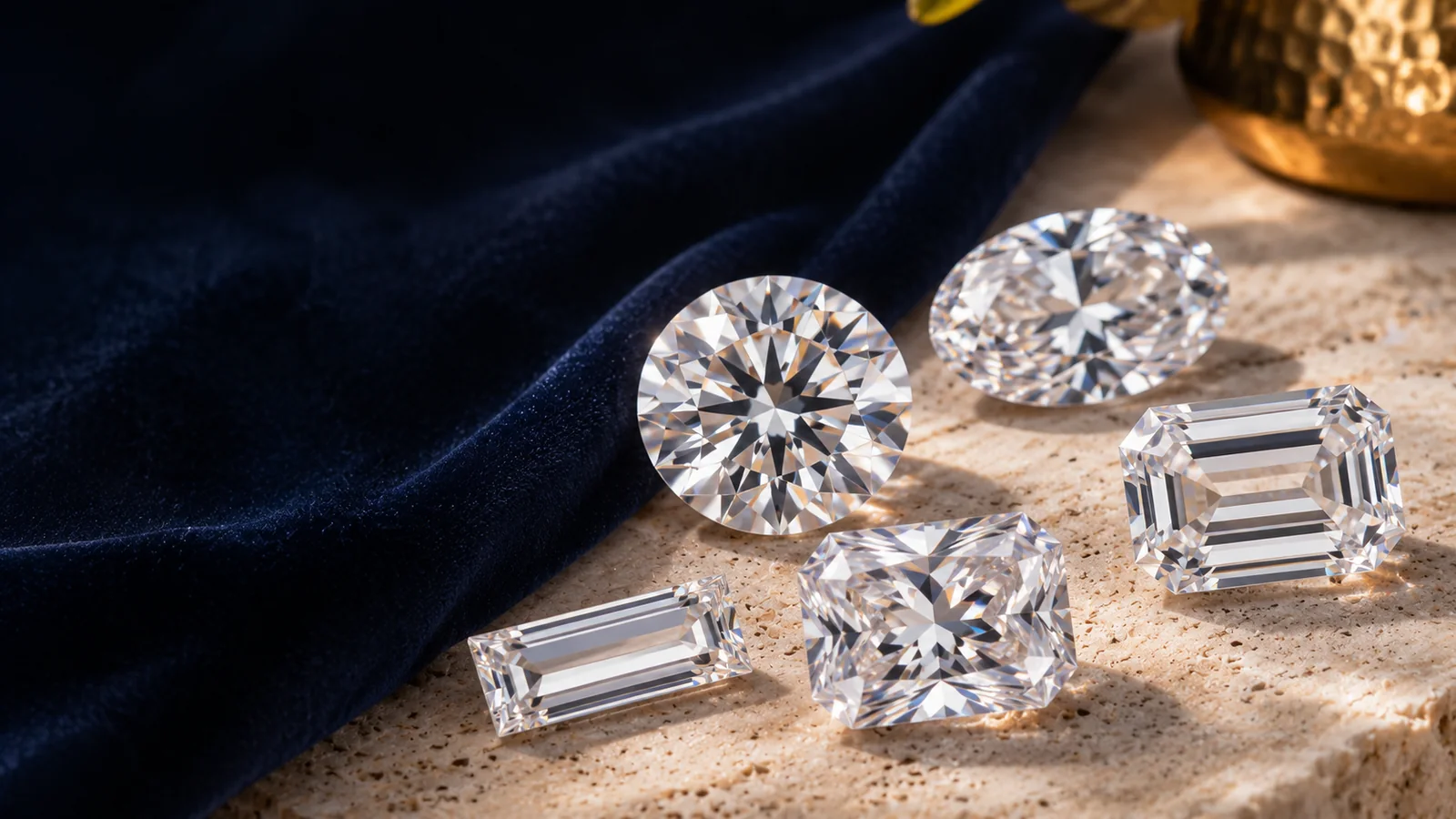
Editorial note: The accompanying hero and lifestyle images are original conceptual illustrations. The five linked gallery images are from our own product entries. No lab-grown diamond inventory is implied or pictured as a moissanite product. Certifications and grading claims should be interpreted only within the exact individual product’s documentation.