


Divinity Crystals · Mineral Collecting, Statement Specimens & Safe Displays
A large mineral specimen is more than a decorative object. It can reveal how a crystal formed, what other minerals grew around it and how geological conditions affected its colour, shape and internal structure. A cluster of transparent Quartz, a purple Amethyst crystal group and a metallic Pyrite specimen have different compositions, growth habits and long-term care needs.
We often hear phrases such as big rock crystal, museum-grade Pyrite, raw Quartz cluster, large Amethyst geode and collector-grade mineral specimen. These phrases describe different things. In mineralogy, rock crystal specifically means transparent colourless Quartz. A large crystal specimen, by contrast, may contain a completely different mineral or several minerals attached to a matrix.
This Divinity Crystals collector guide is designed to help you judge identity, structure, condition, actual size and weight, documentation, mounting, transport and conservation before buying. We link to our own published products instead of inventing examples, and we distinguish the existing first-party merchandise photographs from the original editorial cover and lifestyle portrait.
The premium editorial cover was created to illustrate a Quartz, Amethyst and Pyrite display. It is not a photo of a particular combination we sell. Below you will see five product-gallery views from separate Divinity Crystals listings—including two different Pyrite sizes—and a clear description of what each image can and cannot establish.
Seven collector rules worth remembering
- Rock crystal means transparent colourless Quartz, not every large mineral rock.
- Weight does not determine value without mineral identity, growth quality, condition and collector demand.
- “Museum grade” is not a universal laboratory grading scale and should not replace specific evidence.
- Look at every side, including matrix, base, points, fractures and any possible restoration.
- Plan physical support before ordering a heavy or awkwardly shaped specimen.
- Protect Pyrite from excess humidity and protect some Amethyst from prolonged intense sunlight.
- Match each claim to the exact object: photographs, measured mass, locality, repairs and any laboratory report.
Understanding crystal growth: what collectors are actually buying
A crystal’s external faces often reflect its ordered internal structure, but real geological environments are complex. Available space, changing fluid chemistry, temperature, pressure and the presence of other minerals can alter the final form. Intergrown points, contact marks and natural matrix can be part of what makes a specimen distinctive.
Quartz, with chemical composition SiO₂, may form prismatic crystals with pointed terminations. A cluster contains multiple crystals grown together, while a geode is a cavity, often in rock, lined with mineral crystals. Amethyst is the purple variety of Quartz. Pyrite is an iron sulphide mineral, often with sharply reflective faces and characteristic cubic or pyritohedral forms.
Clear Quartz and rock crystal
Colourless transparent Quartz may show prism faces, pointed terminations, internal growth zones and natural inclusions. The most compelling display is not necessarily perfectly clear: an interesting natural arrangement or well-exposed group can make a specimen memorable.
Amethyst clusters and geodes
Amethyst is Quartz coloured by natural defects and trace-element effects. Purple depth, zoning, sparkle and crystal condition can affect visual appeal. Raw fragments and whole crystal clusters are distinct formats; one is not the photograph of the other.
Pyrite cubes and intergrowths
Pyrite is brassy, dense and metallic, frequently with striking geometric crystal forms. Some pieces are particularly vulnerable to chemical deterioration in damp environments, so condition and storage history matter as much as shine.
Aquamarine-labelled clusters
Aquamarine is normally the blue-to-green variety of beryl. A blue-coloured “aquamarine” photograph is not itself a species test, and the word phantom refers to a specific internal growth pattern, not a general premium grade. Verify the actual material and any advertised report.
Collectors may value well-defined habits, unusual formations, mineral associations and credible locality information. The Natural History Museum’s mineral collection overview explains why variation in crystal forms and localities is scientifically important. Such research provides background—not an appraisal of a particular piece on our website.
What makes a large mineral specimen desirable?
Collector appeal is not a simple equation of weight times price. Some specimens are admired for large intact crystals, others for remarkable crystal geometry, a rare mineral association, an unusually vivid natural colour or an instructive growth feature. An attractive but repaired specimen may still be collectible when its repair is disclosed. An enormous cluster with crushed terminations may be less desirable to some collectors than a smaller, undamaged example.
| Collector check | What to inspect | Why it matters |
|---|---|---|
| Mineral species | Actual Quartz, Amethyst, Pyrite or beryl identity. | Different species have distinct habits, care needs and value factors. |
| Crystal habit | Faces, point terminations, cubic growth, intergrowth and matrix. | Genuine natural structure and presentation influence interest. |
| Condition | Chips, fractures, unstable matrix, discolouration or loose crystals. | Some damage is natural; recent loss or unrevealed repairs affect decisions. |
| Preparation and restoration | Cut bases, reconstructed pieces, glue joints or surface coatings. | Honest disclosure distinguishes natural growth from interventions. |
| Actual dimensions | Measured length, width, height, weight and centre of mass. | Essential for safe handling, delivery and the display plan. |
| Locality and reports | Chain-of-custody record, named laboratory and verified report scope. | Retail names alone do not establish a mine or geographic source. |
| Display aesthetics | Orientation, lighting, overall silhouette and visibility from key angles. | Beauty can be subjective without requiring investment guarantees. |
Claims such as “rare,” “museum grade,” “investment-grade,” “collector grade” and “extra-premium” should not become substitutes for those facts. A buyer can appreciate strong workmanship and natural beauty without assuming a universal certificate of rarity or a guaranteed resale profit.
Five first-party mineral photographs from our published collection
Each image is attached to its own Divinity Crystals product listing. The 10 kg and 1 kg Pyrite entries are different listings; the Amethyst image comes from our premium Amethyst cluster listing and any pictured report must be independently matched to the actual specimen. The editorial cover and Indian collector portrait illustrate display concepts, not exact weight, provenance or certification.
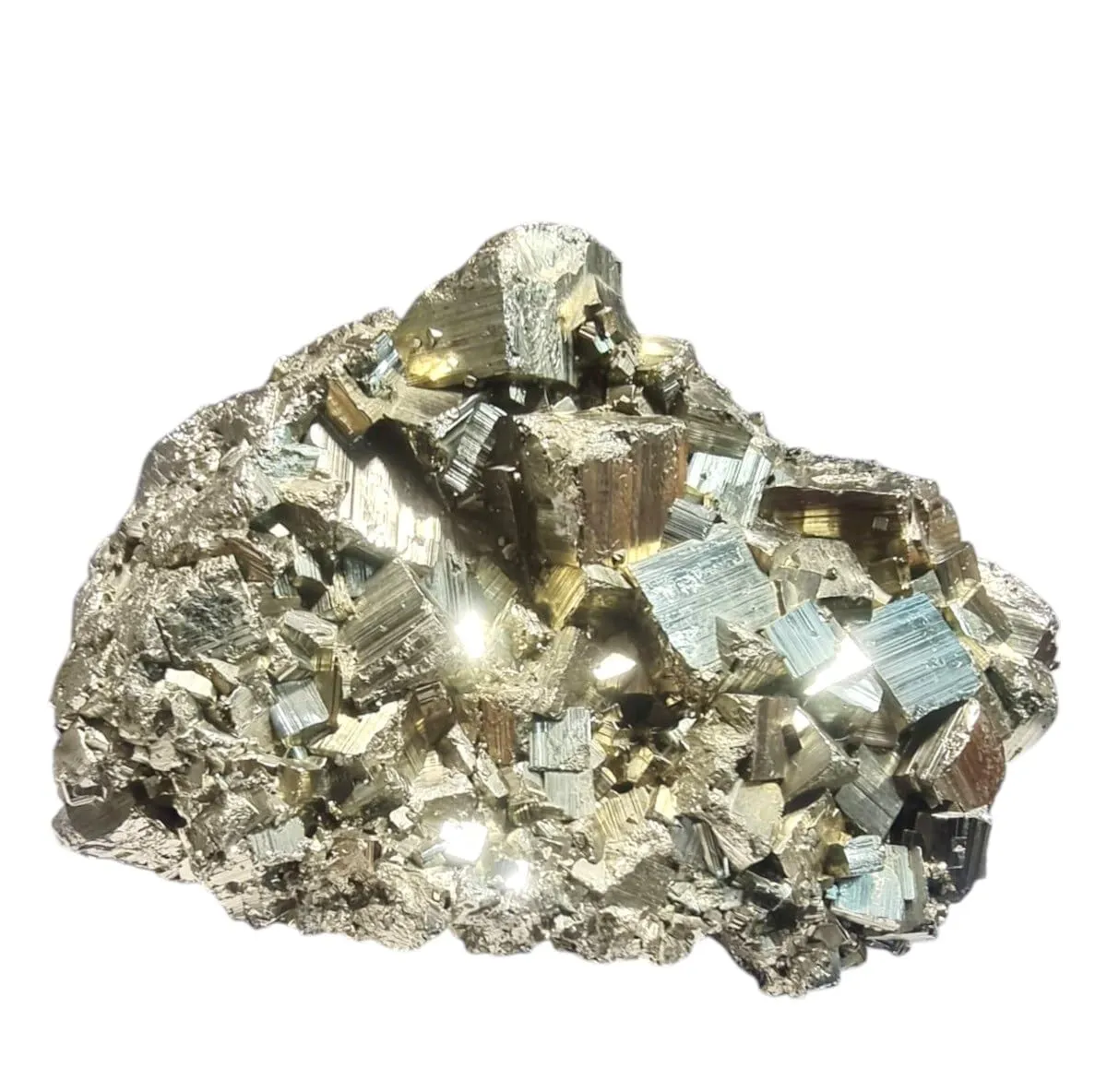
10 kg Pyrite — Front-View Specimen
Our existing front-view product photograph attached to the listing advertised as a 10 kg Peruvian Pyrite cluster. The stated weight, locality and laboratory claim require item-specific documentation.
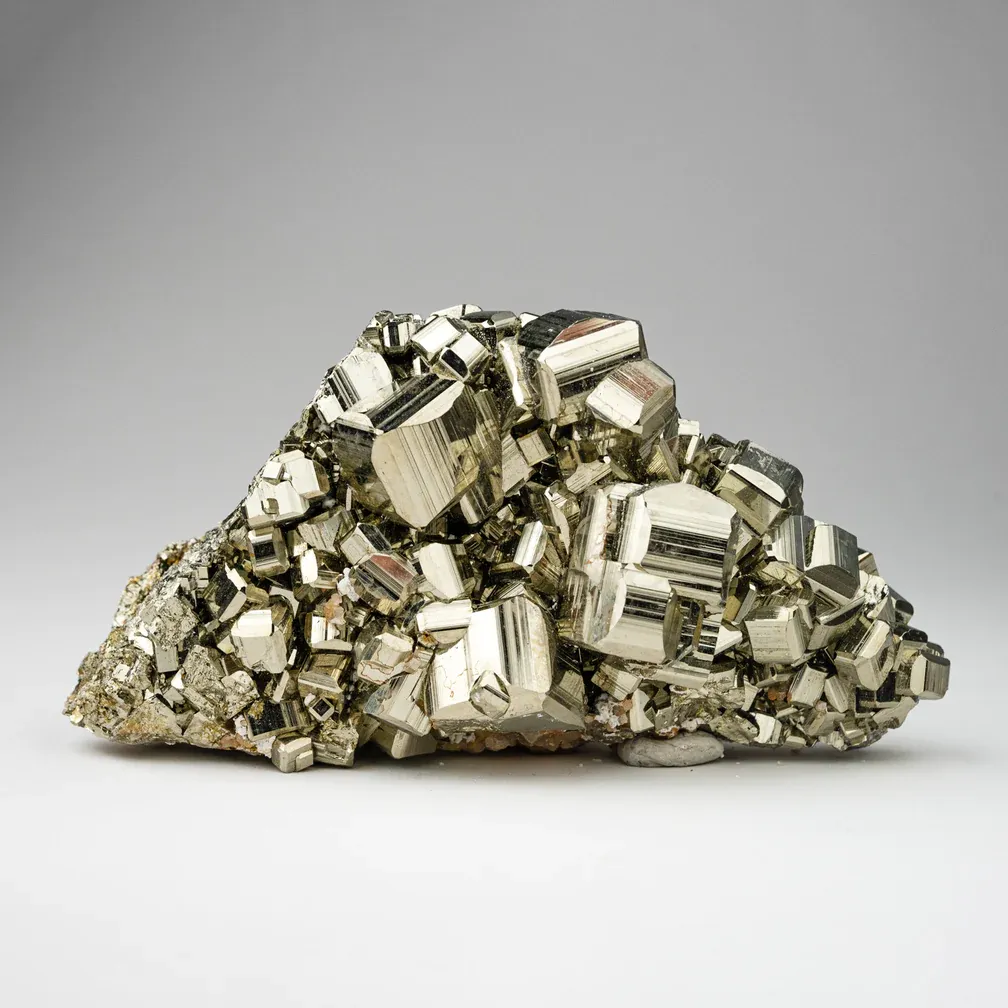
1 kg Pyrite — Crystal Cluster View
A separate first-party product view from our 1 kg Pyrite listing. Compare the crystal faces, base, condition and exact verified mass rather than assuming the 10 kg specimen is the same object.
Clear Quartz — Cluster on Wooden Base
An existing first-party gallery photograph from our Clear Quartz/Sphatik cluster listing. This compact view illustrates the product format; individual dimensions and any phantom-growth claim need confirmation.

Amethyst — Collector Cluster Listing
Published product-gallery photograph from our separate Amethyst cluster listing. If a laboratory report is pictured, verify the issuing laboratory and its exact connection to the selected specimen before relying on any certification claim.
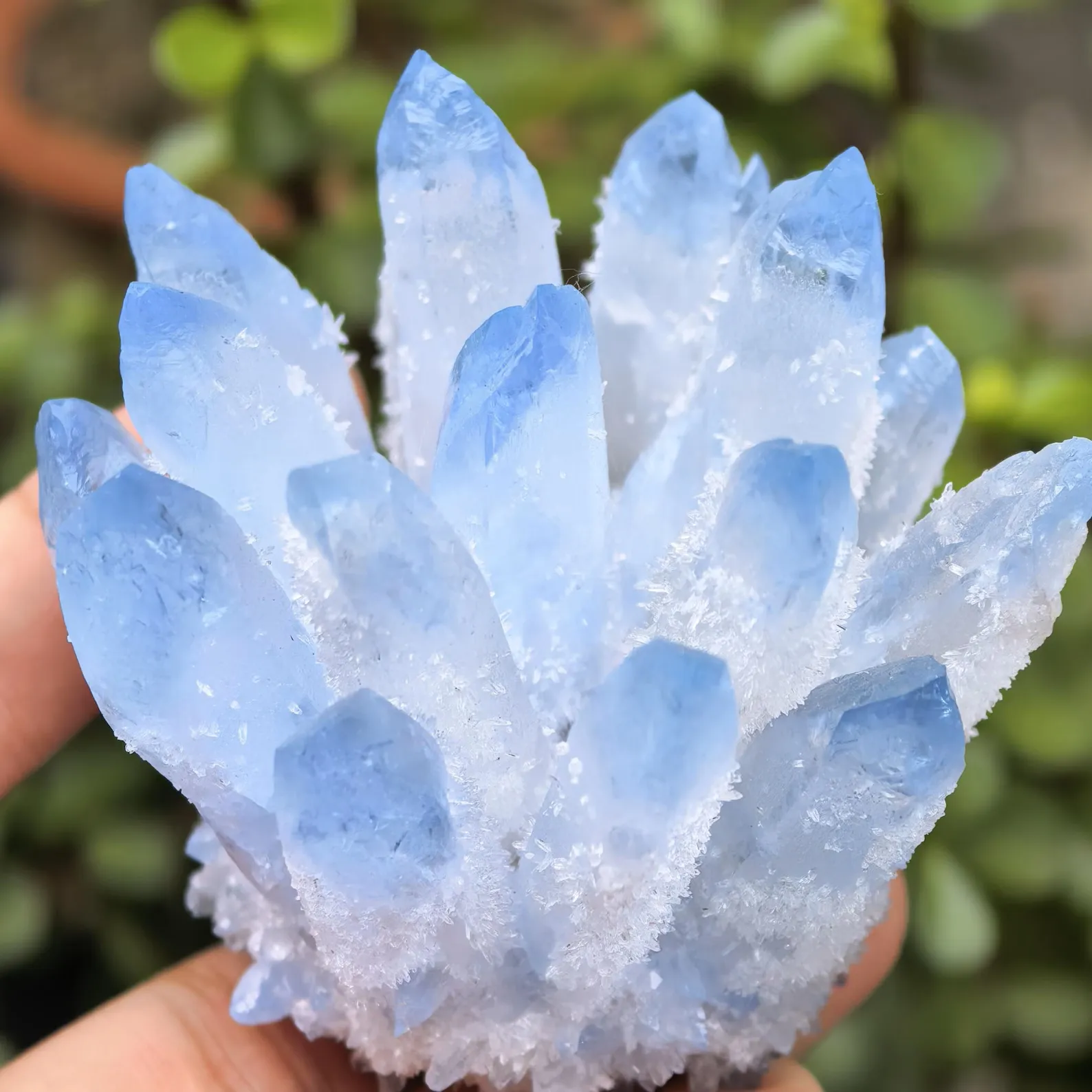
Aquamarine-Labelled Cluster
An existing first-party gallery view of our Aquamarine-labelled cluster. The blue-toned appearance does not independently establish beryl identity, size or the advertised phantom and certification claims.
Comparing our collector examples: what each listing illustrates
Our large Peruvian-labelled Pyrite cluster
Our 10 kg Pyrite listing illustrates a substantial metallic mineral display. Its title includes “museum grade,” “Peruvian” and “lab certified.” Those claims should be checked through measured mass, photographs of the exact specimen, locality documentation and any corresponding laboratory report rather than inherited from an editorial picture.
For a large specimen, the installation plan is part of the purchase: assess total weight, table or pedestal load capacity, centre of gravity, points vulnerable to impact and safe lifting requirements.
A smaller separate Pyrite specimen
Our 1 kg Pyrite listing is a different product, with its own photos and description. One kilogram and ten kilograms are not alternate camera crops of the same item. Check exact dimensions, condition and the stable orientation of the selected piece.
Both listings involve Pyrite’s moisture sensitivity, but the appropriate packaging and lifting equipment can differ substantially with size and shape.
Our Sphatik-labelled Quartz cluster
The Clear Quartz/Sphatik cluster listing includes translucent crystal growth and an advertised phantom description. The gallery uses an older, small-resolution first-party view to show the format without magnifying it excessively. We should verify the specific phantom feature, specimen dimensions and any claimed report against the actual stone.
Our Amethyst cluster and raw pieces are different items
The gallery now illustrates our Amethyst Phantom Cluster listing using an existing first-party view that also depicts a report-like document. Its contents, issuer and connection to the exact stone have not been independently authenticated by this article. Our separate raw Amethyst chunk listing contains individual fragments rather than the pictured premium cluster. A collector should compare the actual size, form and relevant paperwork for the item selected.
A blue cluster requiring accurate identity
Our Aquamarine Phantom Cluster listing is included as another collector format. Its photograph shows the advertised appearance but cannot confirm beryl species, precise weight, natural phantom growth or report conclusions by itself. Material identity deserves its own evidence.
Specimens are not interchangeable
A tumble, a raw chunk, a geode, a cut specimen and a natural cluster have different visual and physical properties. A beautiful styled photo should not silently replace the specific selected product or a separate listing’s actual photographs.
How to inspect photographs for real collector information
When considering a costly or substantial mineral specimen, ask to examine the actual object from every side. A highly stylised advertisement can be attractive, but it rarely reveals the underside, concealed cracks, mounting repairs or how the specimen rests on a stable surface. Those details become important when the rock must be packed, transported and displayed.
Front and side angles
Compare natural crystal points, intergrowth, shadowing and relative depth. A single dramatic front view may hide broken terminations or support joints. A side view can reveal whether the piece balances safely.
Underside and stable base
The underside reveals loose matrix, cut surfaces, unstable support or a need for a purpose-built cradle. Never assume a large cluster is safe to balance on a polished tabletop simply because it stands in a studio photograph.
Close-up details
Look for chipped ends, unnatural joins, surface coating, odd colour concentration and powdery deterioration. A magnified photograph can raise good questions but cannot independently confirm mineral species or provenance.
Scale and documentation
Request a measured ruler and verified scale reading when relevant. Show the corresponding report only if its issuer, identification and specimen match are clear. Avoid simulated certificate graphics and unverified country-of-origin claims.
In particular, a product photo of a large Pyrite rock on a scale may provide helpful context, but without independently matching the exact item and reading, it should not be presented as a laboratory weight certificate. The same standard applies to specimen photographs alongside a certificate card.
Six collector checks from selection to display
We recommend a straightforward sequence that can be repeated for future acquisitions without guessing a specimen’s weight, repair history or suitability for your space.
-
Identify the mineral and natural structure
Check whether the item is colourless Quartz, purple Amethyst (a Quartz variety), iron sulphide Pyrite or another mineral. Review crystal habit, attached matrix, exposed points, inclusions and the exact type of cluster or geode.
-
Request all-side photographs of the exact item
The front, back, sides, underside and close views of points reveal different information. Ask about chipped terminations, loose grains, coatings, glued repairs, stabilised sections or altered surface areas before making a high-value decision.
-
Confirm mass, dimensions and a safe display plan
Obtain measured weight and length × width × height. A photo next to a person can mislead scale. Check the real load capacity of the shelf, floor or pedestal and whether the base needs a custom non-staining support.
-
Assess paperwork, origin and grading claims
A lab report may identify a mineral, but a country or mining locality is a separate claim. Museum-grade and collector-grade are not universal independent gemological grades. Match documentation to the actual specimen.
-
Plan protective packing and installation
For heavy mineral specimens, plan an immobilised, cushioned package that supports the matrix and isolates the terminations. Discuss transport handling, insurance and condition photographs before dispatch, and arrange suitable help for installation.
-
Use mineral-specific care and monitor the display
Keep Pyrite appropriately dry and check for corrosion; protect some Amethyst from prolonged strong sunlight. Dust gently when mineral and matrix are known, protect sharp points, and avoid soaking unknown specimens.

If the condition or weight of a chosen specimen is unclear, contact Divinity Crystals for clarification before buying. Documentation should relate to the exact item that will be prepared for dispatch.
Display engineering: size, load and centre of gravity matter
A substantial mineral specimen can be heavy for its footprint and awkwardly shaped. It may have a narrow contact base while much of its mass extends to one side. A fragile cluster can also contain sharp natural points positioned where somebody might brush against them. Because large pieces are decorative and geological objects, display planning should be practical rather than symbolic alone.
| Display question | Why it matters | Safer choice |
|---|---|---|
| Can the support bear the mass? | Furniture may fail under concentrated or dynamic loading. | Confirm the actual rated capacity and use a suitable stable cabinet, pedestal or professional mount. |
| Is the base stable? | Irregular shapes may rock or tip under small impacts. | Use a purpose-fit non-staining cradle or properly engineered mount; do not rely on decorative balancing. |
| Are terminations exposed? | Quartz and Amethyst points can chip or cause contact injuries. | Maintain clearance from edges, furniture doors, curtains and busy walkways. |
| Is the room humid? | Pyrite may oxidise when conditions favour deterioration. | Choose a relatively dry environment and monitor any powdering, cracking or colour change. |
| Is the specimen in harsh sunlight? | Some coloured minerals, including Amethyst, may fade. | Prefer indirect or suitably controlled light. |
| Are children or pets present? | Loose fragments, heavy rocks and sharp points can create hazards. | Keep out of reach with suitable barriers and secure mounts. |
Advice from the National Museums Scotland on object handling underscores the need for good practice when moving heavy and awkward collection material. For a large specimen, identify the lifting path and use sufficient competent assistance; a few seconds of careless handling can cause irreversible damage.
Safe transport and unpacking of collector-scale minerals
Shipping is a major part of the buyer experience for heavy minerals. A specimen may have great mass but brittle individual points. The outside box must take shipping shocks without forcing the cluster itself to absorb them. Packaging methods should suit the actual weight, shape, orientation, matrix and fragility of the stone, and carriers may have special limitations.
Record condition
Photograph all angles of the selected specimen and document visible chips or repairs. Confirm measured dimensions, total shipment weight, any support base and what insurance or shipping service is agreed. A blanket “damage-proof” promise is not credible.
Support the matrix, not the tips
Provide immobilising and cushioning materials around the stable base or strongest supporting regions. Keep exposed points from contacting hard packaging or neighbouring stones. A specialist crate may be appropriate for some very large pieces.
Plan the lift before opening
Place the parcel on a stable surface and ensure there is safe access to the final display. Confirm the weight and lifting resources before moving a substantial piece. Avoid pulling up a cluster by a tall point or handle-like crystal.
Inspect immediately
Compare the actual stone with pre-dispatch photographs, including newly broken tips or loose pieces. Retain the packaging while investigating any shipping problem and follow the applicable store delivery and returns process.
For a specimen listed at 10 kg, a shelf that merely “looks strong” is not adequate evidence of support. Check materials, structural ratings and where the mass is concentrated. If in doubt, use a professionally selected support or consult a competent installer.
Mineral-specific conservation: Quartz, Amethyst and Pyrite
There is no universal “crystal cleansing” method safe for all mineral specimens. Mohs hardness measures resistance to scratching; it does not tell you whether a cluster’s associated matrix is soluble, fragile, treated, glued or chemically sensitive. Begin with identifying the specimen and choosing the least intrusive cleaning approach.
Hard does not mean unbreakable
Quartz has Mohs hardness around 7, but narrow points can still fracture or chip on impact. Use a soft dry brush to remove loose dust where appropriate, and avoid using a point as a handle. Do not soak an unidentified cluster with possible coatings or associated minerals.
Protect colour and terminations
Amethyst is Quartz with similar basic hardness but may change colour under prolonged strong sunlight or heat. Use a stable indirect-light display and do not rub fragile terminations forcefully. The matrix may need more conservative care than the quartz itself.
Control moisture and watch condition
Pyrite oxidation can produce acidic products and cause cracking or powdering in susceptible specimens. Keep vulnerable Pyrite in appropriately dry conditions, inspect changes and isolate actively deteriorating pieces before they affect nearby material.
Check every component
Natural mineral aggregates may contain softer accessory minerals, repaired areas or coatings. Do not apply acid baths, saltwater, household bleach, pressure washing or heat to unknown mixed specimens. Consult an appropriate conservation professional for significant deterioration.
The Canadian Conservation Institute’s natural history collection guidance identifies humidity-driven Pyrite deterioration as a real preservation concern. The Canadian Museum of Nature’s Pyrite disease article explains why an affected piece may need isolation and dry conditions. The Natural History Museum also discusses mineral sensitivity, display lighting and the importance of supporting unusual, heavy crystal forms.
For a practical material-specific home guide, read our Crystal Care & Cleansing article. Sound, moonlight or symbolic rituals may be personally meaningful, but they do not remove physical dirt or reverse mineral oxidation.
What locality and laboratory reports can actually establish
A specimen described as Peruvian Pyrite, Brazilian Quartz or a rare locality may have a credible geographic history—but the country name in the title or the appearance of the rock is not independent proof. In some cases locality is based on mine records, exporter or collector documentation; a conventional gem identification report does not necessarily determine source geography.
Read the report’s scope
Confirm the institution, report date, number, sample description, measured properties, identification and any stated limitations. A card saying “lab certified” is insufficient without a report that genuinely corresponds to the physical material.
Identify which specimen was tested
A report for one stone, fragment or sample must not automatically be applied to an entire group of unrelated clusters. If the piece is trimmed, repaired or altered, the paperwork should not imply that its present condition was evaluated when it was not.
Separate place names from mineral species
Mineral identification and geographic origin are different questions. Pyrite from multiple countries may appear visually similar, and quartz from different localities can share habits and inclusions. Ask about documented provenance when locality influences price.
Avoid investment promises
Collector demand and resale values may change, and the condition of a heavy mineral can deteriorate if handled poorly. The adjectives “museum” or “investment” are not a guarantee of a financial return.
When customers ask us about a large, high-value listing, the strongest answer is a consistent description supported by exact product photographs, measurements, transparent report information, documented condition and a practical delivery plan—not a generic trophy claim.
Natural beauty does not require exaggerated crystal powers
Large mineral specimens are compelling because their visible structures record geological processes. A Pyrite cluster can be an extraordinary metallic sculpture; a Quartz group can reveal natural crystal growth; a purple Amethyst geode can be a dramatic colour accent. None needs a claim that it guarantees wealth, purifies the air or shields a home from electromagnetic radiation.
Some people place stones in a home or workplace for personal symbolism or traditional reasons. Those meanings should be presented as beliefs rather than laboratory results. Medical conditions, indoor air quality, structural support and financial decisions deserve appropriate expert advice and practical action.
At Divinity Crystals, our goal is to connect customers with accurately described, attractive mineral objects through relevant first-party photographs, honest disclosure, safe handling and clear care instructions. Our collection focuses on clearly described stones, available documentation, safe handling and appropriate care information rather than exaggerated promises.
Checklist before buying a statement piece from our collection
Consider these final questions before committing to a large crystal for a home, office or collector display. The right purchase is not simply the heaviest item with the most luxurious adjective in its title.
| Before purchase | What to confirm from our listing or team |
|---|---|
| Product identity | Correct mineral species and physical form; whether the advertised specimen is the exact object photographed. |
| Natural condition | All-side and close photographs; points, matrix, chips, repairs, coatings or unstable pieces. |
| Scale | Measured mass, length, width, height and any support base or crate dimensions. |
| Documentation | Real report and issuer where advertised, exact specimen match, treatment and locality disclosures. |
| Installation | Furniture ratings, weight distribution, lifting resources, protective supports and household access. |
| Transport | Cushioning, secure crate or box, route, delivery method, insurance and condition documentation. |
| Long-term care | Humidity for Pyrite, light for Amethyst, gentle cleaning and regular inspection for damage. |
Our linked 10 kg Pyrite and 1 kg Pyrite listings illustrate the importance of these checks. We should confirm the item-specific facts before making any stronger guarantee about weight, museum status, geographic origin or laboratory certification.
Frequently asked questions about large crystal specimens
Practical answers about rock crystal, heavy Pyrite, Amethyst light exposure, repairs, identification, shipping and collector-safe display.
Is a 10 kg mineral specimen automatically rare?
No. Weight alone does not establish rarity, condition, provenance, visual quality or collector demand. Compare mineral species, crystal habit, complete terminations, damage, locality and documentation.
Does museum grade mean an official certification?
No. In retail, museum grade is commonly a descriptive marketing term, not a single universal grading system. Ask which objective facts support the description and whether a separate report exists.
What does phantom Quartz mean?
Phantom refers to a visible internal outline or stage of earlier growth within a later crystal. It is a feature that needs inspection; the word in a listing title alone does not verify the phenomenon.
Are all Aquamarine-labelled blue crystal clusters beryl?
Not necessarily. Aquamarine is a blue-to-green variety of beryl, but appearance alone cannot establish that the pictured mineral is beryl. Ask for specimen-specific identification evidence.
Why is humidity a concern for Pyrite?
Certain Pyrite specimens oxidise when exposed to elevated humidity and oxygen, producing corrosion products and sometimes crumbling. A dry, stable storage environment reduces risk.
Can Pyrite deterioration spread to nearby specimens?
Deteriorating Pyrite can release acidic corrosion products that may damage nearby storage and mineral material. Isolate an affected item and seek qualified conservation advice.
How should a large cluster be lifted?
Support its stable base or matrix; never grasp exposed crystal points. For heavy or awkward pieces, plan a two-person or professional lift with a route and support ready.
What measurements should I request for a big specimen?
Measured mass plus overall length, width and height, ideally with all-side photographs and a known scale reference. Confirm the weight of a stand or display crate separately.
How do I check if crystal points have been repaired?
Look at close-up photographs for unusual seams, glue lines, colour changes, misaligned faces or reattached pieces, but note that not all repairs are identifiable by photos alone. Ask for written disclosure.
Can strong sunlight fade an Amethyst display?
Some Amethyst can lose colour under prolonged intense sunlight or heat. A well-supported indoor position away from direct strong light is a cautious choice.
Can I display a heavy specimen on a glass shelf?
Only if the shelf, brackets and supports are engineered for the actual weight, impact risk and load distribution. Otherwise choose a suitable rated cabinet or pedestal with stable support.
What should I confirm before buying our 10 kg Pyrite listing?
Ask us to confirm the current specimen’s measured mass, all-side original photos, dimensions, condition, any repair, origin documentation, report scope, packaging plan and delivery arrangements.
Final perspective: collect real geology with clear information
The appeal of a large crystal comes from its material, structure, condition and presentation. An intact Quartz group, a richly coloured Amethyst specimen or a sharply formed Pyrite cluster can be a distinctive object without promising financial or medical transformation.
For a confident Divinity Crystals purchase, compare the actual listing photos, verify the selected specimen’s size, understand any treatments or repairs, review documentation within its proper scope, and plan safe delivery and display. These are the details that preserve both the mineral and the trust of the customer.