

Description
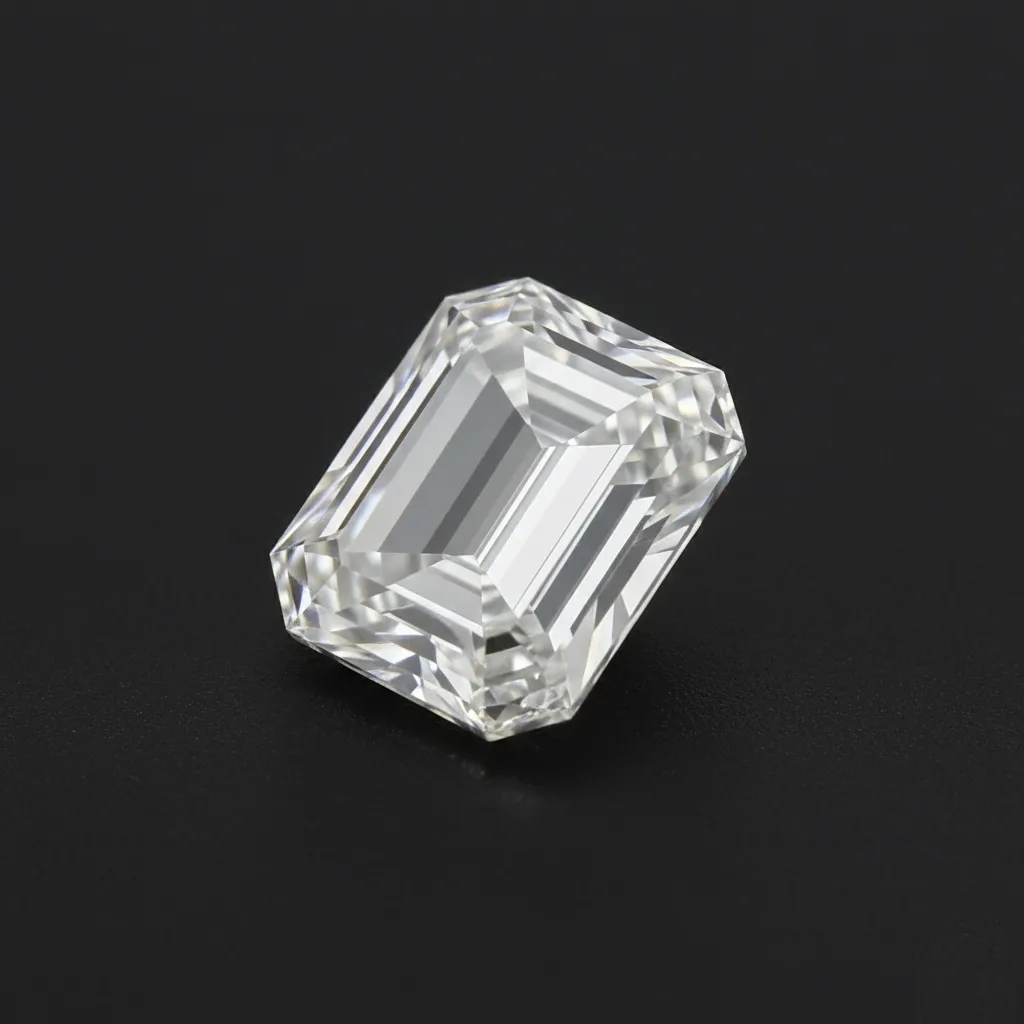
Emerald Cut Moissanite
Clean lines. Clipped corners. Architectural brilliance. Our lab-grown emerald-cut moissanite brings refined step-cut beauty to custom solitaires, pendants and vintage-inspired jewellery.
Explore actual gemstone photographs, elegant styling ideas and practical checks for your selected stone.
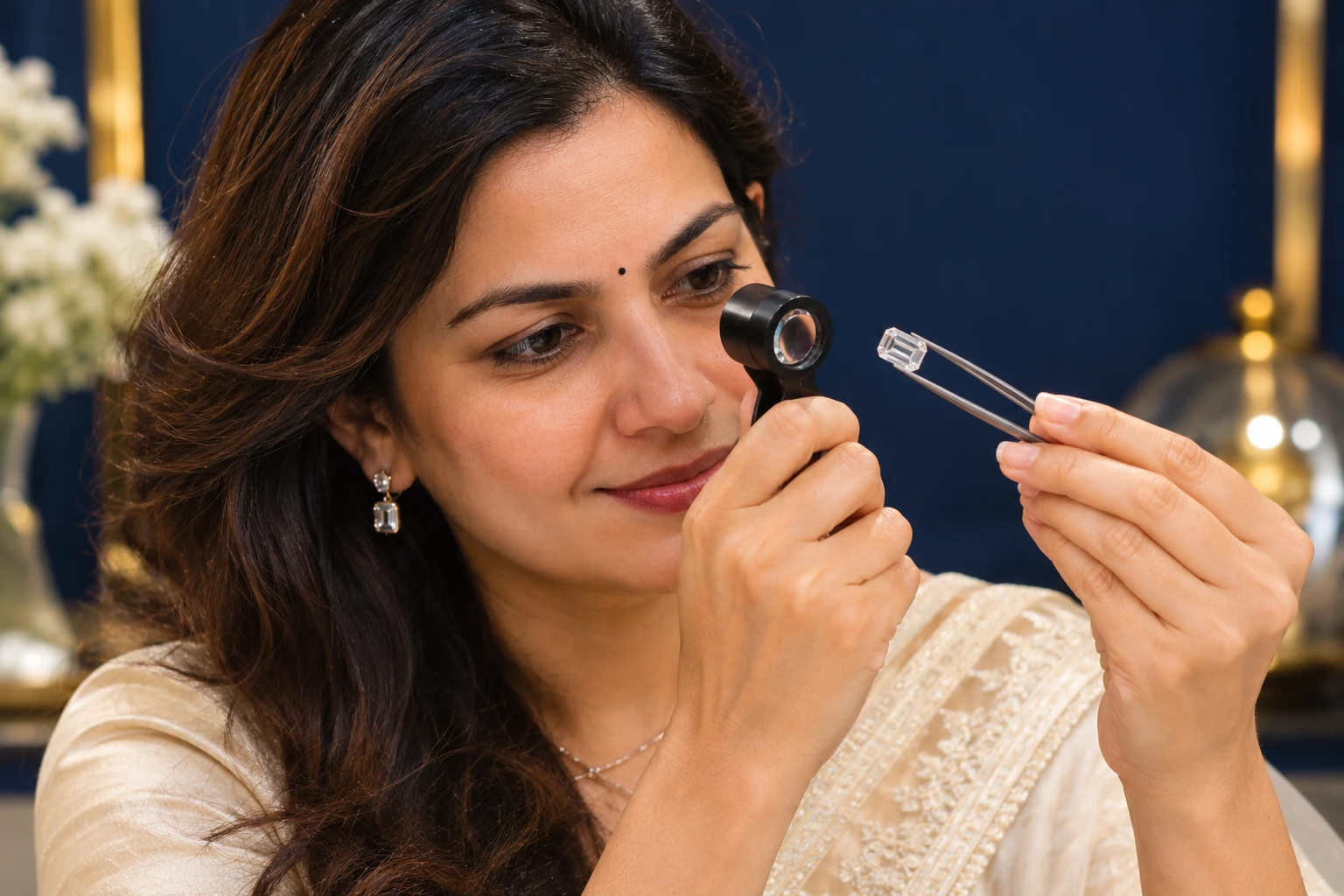
A study in understated sparkle.
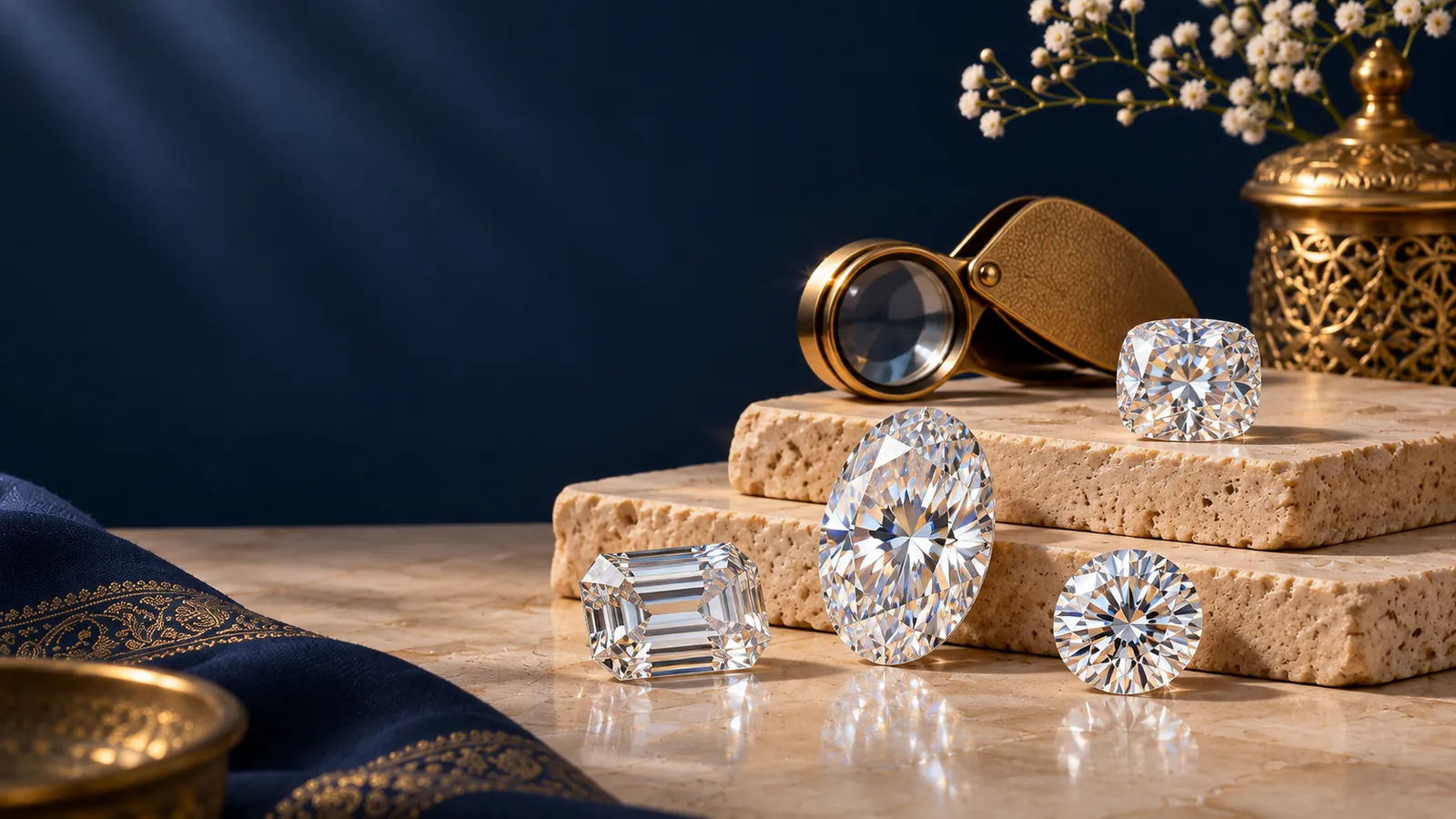
Rather than the many small flashes associated with brilliant cuts, an emerald cut uses long, parallel step facets and an open central table. These features can create a distinctive hall-of-mirrors effect: wide flashes of reflected light within a crisp rectangular outline. Its apparent brilliance depends on the individual stone, its cut, and the lighting in which it is viewed.
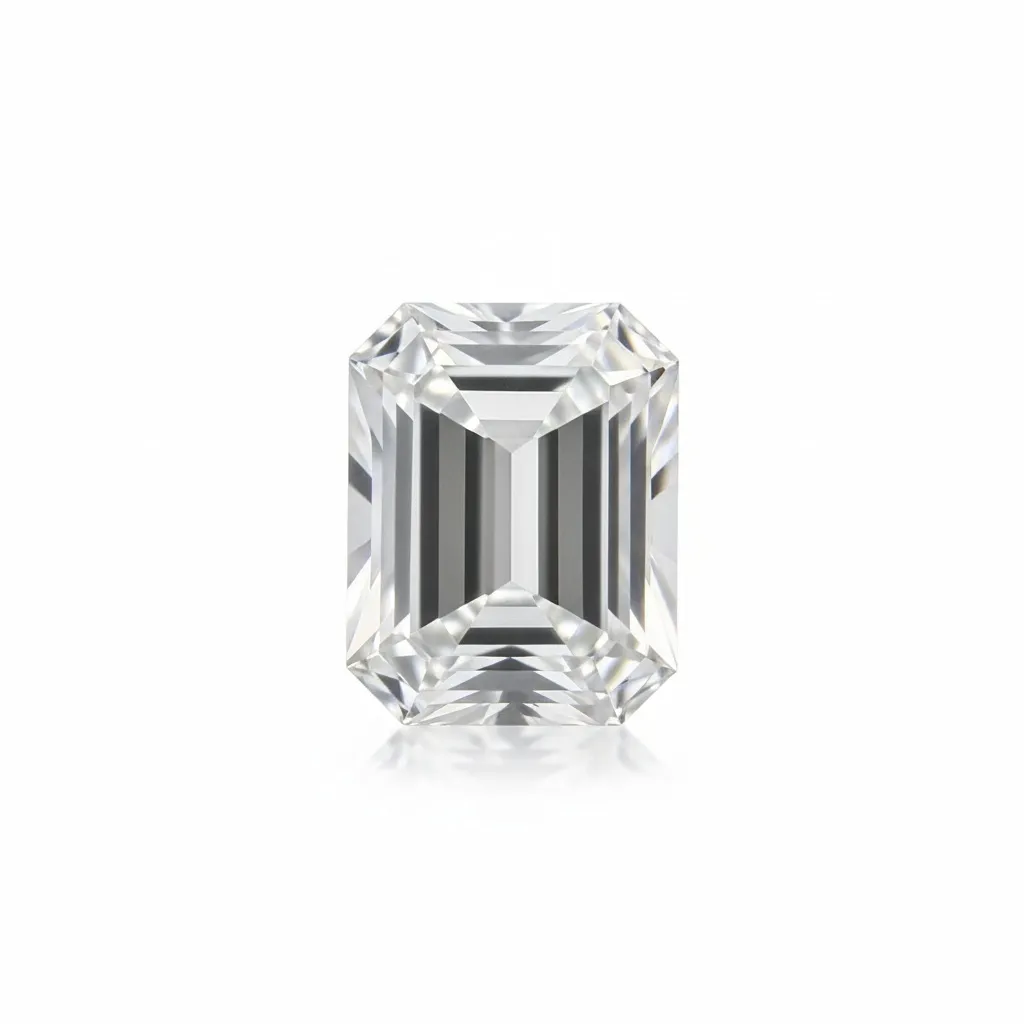
More than a rectangular shape.
The defining clipped corners distinguish emerald cut from a sharp-cornered baguette or rectangular princess. Its steps can reveal the interior of the stone more openly than many brilliant cuts, making close inspection of the actual gem valuable.
The anatomy of an emerald cut.

Architectural beauty. Personal expression.
Choose emerald cut if you love geometric elegance and a more restrained play of light. It works beautifully in east–west settings, slender solitaires, bezel designs and Art Deco-inspired jewellery. These are design possibilities; mounting and finished jewellery are not included with this loose-stone listing.
Before asking a jeweller to create your design, confirm the individual stone’s length, width, depth and any setting tolerances. Carat weight alone cannot guarantee a particular face-up size.
Three thoughtful checks before checkout.

Check the steps
Look at the real merchandise photo for balanced clipped corners, an open table and the appearance of the parallel facets.
Measure carefully
Choose using actual length, width, depth and carat details from your selected product variation.
Review documents
Where a GRA report or card is supplied, compare its numbers and measurements with the exact stone.
Understand the GRA listing.
Our original product title states GRA and D/VVS1. These are listed specifications, not grades independently established by the images on this page. We recommend reviewing documentation associated with the selected stone—its shape, size, markings, and report number where applicable—before relying on a grade.
The faceted gemstone photographs show the cut style; they cannot establish independent laboratory certification or confirm that every order contains the exact same photographed specimen.
Moissanite, distinct from diamond.
Moissanite is silicon carbide (SiC); diamond is carbon. Moissanite’s commonly reported Mohs hardness is about 9.25, which describes scratch resistance rather than immunity to chipping or impact. Some basic thermal diamond testers may also respond to moissanite, so specialized equipment is preferred for material identification.
Lab-grown moissanite can be a beautiful option for jewellery, but gemstone properties alone do not establish environmental or ethical claims for any specific supply chain.
Moissanite and diamond, compared.
| Property | Lab-grown moissanite | Diamond |
|---|---|---|
| Composition | Silicon carbide | Carbon |
| Hardness (Mohs) | Approximately 9.25 | 10 |
| Refraction | Generally doubly refractive | Singly refractive |
| Visual character | Often vivid coloured dispersion | Different mix of brilliance and fire |
| Identification | Gemological or moissanite-specific testing | Diamond identification and grading |
General mineral characteristics, not an individual-stone laboratory report.
A simple routine for lasting beauty.

Keep the steps luminous.
Gently polish fingerprints from an unmounted gemstone with a lint-free cloth. When appropriate, clean with lukewarm water and a small amount of mild soap, then rinse and dry carefully. Keep the stone away from abrasive surfaces and hard knocks.
For finished jewellery, a qualified jeweller should advise on the setting, other gemstones, repair history and suitability for ultrasonic or steam cleaning.
A jeweller’s checklist.
Confirm the stone’s exact length, width and depth, the preferred orientation, the mounting design and whether the clipped corners are securely protected. Check the condition of prongs or bezels regularly once your jewellery is in use.
Ask us for any missing size or paperwork details connected to your chosen variation.
Frequently asked questions
What is emerald moissanite?
Our emerald gemstone is lab-grown moissanite, a silicon-carbide gemstone distinct from diamond. An emerald cut has clipped corners and long step facets, creating crisp lines and a hall-of-mirrors appearance rather than the sparkle pattern of a radiant cut.
How does this cut look in jewellery?
An emerald cut has clipped corners and long step facets, creating crisp lines and a hall-of-mirrors appearance rather than the sparkle pattern of a radiant cut.
How do I choose the right carat size?
Select your preferred carat option and compare the stone’s actual length, width and depth in millimetres. These measurements help your jeweller choose the right mounting.
What is included with the order?
We offer this as a loose moissanite gemstone for custom jewellery. A finished ring or pendant is not part of the loose-stone selection unless specifically shown in the chosen purchase option.
What about D colour, VVS1 clarity and GRA details?
Our product is presented with D colour and VVS1 clarity specifications and GRA information. Our team can help you review the details relevant to your selected stone.
Which jewellery setting works best?
Emerald cuts suit streamlined bezel and prong settings. Their broad table makes cut symmetry and surface appearance especially noticeable.
How should I clean and store it?
Use a soft lint-free cloth and, where suitable, mild soap with lukewarm water. Protect it from hard impacts and have any finished jewellery setting checked periodically.